
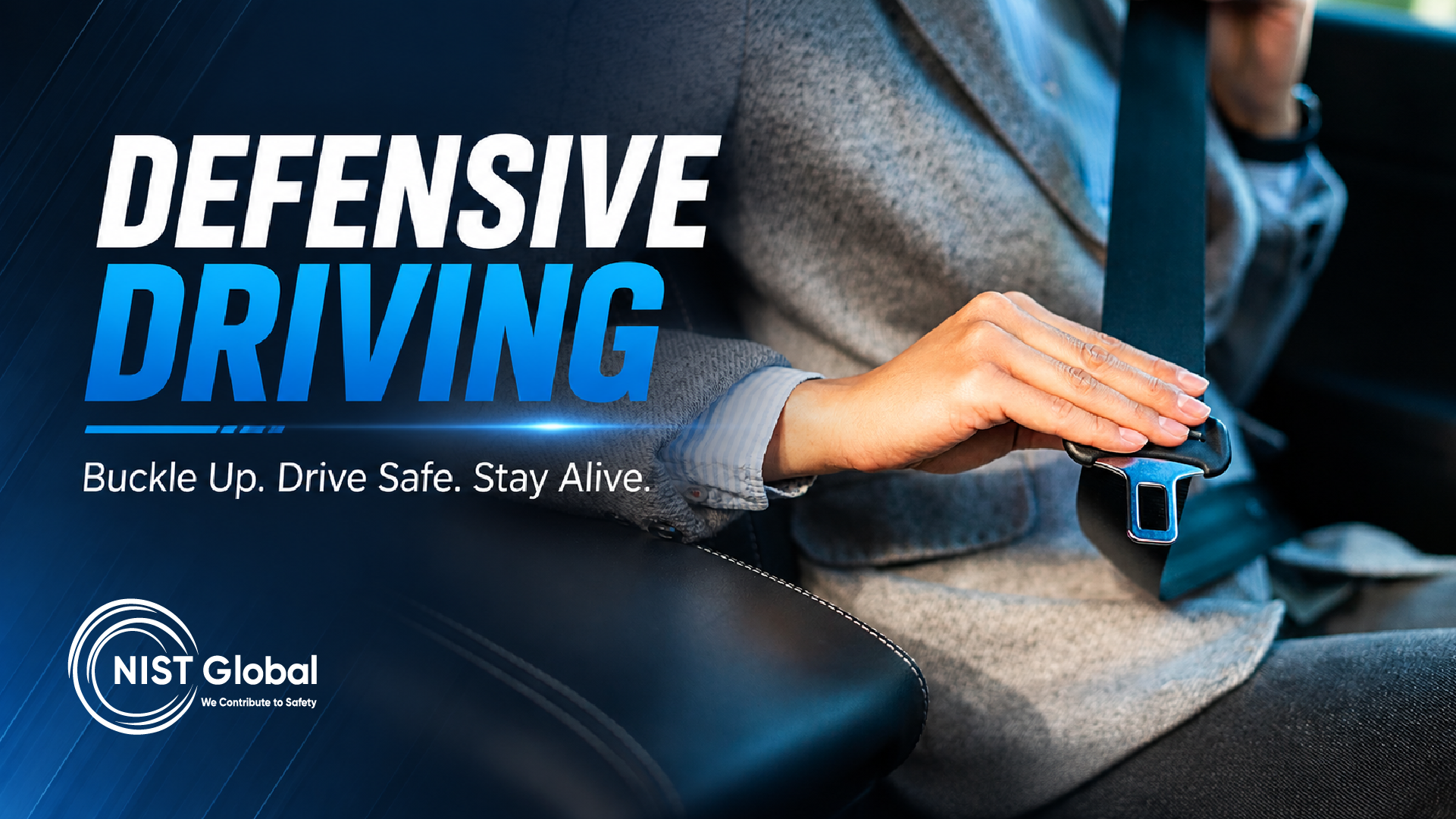
A single click of a seat belt can make the difference between a close call and a life-changing accident. Yet, despite all its benefits, there are still so many drivers and passengers who ignore this very basic safety measure. Putting on a seat belt is the simplest way to stay safe while driving and an essential component of defensive driving. One never knows when an accident might happen; however, following a few good driving practices before every trip will help avoid any accidents and injuries.
Defensive Driving is all about staying alert, recognizing potential hazards, and making safe decisions before a situation turns into an accident. It motivates the drivers to stay aware of their surroundings and anticipating potential hazards, and making safe decisions before a situation turns into an accident. At NIST Global, we understand that being safe on the road starts from developing safe driving habits and responsible attitudes. That is why our Defensive Driving Training programmes aim at fostering safer driving practices.
What Is Defensive Driving?
Defensive driving can be referred to as proactive driving since its essence is to anticipate possible dangers, identify hazards in time, and react accordingly so that to avoid collisions. In contrast to compliance with traffic regulations only, the defenders of the roads keep track of the changes in road conditions and the behavior of other road users, making decisions that minimize the probability of crashes.
Such basic elements of defensive driving as keeping a safe distance between vehicles, observing speed limits, staying focused while driving, anticipating the actions of other motorists, and protecting both the driver and passengers before starting a trip are the foundations of defensive driving. Using a seat belt while driving can be considered one of the basics of defensive driving because of the necessity to get protected in case some accident happens even despite taking precautions beforehand.
Defensive driving is based on the knowledge that not everyone follows safety measures while using the roads. Consequently, by implementing responsible behavior while driving and taking important safety measures (like wearing seat belts), a driver greatly increases his chances of avoiding accidents.
Why Wearing a Seat Belt Is Essential in Defensive Driving
Defensive driving is associated with the reduction of dangers and readiness for the unpredictable situation on the roads. Despite all the precautions a driver takes in order to avoid any accidents, there can be some uncontrollable factors like the behavior of other participants in traffic, the weather conditions, and the state of the car. For this reason, wearing a seat belt becomes an important element of defensive driving. The following are the main arguments in favor of wearing a seat belt.
1. Reduces the Risk of Serious Injuries
In case of a crash, a person’s body goes on moving because of inertia. A seat belt helps to secure the movement of the body and distribute the force of the crash in such a way that the strongest body parts absorb the force; the chest, the shoulders, and the pelvis. As a result, one can reduce the possibility of severe injuries greatly.
2. Works Together with Airbags
The airbags provide extra protection in the case of a collision, but they work only in combination with seat belts. Thus, wearing a seat belt provides a proper position for the passenger or the driver.
3. Prevents Occupant Ejection
In case of enormous impact crashes or rolling of the vehicle, passengers without seat belts are more likely to be thrown out of the vehicle. Being within the protective shell of the car increases the likelihood of surviving and the possibility of receiving less serious injuries.
4.Protects Every Occupant in the Vehicle
Seat belts should be worn by all passengers. Without seat belts, rear passengers may be thrown forwards in case of a crash, which will increase the danger for both them and the front passengers. It is therefore necessary for all passengers to wear seat belts, ensuring safety for all the passengers in the car.
5. Supports Responsible Defensive Driving
The use of a seat belt is one of the most simple actions that indicate responsible driving behavior. It shows the desire to take care of one’s own safety and compliance with traffic laws and the readiness to face any possible situation on the road.
Benefits of Wearing a Seat Belt
Wearing a seat belt is an easy practice that ensures great safety for all drivers and passengers. Some of the reasons include the following:
-
Reduces the Risk of Severe Injuries: It ensures that the injuries of the body parts like the head, chest, and spine are minimized during an accident.
-
Prevents Occupant Ejection: In cases of accidents or roll-over, it prevents the occupants of being ejected from the car and increases their chances of survival.
-
Improves Protection by Airbags: The seat belts ensure increased protection of the occupants in case of a crash because they coordinate with the airbags.
-
Protects All the Occupants: With seat belt wearing by all the passengers, the risk of injuries for front and rear seat passengers can be minimized.
-
Develops Defensive Driving Habits: Use of seat belts ensures responsible driving practices.
Defensive Driving Practices Beyond Wearing Seat Belts
Although wearing seat belts plays a crucial role in defensive driving, there is much more to consider in terms of safe driving than merely using seat belts. Drivers who employ defensive driving methods are capable of being aware of the potential hazards that might happen and to react accordingly.
Some essential defensive driving practices include:
-
Maintain proper distances between the car and other cars to be prepared in case of an emergency situation.
-
Stay focused on the road and avoid distracting things, such as mobile phones usage, eating food, and similar.
-
Stick to the speed limit and adapt the speed to the current road conditions.
-
Be aware of the potential problems and observe the actions of the surrounding people.
Combining these approaches with seat belt usage allows one to lower the probability of accidents on roads significantly.
Conclusion
Defensive driving is about making safe choices before an emergency occurs, and wearing a seat belt is one of the most important of those choices. By combining responsible driving habits with consistent seat belt use, drivers can significantly reduce the risk of serious injuries and contribute to safer roads for everyone.
At NIST Global, we are committed to helping individuals and organisations build safer driving habits through industry-focused Defensive Driving Training. Our practical, expert-led programmes empower drivers to anticipate risks, make informed decisions, and foster a stronger culture of road safety; because every safe journey begins with the right knowledge and the right habits.
Key Takeaways
-
Defensive driving is an offensive technique that enables the driver to foresee any dangers on the roads and avoid car accidents.
-
The use of a seat belt is one of the easiest and most efficient methods to keep one from getting severely hurt in the case of an accident.
-
Seat belts function in combination with airbags to offer the best protection and must always be used, irrespective of where the passenger sits in the vehicle.
-
Busting myths related to the use of a seat belt leads to better safe driving practices.
-
A combination of defensive driving and seat belt use promotes safety on the road.
Frequently Asked Questions (FAQs)
you might also like
Popular Safety Training Programmes
Behaviour Based Safety Training
Develop safe behaviours, strengthen safety culture, and reduce workplace incidents through proactive observation and intervention.
Fire Safety Training
Equip employees with the knowledge and practical skills to prevent fires, respond effectively, and protect people and assets.
Defensive Driving Training
Improve driver awareness, reduce road risks, and promote safer driving practices for employees operating vehicles.
The Right Safety Training Could Prevent the Next Workplace Incident
Explore our comprehensive range of workplace safety training programmes designed to reduce risks, strengthen safety culture, and improve workforce competence across all levels of your organization.