
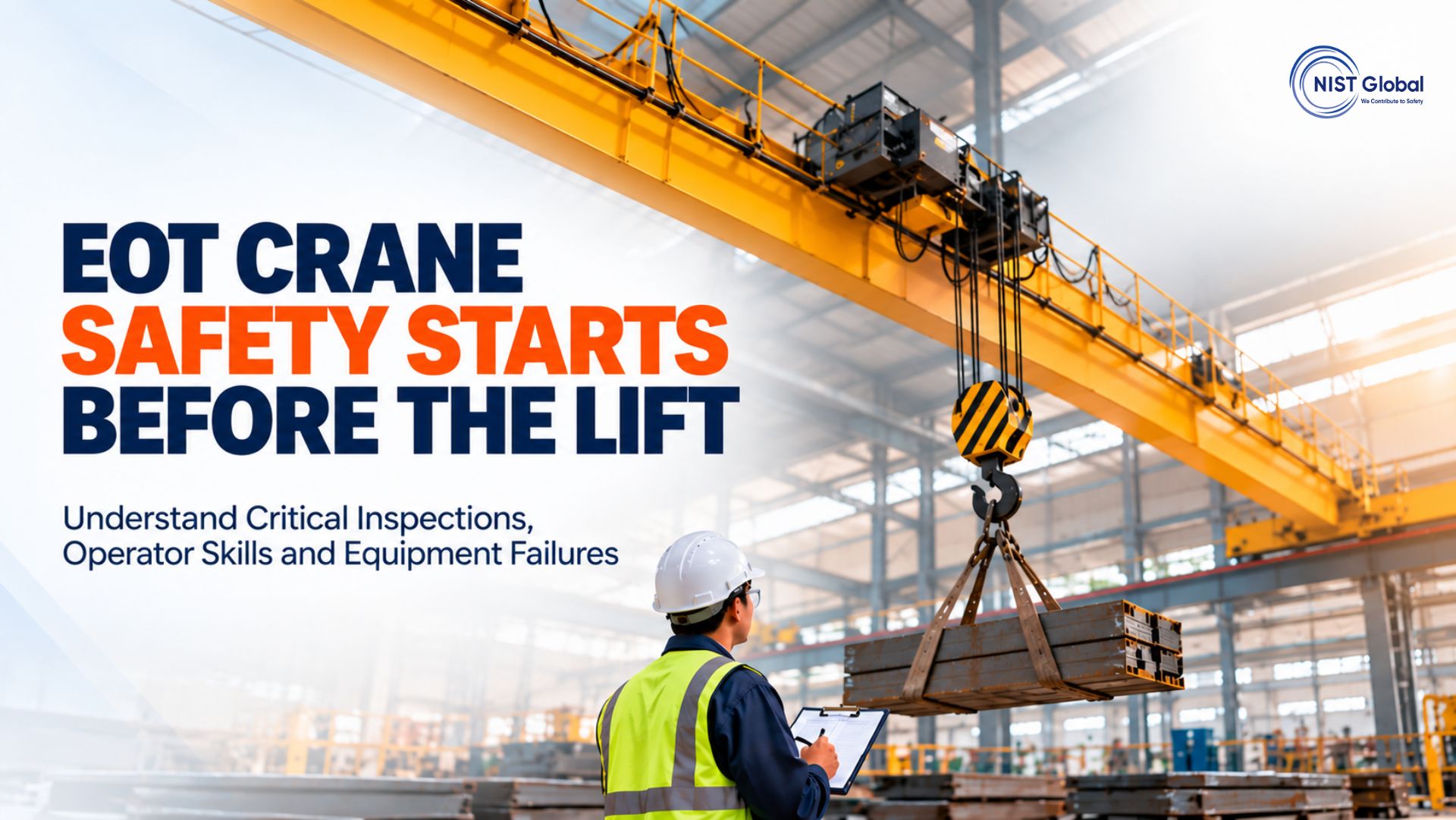
EOT Crane Safety: Daily Checks, Operator Competence and Common Failures
EOT crane safety depends on regular pre-use inspections, competent operators, correct load handling and timely maintenance. Electric Overhead Travelling (EOT) cranes are widely used in manufacturing plants, warehouses and fabrication workshops to move heavy loads, where equipment defects, overloading and [...]
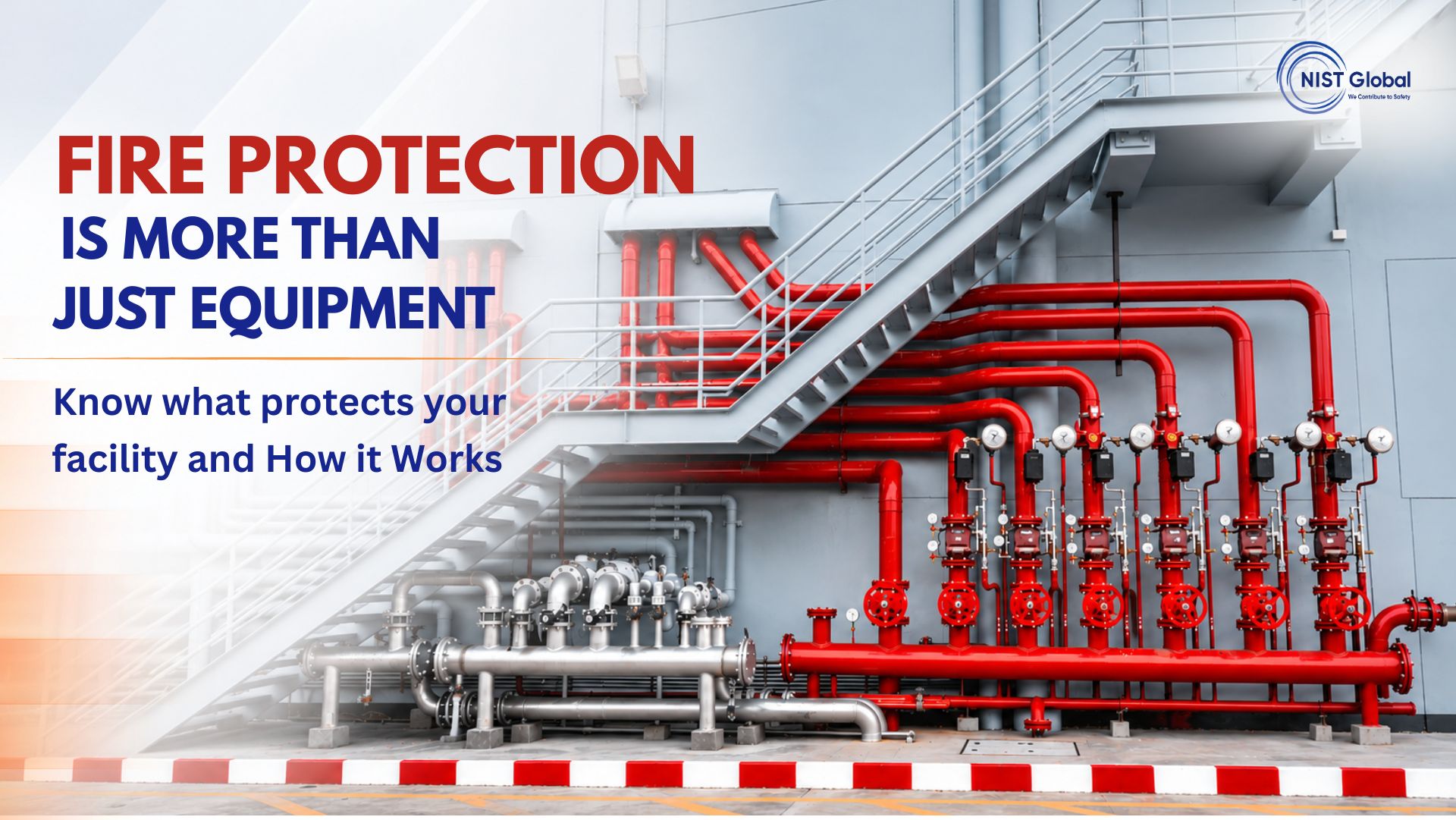
Understanding Fire Protection Systems in Industrial Facilities
A fire outbreak happens within the high-voltage switchgear unit located within an industrial manufacturing company. An arc flash is ignited in the PVC coating covering the thick cables. The smoke detector picks up the combustion particles within milliseconds and alarms [...]
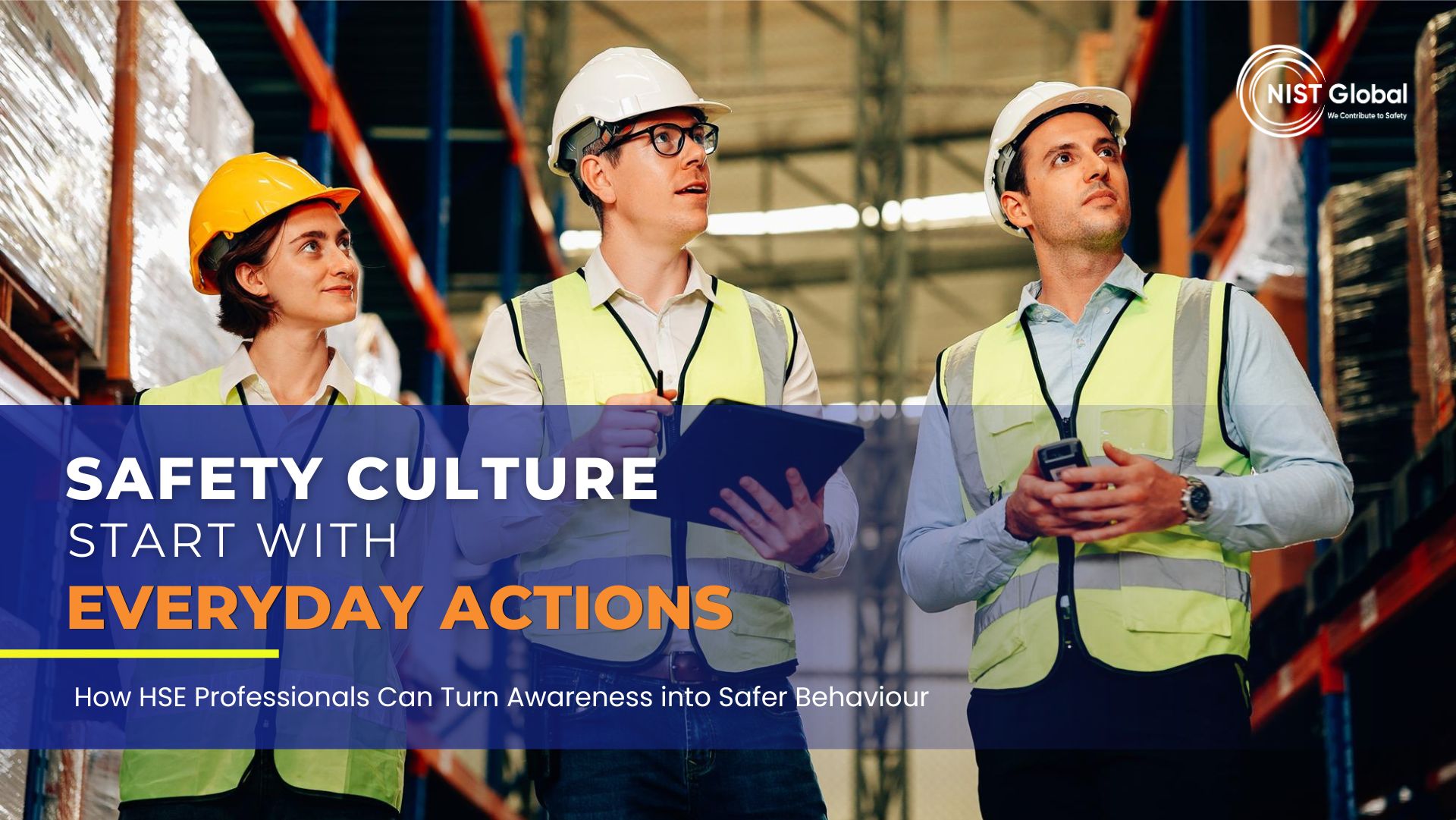
How HSE Professionals Improve Safety Culture and Employee Behavior?
HSE professionals play a key role in improving workplace safety culture by strengthening hazard awareness, encouraging safe behaviours and ensuring employees follow established safety procedures. A positive safety culture helps reduce unsafe practices, improve incident reporting and make safety a [...]
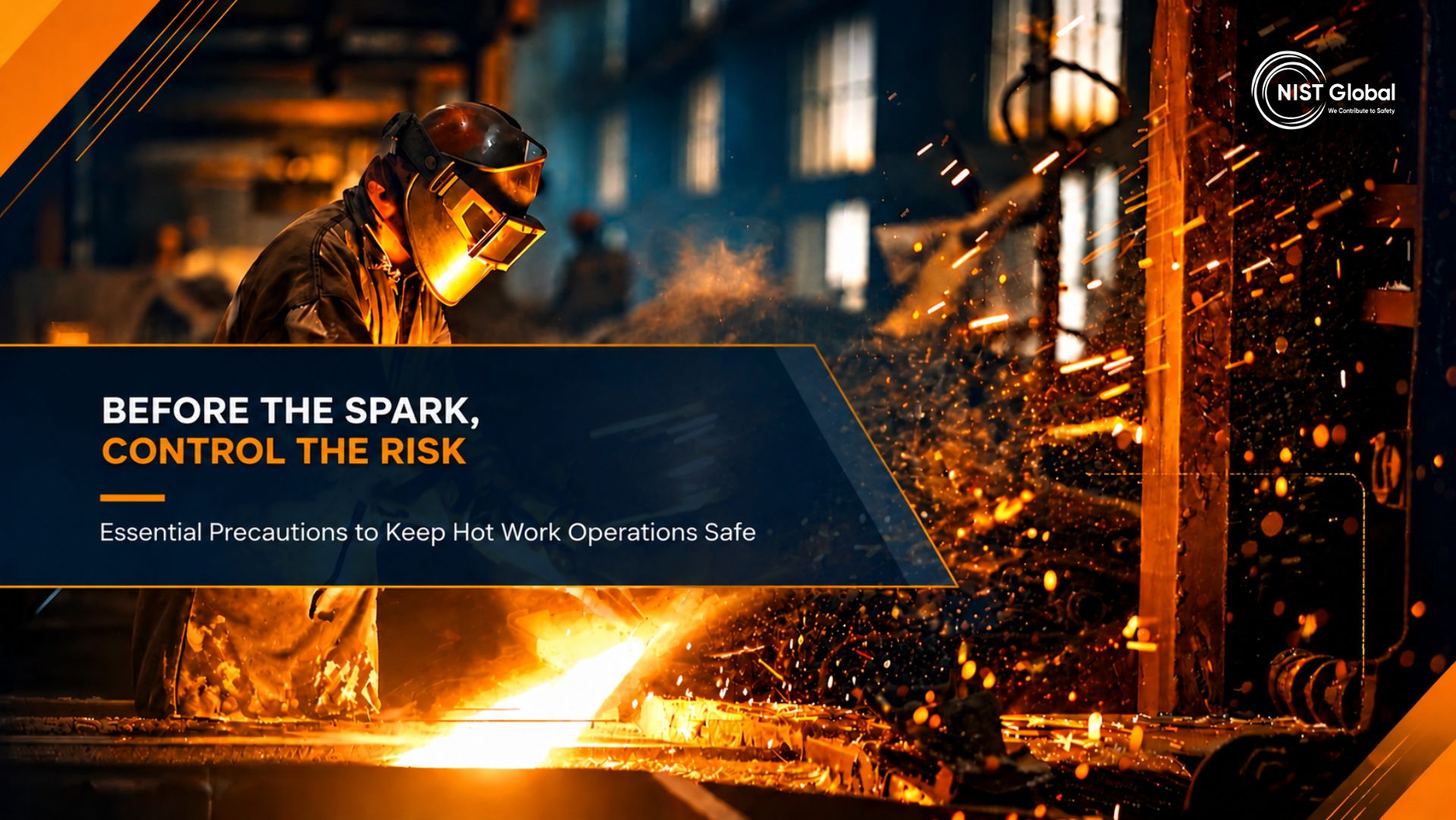
Hot Work and Fire Prevention: Essential Safety Measures
A maintenance crew starts the process of grinding a steel support girder within a manufacturing facility. Hot sparks fall silently from the steel girder into the aisle of cardboard boxes and oily rags in an adjacent storage area. Maintenance work [...]
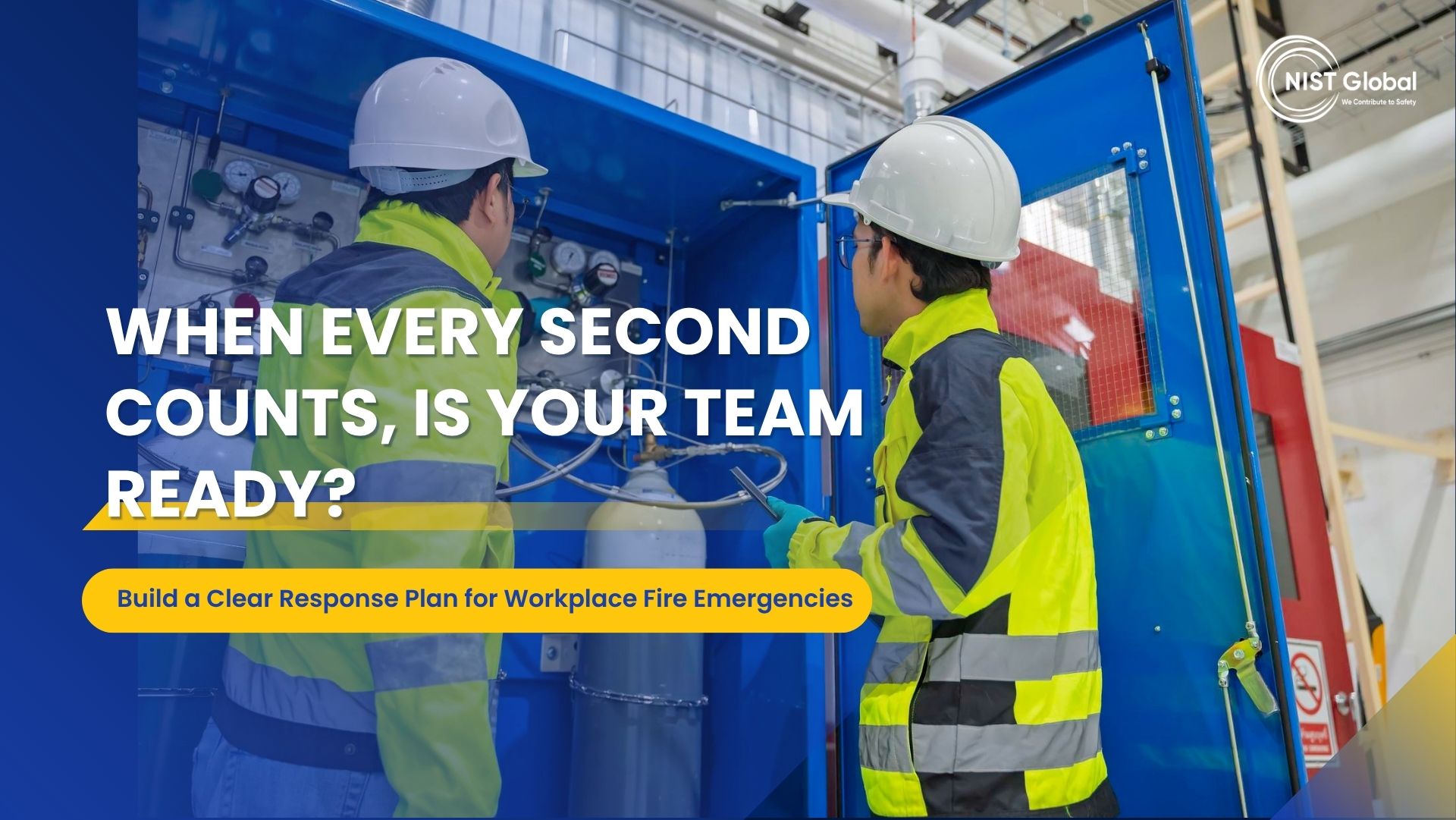
Fire Emergency Response Planning for Manufacturing Facilities
Fire emergency response planning is essential for protecting workers, preventing fire-related injuries and minimising property damage in manufacturing facilities. An effective plan requires clearly defined emergency roles, reliable communication, accessible evacuation routes and regular emergency drills to support a coordinated [...]
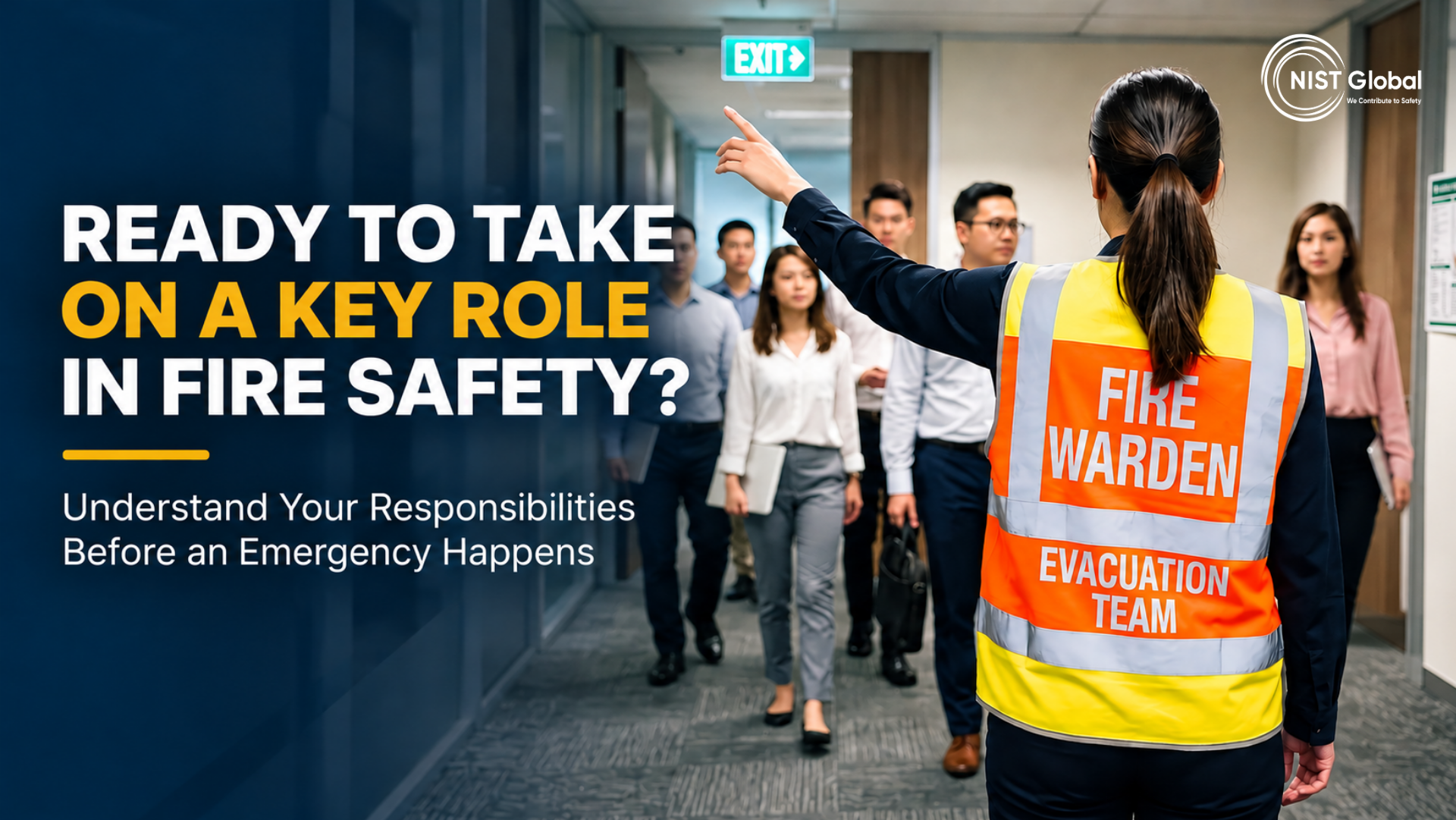
Fire Warden Training for Corporate Teams – Roles, Responsibilities & Certification
During a fire emergency, smoke can spread rapidly through corridors, stairwells and other building spaces, reducing visibility and making evacuation more difficult. Lifts should not be used during a fire unless specifically designated for emergency evacuation by the building’s fire [...]
Safety Audit vs Safety Inspection: What’s the Difference?
Workplace safety is more than a reaction to an incident after it occurs. Organizations need to identify hazards, assess the risks, monitor safety practices, and ensure their controls remain effective. Two important tools that help this process are safety inspections [...]
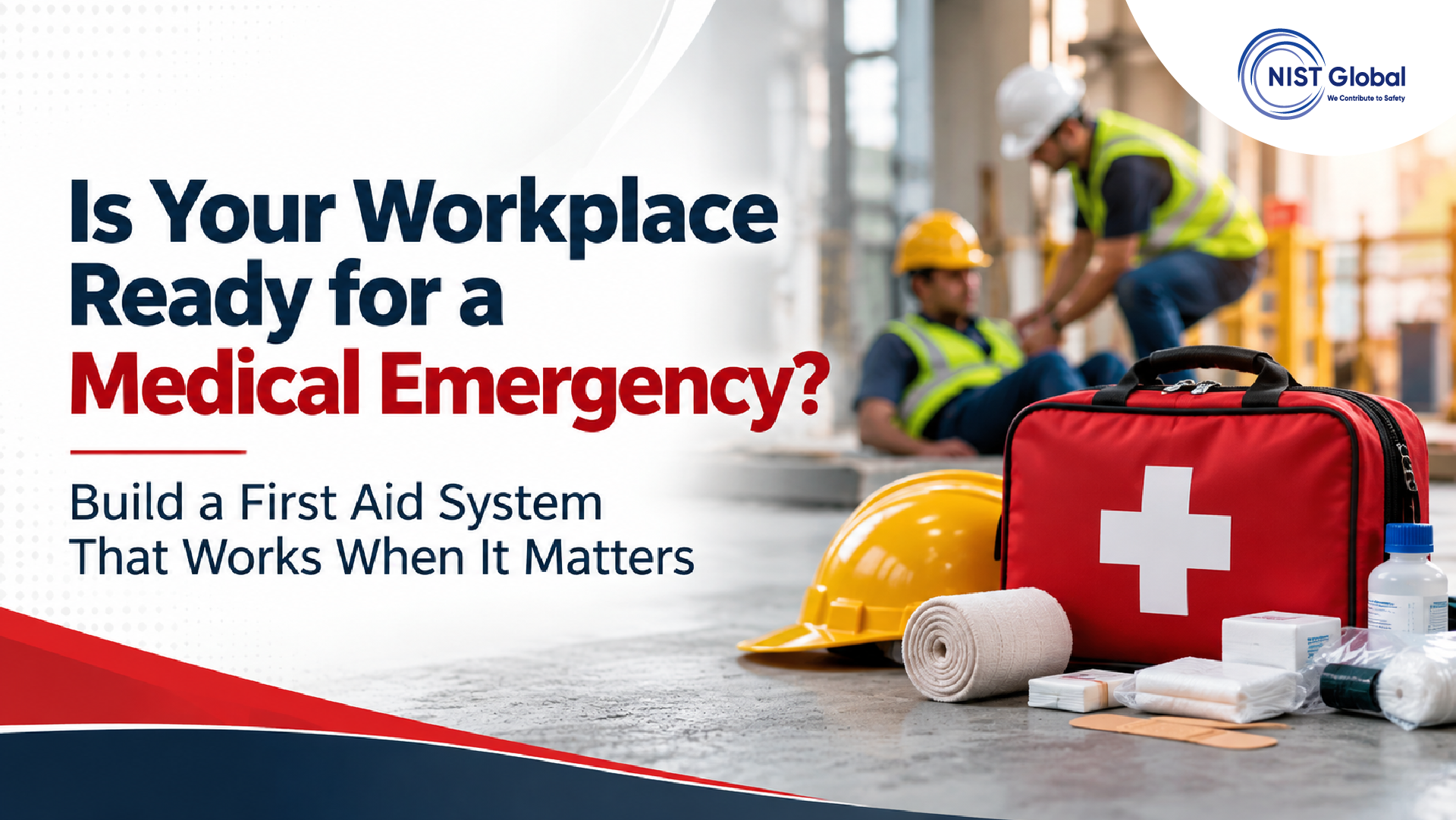
Building an Effective Workplace First Aid System
Did you know? Nearly 3 million workers die every year from work-related accidents and diseases, according to the ILO. While not every workplace incident is fatal, the outcome can depend heavily on how quickly and effectively people respond when an [...]
Different Types of HSE Personnel and Their Responsibilities
Safety in the workplace is no accident. Every well-managed worksite involves individuals who are always searching for risks, assessing risk and ensuring that safety measures function when they matter most. However, safety in the workplace is not the responsibility of [...]
Fire Safety Responsibilities of Employees, Supervisors, and Managers
A fire rarely starts as a major emergency. It can begin with a damaged electrical cable, an overheated machine, combustible waste, or a blocked fire extinguisher. What happens next often depends on whether someone notices the hazard, reports it, and [...]