
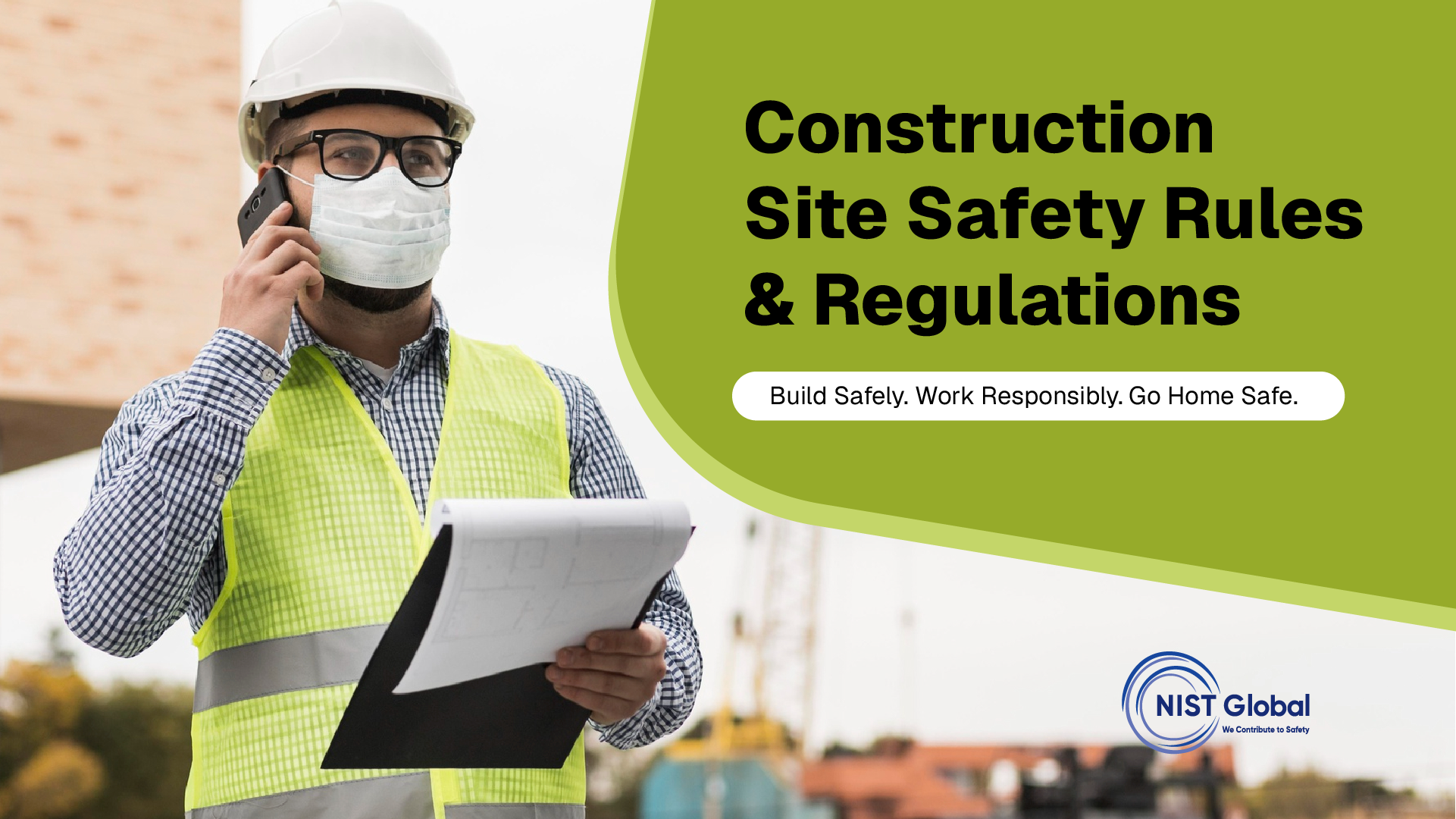
A construction site can change in seconds. Equipment, electricity, work at heights, and other dynamic operations can quickly become a source of danger if there is no proper attention to safety on the construction site. The safety in the construction industry is not only related to the detection of potential dangers but also consists in risk control and adherence to safe work practices. The issue is bigger than just using personal protective equipment.
Training, equipment inspection, communication, hazard report, and preparation for emergency situations; all this is necessary. NIST Global helps businesses improve the workplace safety by means of safety training that provides employees with the necessary knowledge and skills. With proper training and safety measures, organizations will be able to protect their workers, avoid accidents, minimize downtime, and develop a better safety culture.
What Is Construction Site Safety?
Construction site Safety is described as the procedures, processes, and control mechanisms that ensure the protection of the individuals working at the construction site, contractors, equipment, as well as property from the potential dangers associated with the construction process.
This includes the identification of possible hazards, assessment of the risks associated with them, and implementation of appropriate control mechanisms before commencing construction works. Some of the ways in which construction site safety can be improved include safe work procedures, PPE, employee training, supervision, equipment maintenance, and emergency planning.
Why Is Construction Site Safety Important?
A good construction safety program will help organizations:
-
Prevent workplace accidents, injuries, and fatalities
-
Ensure protection of employees, equipment, and property
-
Eliminate downtime and losses related to the incidents
-
Increase efficiency
-
Facilitate compliance with applicable safety standards
-
Create a proactive safety culture
Safety should thus become an intrinsic part of construction operations.
10 Essential Construction Site Safety Rules
The below given are the 10 essential construction site safety rules:
1. Wear Appropriate Personal Protective Equipment (PPE)
Workers should wear PPE depending on the risks involved in their specific task. Some of these pieces of protective equipment include hardhats, safety footwear, gloves, eye and face protection, high visibility vests, hearing protection or respiratory protection.
Personal Protective Equipment is just one of the layers of protection for workers who must always ensure that they use the equipment along with other control measures.
2. Observe Safety Signs
There are different types of safety signs used in construction sites to warn people about the various dangers and give directions. These signs include warning, mandatory, prohibition, and emergency signs.
Understanding these signs will help the worker to know the restricted areas as well as the hazards on-site.
3. Ensure Good Housekeeping at the Construction Site
Poor housekeeping can increase risks on the site through slip, trip, and fall accidents among others. This can be achieved by regular removal of wastes, storage of material in correct places and maintaining the accessibility of routes.
Good housekeeping not only enhances the effectiveness of the site but also increases emergency routes access.
4. Use the Right Tools and Equipment Safely
Employees should use the right tools and equipment as well as observing instructions from the manufacturers. The right people must also use machinery on-site.
Improper use of machines increases the risk of injury to the worker as well as damaging the equipment.
5. Inspection of Tools, Equipment, and Work Areas
Employees are encouraged to inspect their tools, machinery, and work areas before beginning any work. This helps to identify any broken tools, faulty equipment, any faulty electrical connections, among others.
All organizations should remove from use any piece of equipment that is faulty until it has been repaired or replaced by qualified individuals.
6. Adopting Fall Protection Measures
Work that is done at height needs careful planning as well as adequate fall protection measures. Guardrails, adequate scaffolding, safety nets, ladders, or personal fall arrest systems can be adopted depending on the task at hand and the environment.
Employers should analyze all fall hazards and ensure that employees know how to utilize the fall protection systems chosen.
7. Safe Behavior around Moving Vehicles and Machinery
There are dangers posed by moving vehicles and machines especially in areas that have poor visibility. Employees should walk only on designated walkways and maintain a proper distance from machines in operation.
Machinery operators and employees need to follow laid down communication procedures always.
8. Adhere to Electrical Safety Precautions
Since construction involves temporary electrical supplies, power tools and electrical hazards, the employees must inspect the electrical tools, wires, and connections prior to use and inform about any damages to the management.
Only trained personnel should handle any electrical installation that falls within their level of competency. Employees should also observe the required isolation and control processes before handling any electrical installations.
9. Report Hazards and Near-Misses
Employees are supposed to report any hazardous conditions, defective equipment, spillage, obstructions, unsafe structures and other forms of hazards when they become aware of them.
Reporting near misses is also an important tool in detecting potential failures that could lead to accidents. Organizations need to develop a culture where employees are not afraid to report any issues without being blamed.
10. Prepare for Emergency Situations
Any construction site should have appropriate emergency plans based on its nature of activities and hazards. Employees should be aware of emergency exits, assembly points and any other emergency procedures.
Training and drills could help employees handle emergency situations such as fires, serious injury, chemical hazards, or any other site specific emergency.
Best Practices for Improving Construction Site Safety
Organizations may be able to enhance construction safety through the integration of control measures with training and supervision continuously. These include:
-
Regular training and toolbox talks
-
Hazard identification and risk assessment
-
Effective communication among workers, supervisors, and contractors
-
Regular inspection and maintenance of equipment and tools
-
Encouraging workers to identify hazards and near-misses
-
Updating the safety controls when there is a change in site conditions and activities
These are some of the ways through which organizations can shift from being reactive in terms of safety issues to becoming proactive about them.
Responsibilities of Employers and Workers
Construction Safety is a collective responsibility.
Employers/Contractors
-
Ensure provision of a safe working environment.
-
Ensure availability of PPE.
-
Train workers and provide risk control measures.
-
Maintain equipment and procedures for emergencies.
Workers
-
Adhere to safety precautions and use PPE properly.
-
Operate equipment only when permitted.
-
Report risks and undergo safety training.
Supervisors
-
Observe the work process and convey safety requirements.
-
Identify risks and see to their correction.
Conclusion
Safety on a construction site requires regular activities performed throughout the entire course of the project. Whether it is wearing proper PPE, inspecting equipment, addressing fall hazards, reporting hazardous working conditions, and preparing for emergencies, all safety activities play their role in avoiding accidents.
When an organization provides its employees with structured safety training courses, it will be possible to make the workers aware of various hazards and follow safe work procedures depending on the changing conditions of the construction site. The development of the safety culture starts when safety becomes a normal activity instead of being performed only for compliance reasons. The NIST Global team helps companies implement professional safety training courses to improve workers’ safety skills.
Key Takeaways
-
Hazard identification and risk management are crucial at construction sites.
-
PPE should be used based on the hazards in one’s job.
-
Tools, machinery, and work sites need to be checked regularly.
-
Housekeeping can help prevent accidents from happening.
-
Certain measures are needed to control fall, machinery, and electrical hazards.
-
Accidents and near-misses should be reported by the workers.
Frequently Asked Questions
Popular Safety Training Programmes
Behaviour Based Safety Training
Develop safe behaviours, strengthen safety culture, and reduce workplace incidents through proactive observation and intervention.
Fire Safety Training
Equip employees with the knowledge and practical skills to prevent fires, respond effectively, and protect people and assets.
Defensive Driving Training
Improve driver awareness, reduce road risks, and promote safer driving practices for employees operating vehicles.
The Right Safety Training Could Prevent the Next Workplace Incident
Explore our comprehensive range of workplace safety training programmes designed to reduce risks, strengthen safety culture, and improve workforce competence across all levels of your organization.