
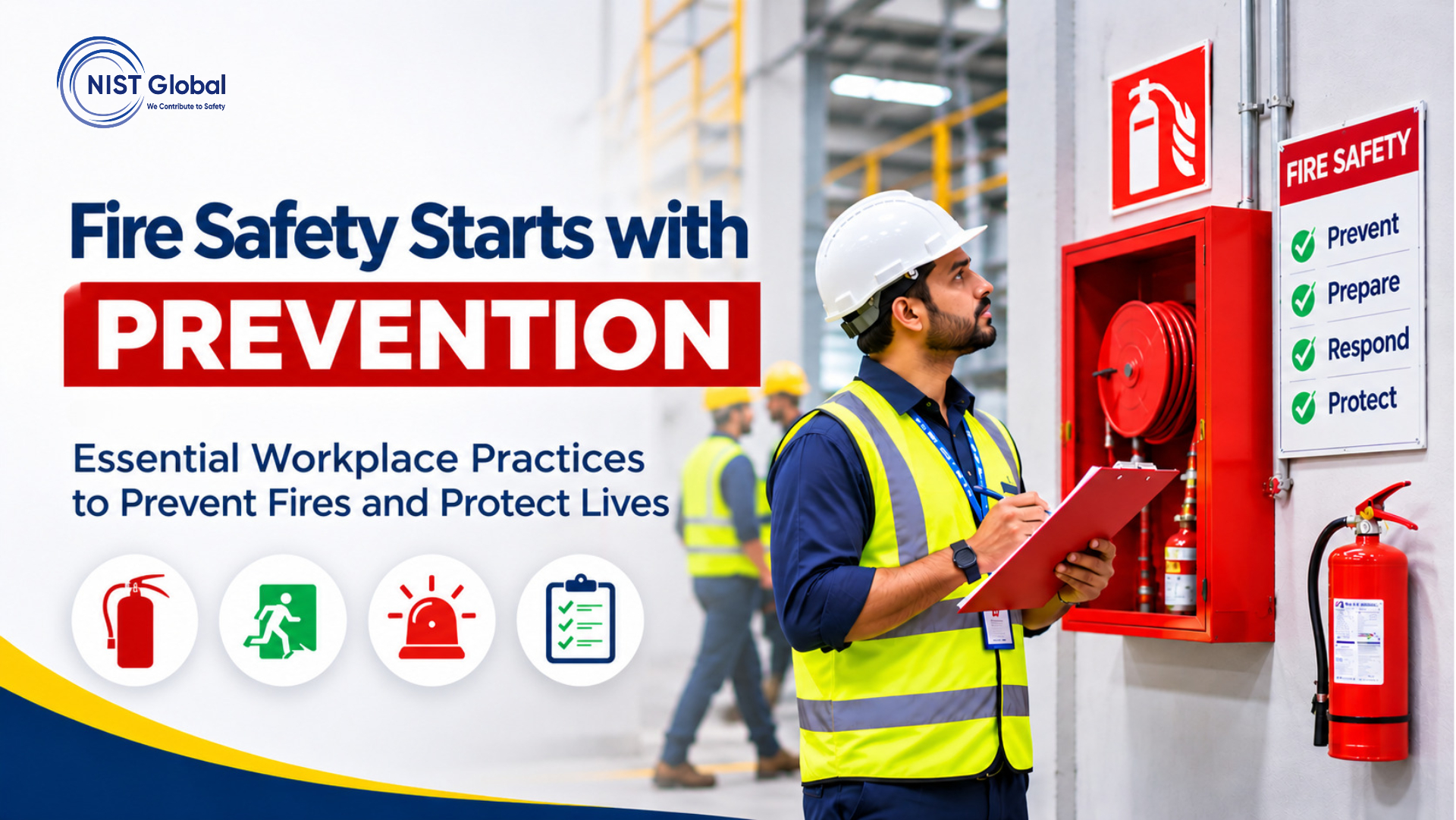
A fire does not always initiate a dramatic warning signal. It can begin with an overloaded socket, a damaged cable, a spark during hot work, or combustible materials stored too close to a heat source. A small mistake or hazard that is overlooked can quickly become an emergency that puts people, property, and business operations at risk within minutes.
That’s why fire safety can’t start when a fire happens. It starts much earlier, by identifying potential risks, preventing them from becoming incidents, and ensuring people are ready to respond when things go wrong. All of this, coupled with risk assessments, preventative measures, reliable fire protection systems, staff training, emergency procedures, and regular inspections, will make for a safer and more prepared workplace.
What Is Fire Safety?
Fire safety is what an organization does to prevent fires and protect people, property, and operations if a fire happens.
An effective approach usually involves:- Recognizing and controlling fire hazards
-
Maintenance of electrical and workplace equipment
-
Fire detection and alarm systems that are appropriate
-
Providing appropriate fire fighting and suppression equipment
-
Clear emergency exits and escape routes
-
Drafting emergency evacuation plans
-
Training personnel
-
Fire inspections and fire drills
-
Regularly reviewing fire safety arrangements
Fire safety is most effective when organizations view prevention and emergency preparedness as linked responsibilities, not separate activities.
Why Is Fire Safety Important?
1. It Protects People
The main purpose of fire safety is still to save lives.
Fires can spread rapidly, and smoke can reduce visibility and make it difficult to evacuate. Early detection, functioning alarms, accessible escape routes, and trained staff give people more time to react and evacuate safely.
Staff needs to be aware of how to raise the alarm, the location of emergency exits, where to assemble, and what to do in an emergency. Clear procedures reduce confusion and help people respond more effectively.
2. It Helps Prevent Fires and Limit Their Spread
Most of the organizations can identify and prevent fire incidents before they cause an incident.
Fire risks can be caused by electrical faults, combustible materials, flammable substances, defective equipment, and uncontrolled ignition sources. Organizations can control these hazards through regular inspections, maintenance, and good housekeeping.
If a fire occurs, detection systems, fire-resistant barriers, fire doors, suppression systems, and appropriate firefighting equipment can help to contain the fire and limit its spread.
3. It Protects Property and Critical Assets
A fire can damage buildings, machinery, electrical systems, stock, documents, and other business assets. The losses incurred can be greater than the cost of repairing the physical damage.
A combination of prevention and appropriate detection, containment, and firefighting systems can minimize possible losses. The controls you need will depend on the building, activities, materials, and hazards.
4. It Reduces Business Disruption
The aftermath of a workplace fire can last long after the emergency has passed.
A serious incident can halt production, damage equipment, affect employees, delay deliveries, and increase recovery costs. Businesses may also face difficulties in returning to normal operations if major critical facilities or systems are unavailable.
Fire safety helps businesses to consistently operate by reducing the likelihood and severity of fire-related disruptions.
5. It Supports Safety and Regulatory Responsibilities
Organization should understand and meet the fire safety requirements which are suitable for their workplaces, buildings, and activities. All the requirements should cover up areas such as emergency exits, fire protection systems, maintenance of the equipment, inspections, and emergency preparedness.
But compliance alone does not guaranty effective fire safety. Organizations should use regulatory requirements as a foundation and combine them with practical risk assessment, employee awareness, and regular improvement.
6. It Enhances Safety Culture
Employees play an important role in preventing fires in the workplace.
Employees who know about common fire hazards are more likely to spot unsafe conditions such as blocked exits, faulty electrical equipment, improper storage methods, and the presence of combustible waste.
Regular communication and training helps to embed fire safety into day-to-day workplace behavior, rather than something employees only think about when an emergency occurs.
Typical fire hazards in the workplace
The type of workplace, the processes used, and the materials will determine the fire hazards. Common examples are:
Electrical hazards: Damaged cables, overloaded circuits, faulty equipment, and poor electrical maintenance can create ignition sources.
Flammable materials: Flammable liquids, gasses, and other combustible materials can increase the likelihood and severity of a fire when incorrectly stored or handled by organizations.
Poor housekeeping: Accumulated waste, packaging, paper, oily materials and other debris can provide fuel for a fire.
Hot work: Welding, cutting, grinding and other such operations can produce sparks and heat that can ignite combustibles in the area.
Heating and cooking appliances: Heat-producing appliances that are not properly maintained or used improperly can be a fire hazard.
Smoking and open flames: Smoking materials, candles, and other open flames can ignite combustible materials if not properly controlled.
Recognizing the hazards is an important part of fire risk assessment at work.
Fire Safety System Key Elements for Success
Risk Assessment Fire
Fire prevention begins with a knowledge of the hazards in the workplace. The fire risk assessment must take into account potential sources of ignition, combustible materials, people who may be exposed to risk, and the existing fire protection measures.
The organization can then implement appropriate control measures based on the findings.
Fire Alarm and Detection Systems
Early warning can give valuable time for evacuation and response. Smoke detectors, heat detectors, and fire alarm systems can alert occupants when a fire starts.
Organizations should be testing and maintaining these systems regularly so that they work when needed.
Fire Extinguishers & Suppression Systems
Employers must supply firefighting equipment suitable to the hazards in their workplaces. When trained to use them, fire extinguishers can help you control a small fire and still provide a clear way out.
In larger or higher risk facilities, fixed fire suppression systems may also be required depending upon specific risks and applicable requirements.
Fire Doors, Compartmentalization, and Escape Routes
Fire-resistant doors, walls, and other forms of compartmentalize can help to limit the movement of fire and smoke. The occupants can leave the building safely when clear and accessible escape routes are available.
Organizations must not block emergency exits or use escape routes for storage.
Why Fire Training is Important?
Fire safety equipment cannot replace awareness and preparedness of employees.
Employees need to know about fire hazards in their work areas, what fire alarms mean, emergency evacuation procedures, where to find firefighting equipment and what their responsibilities are in an emergency.
Training should also help employees understand when to evacuate rather than try to fight a fire. Employees shall never take undue risks in the protection of property.
Practical training helps staff identify hazards and respond more confidently in emergency situations.
Importance of Fire Drills
A written emergency procedure is not a guarantee of a good response. Fire drills let organizations test procedures under controlled conditions. Drills can help organizations determine if employees know evacuation routes, hear the alarm, reach the designated assembly point, and follow their assigned responsibilities.
They can also point out blocked routes, communication gaps, and other weaknesses that companies can fix before a real emergency happens.
What to Include in a Workplace Fire Safety Plan
The workplace fire safety plan should be tailored to the organisation’s specific risks and operating conditions. May contain:
-
Fire safety precautions
-
Emergency alarm systems
-
Emergency exits and evacuation routes
-
Assembly points
-
Emergency contact plan
-
Roles & Responsibilities
-
Procedures for Staff, Visitors and Contractors
-
Provisions for those who may require assistance in evacuation
-
Locations of Fire Equipment
-
Provisions for training and drill-Inspection and maintenance requirements
Organizations should communicate the plan to staff and review it when workplace conditions, layouts, equipment, or processes change.
Key Takeaways
Fire safety is about protecting people, property and business continuity.- Prevention begins with the identification and control of fire hazards in the workplace.
-
Emergency alarm and detection systems can be a useful warning in an emergency.
-
Fire extinguishers and suppression system suitable for the hazards.
-
Clear escape routes and effective evacuation procedures matter.
-
Trained employees can identify hazards and respond appropriately.- Fire drills help organizations to find out where their emergency arrangements have weaknesses.
-
Continuous improvement is supported by regular inspections, maintenance and fire risk assessments.
Conclusion
Fire safety is more than simply putting in extinguishers or doing an annual drill. It needs a co-ordinated approach involving risk assessment, prevention, detection, protection, emergency planning, employee training and continuous review. Organizations should aim to identify risks before an incident happens and make sure employees know how to react in an emergency.
NIST Global assists organizations to improve workplace safety with expert fire safety training and HSE solutions. NIST Global leverages practical training and a workplace-focused approach to increase employee awareness, emergency preparedness, and overall fire safety performance. At the end of the day, investing in fire safety is investing in people, business continuity, and a safer workplace.
FAQs
Popular Safety Training Programmes
Behaviour Based Safety Training
Develop safe behaviours, strengthen safety culture, and reduce workplace incidents through proactive observation and intervention.
Fire Safety Training
Equip employees with the knowledge and practical skills to prevent fires, respond effectively, and protect people and assets.
Defensive Driving Training
Improve driver awareness, reduce road risks, and promote safer driving practices for employees operating vehicles.
The Right Safety Training Could Prevent the Next Workplace Incident
Explore our comprehensive range of workplace safety training programmes designed to reduce risks, strengthen safety culture, and improve workforce competence across all levels of your organization.