
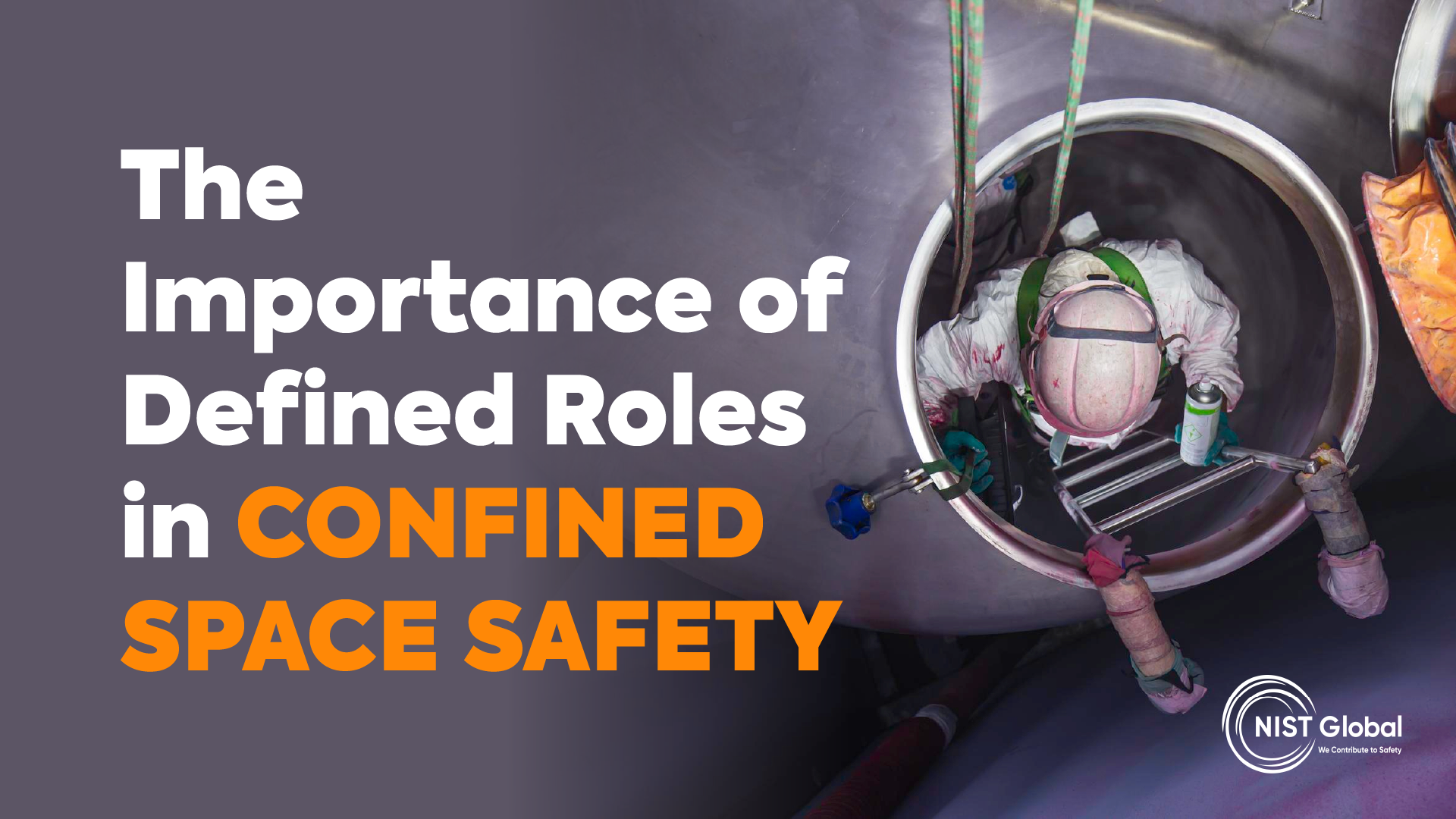
The working conditions in confined spaces, like storage tanks, silos, sewers, utility vaults, and industrial boilers, are among the toughest and most challenging to deal with in the industrial setting.
These are areas not intended for permanent occupancy, having limited access or escape routes, and harboring unseen and dangerous threats. In view of the fact that a slight error within the confines of the facility may lead to multiple fatalities within seconds, a multi-layered hazard management strategy should be adopted.
In order to ensure the protection of people at work, firms have to move beyond general safety guidelines and adopt a structured confined space safety team. This system will guarantee that all confined space entry roles are clear regarding the limits of authority, responsibility, and liability. Defining exact roles and responsibilities in confined spaces is imperative to maintain a protective barrier against the hazards.
Confined Space Entry Roles and Responsibilities
Safe entry operation is similar to a safety chain where, if any of the links does not perform its confined space responsibilities, the whole operation becomes unsafe. It divides these roles into three distinct roles.
1.The Entry Supervisor: The Permit & Control Authority
The Entry Supervisor must ensure the safety and compliance of the whole confined space entry operation. They are responsible to make sure the hazards are identified and controlled before allowing entry.
Key Responsibilities:
-
Verify all energy sources are isolated with Lockout/Tagout (LOTO) procedures and process lines are isolated.
-
Ensure that the confined space is clean, ventilated and that an Authorised Gas Tester (AGT) has tested it.
-
Check and sign the Confined Space Entry Permit ONLY when all safety requirements are completed.
-
Verify rescue equipment, communication, and emergency response systems and procedures are available and ready.
-
If conditions become unsafe or hazards change during the operation, the permit should be suspended/canceled immediately.
2. The Safety Attendant: The External Watchman
The Safety Attendant is away from the confined space during the operation and is constantly supervising the entry and safety of all authorised entrants.
Key Responsibilities:
-
Keep an up to date list of all authorised persons in the confined space.
-
Communicate with entrants actively, visually, verbally and/or by radio.
-
Observe for signs of distress among entrants and conditions that might impact safety of the operation.
-
Prevent unauthorised personnel from entering the confined space.
-
Start emergency response actions and non-entry rescue as needed. The attendant should NEVER go into the confined space to make a rescue.
3. The Authorised Entrant: The Internal Specialist
The Authorised Entrant carries out work within the confined area in accordance with all safety procedures and is alert to changes.
Key Responsibilities:
-
Be aware of the hazards associated with confined spaces, such as toxic gases, oxygen deficiency, engulfment hazards and chemical exposure and be able to identify early signs of exposure.
-
Check and properly wear all required safety gear, such as calibrated gas detectors, harnesses, lighting, respiratory protective equipment.
-
Communicate with the Safety Attendant during the entire entry.
-
When gas alarms activate, conditions get hazardous, or you experience symptoms of exposure, or you are told to evacuate, get out of the confined space right away.
Common Mistakes During Confined Space Entry
With clear roles and responsibilities, confined space incidents can arise due to a lack of safety procedures. The most frequently made errors include:
-
Entering a confined space without conducting atmospheric testing.
-
Failing to maintain continuous communication between the entrant and the safety attendant.
-
Inadequate isolation of hazardous energy sources through Lockout/Tagout (LOTO) procedures.
-
The safety attendant leaves the designated entry point during the operation.
-
Trying to make an unauthorised rescue when a non-entry rescue procedure should be undertaken and the emergency response team activated.
By avoiding these pitfalls, the risk of injury and death will be minimised and compliance with the confined space entry regulations will be achieved.
Who Needs Confined Space Entry Training?
Confined space entry training is essential for organisations where employees work in or around enclosed spaces with potential atmospheric or physical hazards. It is particularly beneficial for:
-
Oil & Gas
-
Petrochemical
-
Manufacturing
-
Power Plants
-
Utilities
-
Water and Wastewater Treatment Plants
-
Construction and Infrastructure
-
Chemical Processing Facilities
-
Mining and Metals
-
Food and Beverage Processing Industries
Providing role-specific training helps Entry Supervisors, Safety Attendants, and Authorised Entrants perform their responsibilities safely, comply with regulatory requirements, and respond effectively during emergencies.
Summary of Confined Space Entry Roles and Responsibilities
| Responsibility / Action | Entry Supervisor | Safety Attendant | Authorised Entrant |
|---|---|---|---|
| Signs & Authorises Permits | Yes | No | No |
| Isolates Energy Sources (LOTO) | Yes (Oversees) | No | No |
| Maintains Entry Rosters | No | Yes | No |
| Enters the Enclosed Space | No | NEVER | Yes |
| Monitors Internal Atmosphere | No | Yes (External Readouts) | Yes (Personal Monitors) |
| Orders Immediate Evacuation | Yes | Yes | Yes (Self-Initiated) |
| Executes Non-Entry Rescue | No | Yes | No |
Strategic Hazard Management: The Technical Requirements
An efficient confined space safety team is expected to meet certain technical requirements in addition to operational duties:
Atmospheric Testing Methods
Since atmospheric hazards are not usually visible or scented, the testing process becomes essential.
-
Oxygen: It has to be kept between 19.5% and 23.5% consistently.
-
Flammable: Levels of flammable gas should be lower than 10% of Lower Explosive Limit (LEL).
-
Toxicity: Toxic components such as H2S (Hydrogen Sulfide) and CO (Carbon Monoxide) have to stay within allowable exposure levels.
Testing should be done at all levels of the area—top, middle, and bottom—since gases vary in vapor density. Methane, being less dense, floats upwards, while Hydrogen Sulfide, denser than air, remains at the bottom level.
Hierarchy of Controls
Prior to any access, the following hierarchy of controls should be used:
-
Elimination/Substitution: Chemical cleaning or steaming the tank to eliminate dangerous materials prior to entering it.
-
Engineering Control: Continuous mechanical forced ventilation using a positive pressure system that provides clean air and reduces contamination.
-
Administrative Control: Shortening exposure time, working in cooler hours, and using permits for the worksite.
-
PPE: Full body harness, fall arrest system, and supplied air respirator as the last resort.
Empower Your Workforce with Confined Space Entry Training
Clearly defined confined space entry roles are essential, but they must be supported by practical training to ensure safe and compliant operations.
NIST Global offers corporate confined space entry training designed to help organisations build role-specific competency for Entry Supervisors, Safety Attendants, and Authorised Entrants across industries such as Oil & Gas, Manufacturing, Infrastructure, Petrochemicals, and Utilities.
The training covers hazard identification, permit-to-work procedures, atmospheric testing, emergency response, and safe work practices through classroom and practical learning sessions.
Strengthen your confined space safety programme with industry-focused training. Contact NIST Global to discuss your corporate training requirements.
Key Takeaways
-
The 3 Foundations: Every Permit-Required Confined Space Entry depends on three essential roles; the Entry Supervisor (the authorised manager), the Attendant (the outside safety watchdog), and the Authorised Entrant (the employee within the confined space).
-
The Golden Rule: Never enter the confined space to rescue the entrants. Conduct a non-entry rescue with mechanical methods and call specialist rescue teams.
-
The Safety Solution: Professional training makes your business compliant, transforming a paper-based regulation into an actual safety culture.
FAQs
Q1: Is it possible for a person to be the Entry Supervisor and the Safety Attendant at the same time?
Yes, but only when the supervisor is a certified attendant. However, the supervisor must always stay out of the space, without being distracted, but it is always better to keep the two positions separate.
Q2: How does a Permit-Required Confined Space (PRCS) differ from a Non-Permit Confined Space?
In the latter case there are no present dangers, either physical or atmospheric. On the other hand, PRCS involves potential dangers requiring permission and other safety measures.
Q3: Why is it strictly forbidden to enter the confined space during emergencies?
It will result in the attendant becoming the victim of the same hazard, because one needs proper equipment. Statistics indicate that over 60% of confined space fatalities involve untrained rescue personnel.
Q4: How often is it required for the Confined Space Entry Safety Team to have refresher courses?
Refresher training is mandatory at least once every 12 months. If space conditions or the safety level changes, extra training is required.
Popular Safety Training Programmes
Behaviour Based Safety Training
Develop safe behaviours, strengthen safety culture, and reduce workplace incidents through proactive observation and intervention.
Fire Safety Training
Equip employees with the knowledge and practical skills to prevent fires, respond effectively, and protect people and assets.
Defensive Driving Training
Improve driver awareness, reduce road risks, and promote safer driving practices for employees operating vehicles.
The Right Safety Training Could Prevent the Next Workplace Incident
Explore our comprehensive range of workplace safety training programmes designed to reduce risks, strengthen safety culture, and improve workforce competence across all levels of your organization.