
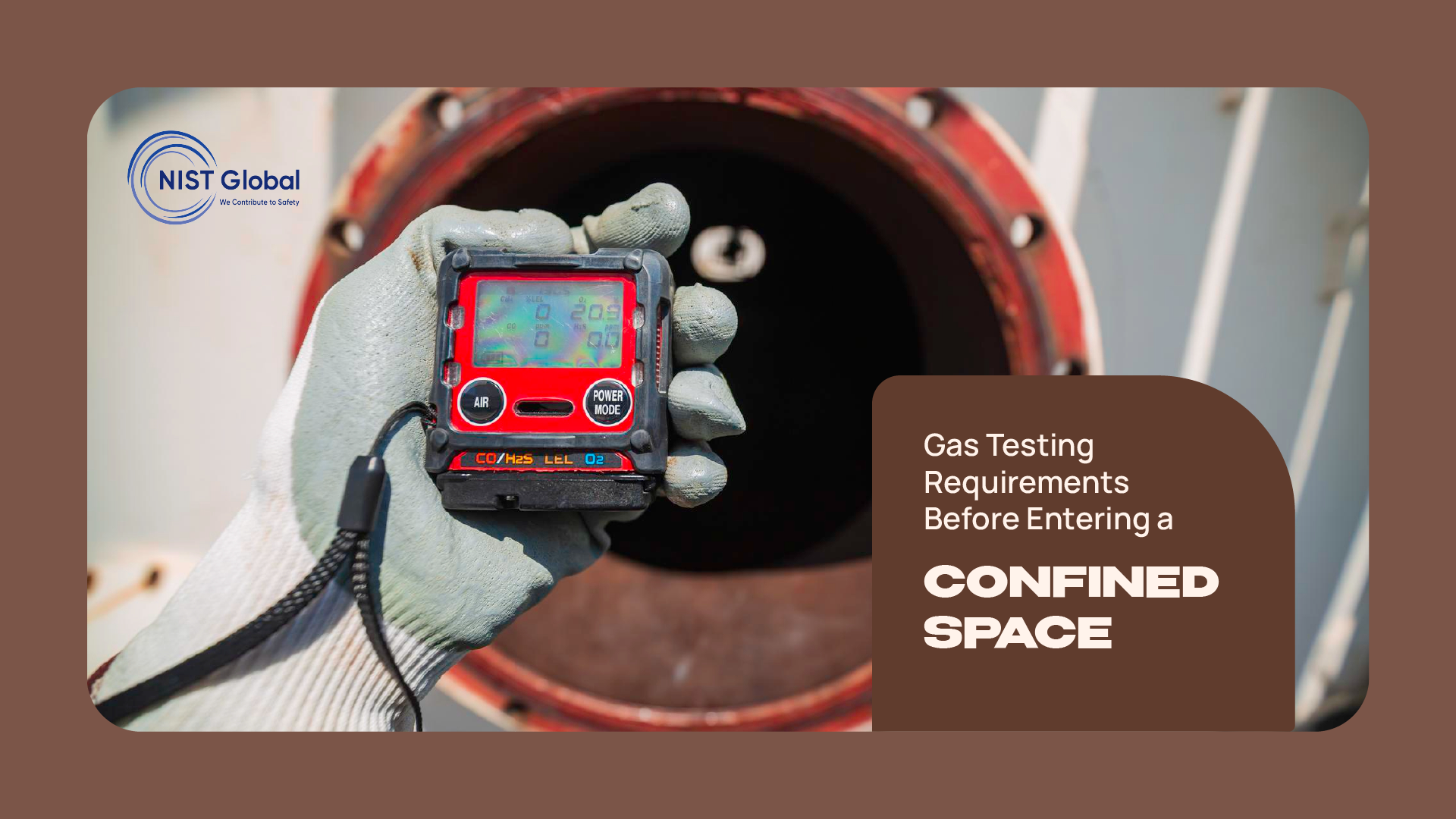
Confined space incidents continue to result in serious injuries and fatalities, often because atmospheric hazards cannot be seen, smelled, or detected without proper equipment. Gas testing serves as the first line of defence, helping ensure that workers enter confined spaces only when the atmosphere is safe.
Learning about the Hidden Hazards of Atmosphere in Confined Spaces
Gas testing should be preceded by the identification of the possible hidden hazards in the confined space.
Oxygen Deficiency and Oxygen Enrichment
Air normally contains about 20.9 percent oxygen. Oxygen deficiency develops fast inside the industrial tank because of chemical processes, including oxidation (inside a steel tank), microbial decay (in wastewater pits because of bacterial decay of organic compounds), or using non-oxygenating gases such as nitrogen or argon during equipment renovation.
The level of oxygen below 19.5% in the confined area is called oxygen deficiency and is considered hazardous as it may cause dizziness and suffocation. The oxygen content above 23.5% means an excess of oxygen, and everything burns when it comes into contact with a spark.
Flammable and Explosive Hazard
Flammable gases and vapors like methane and fuel gases are likely to be contained in a confined space and lead to fire and explosions. Once these gases reach their Lower Explosive Limit (LEL), the lowest level of a gas that explodes when ignited by air, the entire space will explode once it comes into contact with any equipment, static electricity, or any non-intrinsically safe equipment for communication purposes.
Common Toxic Gases in a Confined Space
Accidents that result from exposure to harmful substances account for a huge percentage of all workplace deaths. Two of the most lethal gases are as follows:
- Hydrogen sulfide (H2S): Known as the sewer gas because of its odor, Hydrogen sulfide is an extremely toxic gas that smells like rotten eggs at low levels but paralyzes the sense of smell at high levels, therefore leaving workers unaware of the danger.
- Carbon monoxide (CO): This is a colorless and odorless toxic gas resulting from incomplete burning of carbon compounds.
Constant Monitoring Is Key for Atmospheric Dangers
Atmospheric dangers pose one of the biggest risks for deaths in confined spaces. Such dangers include a lack of oxygen, the presence of toxic gas, and the presence of an explosive atmosphere.
Because such hazards are not visible, employers need to ensure that there is provision for gas testing and continuous monitoring of the atmosphere, as well as procedures in place in case of emergencies.
Order of Gas Testing
Gas testing should be done in a particular sequence for proper detection of hazards. This is so because the tests need to be done at various levels of the confined space since gases may layer according to their densities.
Testing Priority
| Testing Priority | Target Parameter | Safety Rationale |
|---|---|---|
| Priority 1 | Oxygen Content | Oxygen concentration affects the accuracy of many flammable and toxic gas sensors. Verifying oxygen levels first helps ensure reliable readings. |
| Priority 2 | Flammable Gases (LEL) | Combustible gases present an immediate fire and explosion hazard and should be evaluated before assessing toxic gas concentrations. |
| Priority 3 | Toxic Gases (H₂S, CO and others) | Once oxygen and flammability levels are confirmed, toxic gases specific to the work environment can be measured. |
Notice: The suggested testing order may vary according to the manufacturer of the gas detector and the risks associated with the working environment. Users must always consult the operating manual issued by the equipment manufacturer.
Common Mistakes to Avoid During Gas Testing
Even when gas testing procedures are in place, simple oversights can compromise worker safety. Being aware of common mistakes helps ensure that atmospheric testing remains effective and reliable.
- Testing only at the entrance: Atmospheric conditions can vary throughout a confined space due to gas stratification. Gas testing should be conducted at different levels—top, middle, and bottom—before entry and as required during the work.
- Entering before readings stabilize: Gas detectors require sufficient time to sample the atmosphere accurately. Workers should wait until the readings have stabilized before interpreting the results or authorizing entry.
- Using an uncalibrated gas detector: A gas detector that has not been calibrated according to the manufacturer’s recommendations may provide inaccurate readings, creating a false sense of safety. Regular calibration is essential to ensure reliable performance.
- Skipping the bump test: A bump test confirms that the sensors and alarms are functioning correctly before use. Omitting this quick functional check may result in undetected equipment failure during critical operations.
- Ignoring changing atmospheric conditions: Conditions inside a confined space can change rapidly due to welding, chemical reactions, ventilation failure, or the release of trapped gases. Continuous monitoring is necessary to detect these changes promptly.
- Relying only on pre-entry testing: A safe atmosphere before entry does not guarantee that it will remain safe throughout the task. Continuous gas monitoring should be carried out whenever there is a possibility of atmospheric conditions changing during work.
Avoiding these common mistakes, together with proper training, well-maintained gas detection equipment, and strict adherence to permit-to-work procedures, significantly reduces the risk of atmospheric incidents during confined space entry.
Good Gas Testing Practices
The practices listed below will ensure efficient gas testing and increase worker safety.
Calibrate Gas Detectors Before Use:
To have effective performance from an electronic gas detector and get the needed safety information, regular calibration is required. Before starting every shift, testing workers need to conduct a qualitative “bump test”. This requires exposure of the instrument to different levels of test gases to make sure that the sensors function properly and the alarm rings.
Include Gas Testing in the Permit to Work Procedure:
It is a crucial step in the official permit-to-work procedure. As an AGT, it is your responsibility to ensure that oxygen, LEL, and toxic ppm test results are documented in writing on the entry permit. The entry supervisor signs the document, and it is prominently displayed at the entrance point. The entry permit is incomplete without this section.
Continuous and Real-time Monitoring:
Air in the enclosed spaces does not remain constant. Due to the disturbance by workers, chemicals, welding activities, and malfunctions in the ventilation system, toxic gases are emitted instantly. Even if testing was done before entering, there are numerous other factors that change the air quality. Continuous and real-time monitoring is essential for every person entering a confined space.
Building Workforce Competence for Confined Space Entry Gas Testing with NIST Global
Effective gas testing depends not only on the availability of gas detection equipment but also on the competency of the personnel using it. Comprehensive training helps workers interpret readings correctly, follow permit-to-work requirements, and respond appropriately to changing atmospheric conditions.
Successful gas testing involves a lot more than simply having access to the equipment. People entering confined spaces need to know how to test the atmosphere and what to do with the test results.
- Hazard identification and risk awareness.
- Proficiency in operating gas detection equipment.
- Permit to Work system usage.
- Communication and emergency management techniques.
- Safety procedures for conducting confined space operations.
- Continuous improvement and safety culture building.
Periodic competency assessment and retraining make sure that the workforce stays capable of safely dealing with hazards within confined spaces.
Conclusion
Atmospheric testing should never be treated as a standard administrative procedure. Correct gas testing, monitoring, and a proper permit-to-work system are necessary to protect people who perform tasks in confined spaces. Those organizations that make investments in developing employee competence, emergency preparedness, and safety training will be much more likely to avoid accidents and develop a good safety culture.
To know more, visit: https://www.nistglobal.com/confined-space-entry-training.php.
FAQs
1. Why is AGT training necessary?
Training in Authorized Gas Tester enables staff to know how to conduct atmospheric testing, analyze gas results, and carry out confined space activities in a safe manner.
2. Can gas testing and confined space training be customized for certain industries?
Certainly. Training can be made industry-specific in respect of the potential risks, processes, and equipment used in manufacturing, oil and gas, utilities, and construction sectors, among others.
3. Why is permit-to-work training beneficial for workplace safety?
Training in permit to work gives employees knowledge of their responsibilities, necessary communication, and controls to follow prior to conducting high-risk activities.
4. Which other safety programs would supplement gas testing training?
Gas testing training can be supplemented with such safety programs as confined space entry, hazard identification and risk assessment (HIRA), lock out tag out (LOTO), emergency response, behavior-based safety (BBS), first aid, among others.
5. How do you foster a safety culture in an organization?
Safety culture can be developed through regular training, competency assessment, active participation of workers in safety initiatives, and commitment of leaders.
Popular Safety Training Programmes
Behaviour Based Safety Training
Develop safe behaviours, strengthen safety culture, and reduce workplace incidents through proactive observation and intervention.
Fire Safety Training
Equip employees with the knowledge and practical skills to prevent fires, respond effectively, and protect people and assets.
Defensive Driving Training
Improve driver awareness, reduce road risks, and promote safer driving practices for employees operating vehicles.
The Right Safety Training Could Prevent the Next Workplace Incident
Explore our comprehensive range of workplace safety training programmes designed to reduce risks, strengthen safety culture, and improve workforce competence across all levels of your organization.