
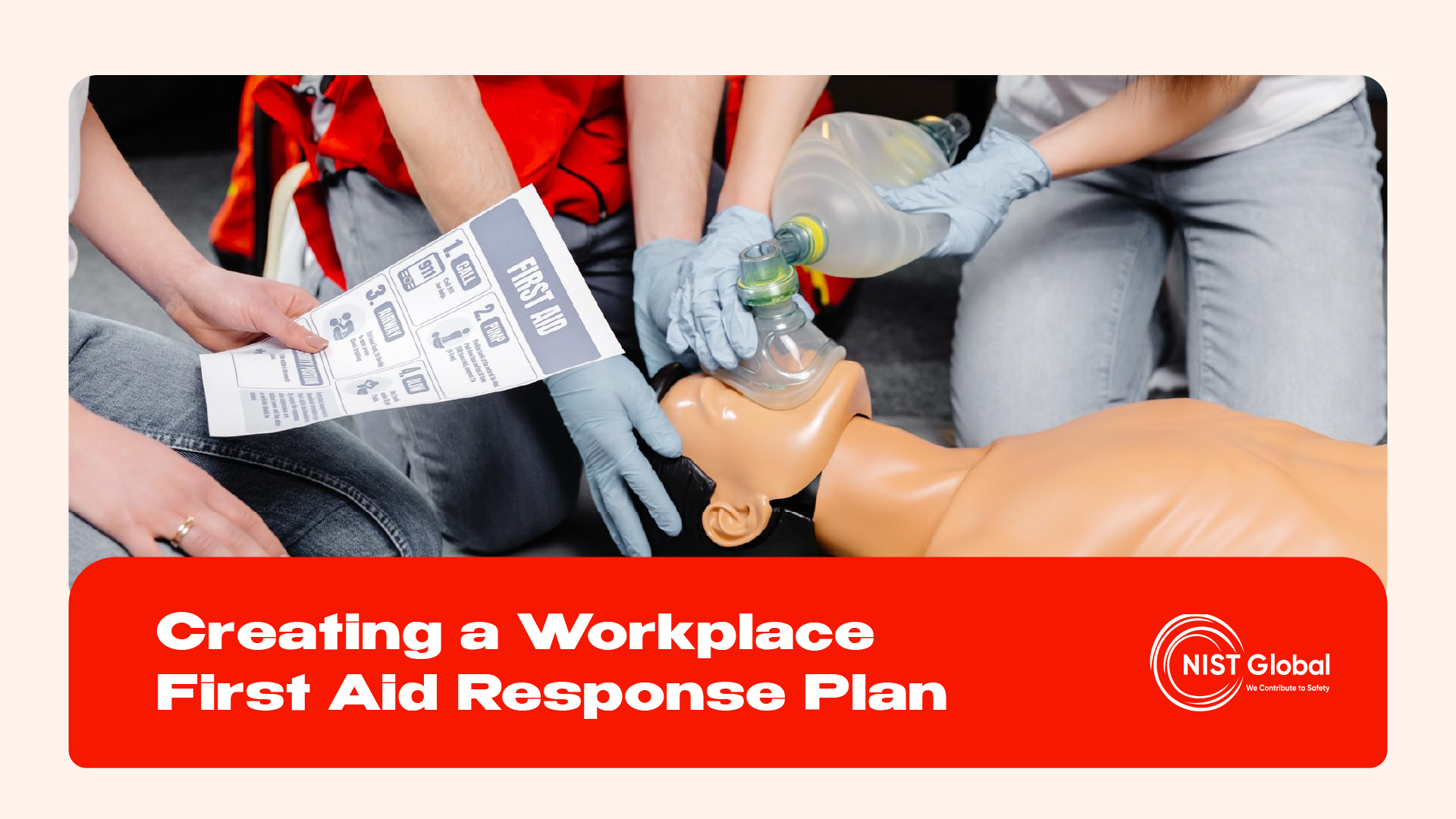
The International Labour Organization (ILO) estimates that nearly 395 million workers worldwide sustain non-fatal work injuries every year, while almost three million people die annually due to work-related accidents and diseases. These figures highlight the importance of workplace emergency preparedness and trained first responders.
A simple passive policy that resides in a cumbersome company manual does not protect employees during such crucial periods. Emergency preparedness at work requires a framework that turns mere witnesses into active first responders. EHS managers, facility managers, and HR executives need to devise a standardized workplace first aid response plan as a basic requirement of their workplace emergency management process.
Why Every Workplace Needs a First Aid Response Plan
According to the American Heart Association (AHA), immediate cardiopulmonary resuscitation (CPR) can double or even triple a person’s chances of survival after cardiac arrest. Early intervention during the first few minutes of an emergency plays a critical role in improving outcomes.
A well-designed response plan does not merely serve as part of an obligatory task; it is a key element that is essential for business resilience.
- Protection of Employees in Case of Medical Emergencies
Saving people from harm through immediate first aid is done in order to save lives, provide stabilization, and stop any further progression of the situation. Having a pre-planned response plan at hand makes it possible to react instantly and save lives in emergencies.
-
Mitigation of the Severity of Workplace Accidents
Immediate assistance is always positively correlated with faster recovery of a patient and lower impact on their health. For example, research validated by the American Heart Association shows that if quality CPR is provided within minutes following cardiac arrest, chances of surviving increase twofold or even threefold. Every minute that passes decreases the survival rate by 7% to 10%.
-
Business Continuity and Safety Culture Support
Focusing on safety systems creates trust within your entire organization. Your employees will notice that you, as an executive, make efforts to invest in emergency infrastructure for your business; thus, a proactive culture of safety is created.
Common Workplace Emergencies That Require Immediate First Aid
Operating within varying environments brings about different physiological dangers. It is impossible to handle such dangers using a generalized approach.
Occupational Incidents within Manufacturing and Industrial Settings
Operating fast-moving conveyor belts, lifting equipment, and moving machinery brings about different risks, which necessitate specific training. Within such an environment, any occupational first aid training should emphasize quick response to incidents involving crushing, severe cuts, arterial hemorrhage control, and fractures.
Incidents Occurring in Construction Sites
Working from elevated platforms, working in areas with scaffold systems, or working amidst large overhead construction parts means that there are increased chances of fall from height incidents and impact injuries. Any first aid plan for construction areas should include management of spinal and head injuries and suspension trauma.
Chemical Burns
Organizations that store corrosive liquids or any other hazardous substances will need specialized action plans in case of an accident involving such chemicals. The response plan should highlight neutralization of the substance, proper use of the advanced eye wash station, and treatment for any thermal or chemical burns.
Medical Situations at Offices and Corporate Structures
Even though offices and IT centers are not likely to be involved in any physical injuries, these areas are susceptible to non-accidental medical situations. These include sudden cardiac arrest, stroke, fainting, and diabetic emergency cases.
Key Elements of an Effective Workplace First Aid Response Plan
A good safety plan goes through certain operational phases to ensure coverage of the whole workplace.
-
Carrying Out a Workplace Risk Assessment
The process of planning starts with conducting a thorough safety assessment of your premises. This means identifying physical, chemical, and biological risks at all times of work, pinpointing risk areas, and considering how close you are to the nearest trauma center.
-
Determining First Aid Needs According to Risks
When all risks have been assessed, you need to develop your particular needs in terms of supplies and training according to the risks involved. It is not enough to rely on general checklists; you need to specify your exact needs in terms of equipment, medications, and other emergency items related to your particular risks.
-
Assigning Roles and Responsibilities During Emergencies
In case of an emergency situation, it can be very chaotic without having a well-defined structure. You need to determine who will be responsible for what – who will be managing the scene, who will contact the external services, who will operate special equipment, etc.
Building a Workplace First Responder Team
The final efficacy of any safety system is completely reliant on the competence of the people implementing it.
-
Selection and Training of First AidersFirst
Volunteers chosen for the internal first responder system must be composed, reliable, and accessible. This group needs extensive workplace first aid training, one that goes way beyond mere theoretical knowledge.
-
Achieving Even Distribution During Work Hours
One of the most typical problems within company policy-making is the failure to factor in multiple shifts, weekends, and seasonal variations in staffing. An effective plan ensures an even balance of trained first responders in all shifts and departments of the facility.
-
Maintaining Expertise via Refresher Training
First aid skills require periodic reinforcement to remain effective. Organizations should conduct regular refresher training and emergency drills to ensure employees retain the knowledge and confidence required to respond effectively during emergencies.
First Aid Equipment and Resource Planning
Even though a well-trained team is needed, having access to well-equipped and properly located devices is required for them to perform their job.
First Aid Station Equipment at Workplace
First aid stations should be clearly marked, regularly restocked, and tailored to suit the particular hazards of each area. For example, conventional kits in offices need only basic dressings; whereas, for the chemical areas, neutralizers and special burn dressings are necessary.
Accessibility of Automated External Defibrillators
Automated External Defibrillators (AEDs) are essential pieces of equipment during any heart-related event. These should be placed in easily accessible places to help the rescuers have access to them in time.
Signage of First Aid Stations and AED Cabinets
The signs should be clearly visible for the ease of finding them in case of an emergency. In addition, a routine inspection should be held to make sure the expiry dates are monitored, seals are intact, and batteries are fully charged.
Establishing Emergency Communication Procedures
Effective communication will make sure that your actions remain organized and that panic doesn’t sabotage your safety procedures.
In-house Emergency Reporting Procedure
Set up a straightforward system for reporting emergencies – such as an emergency number or certain radio channels – which can be used by your in-house emergency response team to report an emergency immediately.
Working Together with Emergency Response Personnel
Make sure that your procedure describes precisely how first responders work with in-house security and safety personnel. This procedure makes sure that building alarms, elevators, and gates are immediately managed to facilitate rescue operations.
Communicating With Outside Medical Assistance
Prepare a standard checklist for employees’ tasks of contacting outside medical assistance. Such a checklist guarantees that all necessary information – like exact gate location, nature of injury, and condition of the patient – is conveyed clearly and immediately.
Enhancing Workplace Safety through First Aid Training for Employees
Developing a workforce that can act as a safety network for your company involves capability development efforts.
CPR and AED Training
A comprehensive CPR and AED training course is an integral part of modern corporate first aid training programs. First responders need to be trained on the appropriate chest compressions depth, ventilation pace, and the safe use of the machine according to adult, child, and infant protocols.
Emergency Response Skills Development
Training should address the issue of varied medical emergencies, such as clearing the airways, securing secondary injuries, spinal immobilization, and environmental emergencies.
Boosting Worker Confidence in Times of Emergency
Direct practice using the dedicated training equipment alleviates the feelings of panic and confusion. Real-life situations where workers practice rescue procedures foster the psychological confidence needed for immediate reaction when an emergency happens.
How NIST Global Supports Workplace First Aid Preparedness
NIST Global provides HSE training, auditing, and corporate consultancy services that help organizations strengthen emergency preparedness and workplace safety capabilities.Supports
Training Programs for First Aid, CPR & AED
AHA Heartsaver Programs: NIST Global offers American Heart Association Heartsaver courses that provide participants with internationally recognized training in first aid, CPR, and AED use.
Contextual Training: Training can be delivered at the workplace, enabling employees to participate in practical and scenario-based emergency drills.
Language Support: Courses are offered in English and regional languages to facilitate effective learning across diverse workforces.
FAQs
Popular Safety Training Programmes
Behaviour Based Safety Training
Develop safe behaviours, strengthen safety culture, and reduce workplace incidents through proactive observation and intervention.
Fire Safety Training
Equip employees with the knowledge and practical skills to prevent fires, respond effectively, and protect people and assets.
Defensive Driving Training
Improve driver awareness, reduce road risks, and promote safer driving practices for employees operating vehicles.
The Right Safety Training Could Prevent the Next Workplace Incident
Explore our comprehensive range of workplace safety training programmes designed to reduce risks, strengthen safety culture, and improve workforce competence across all levels of your organization.