
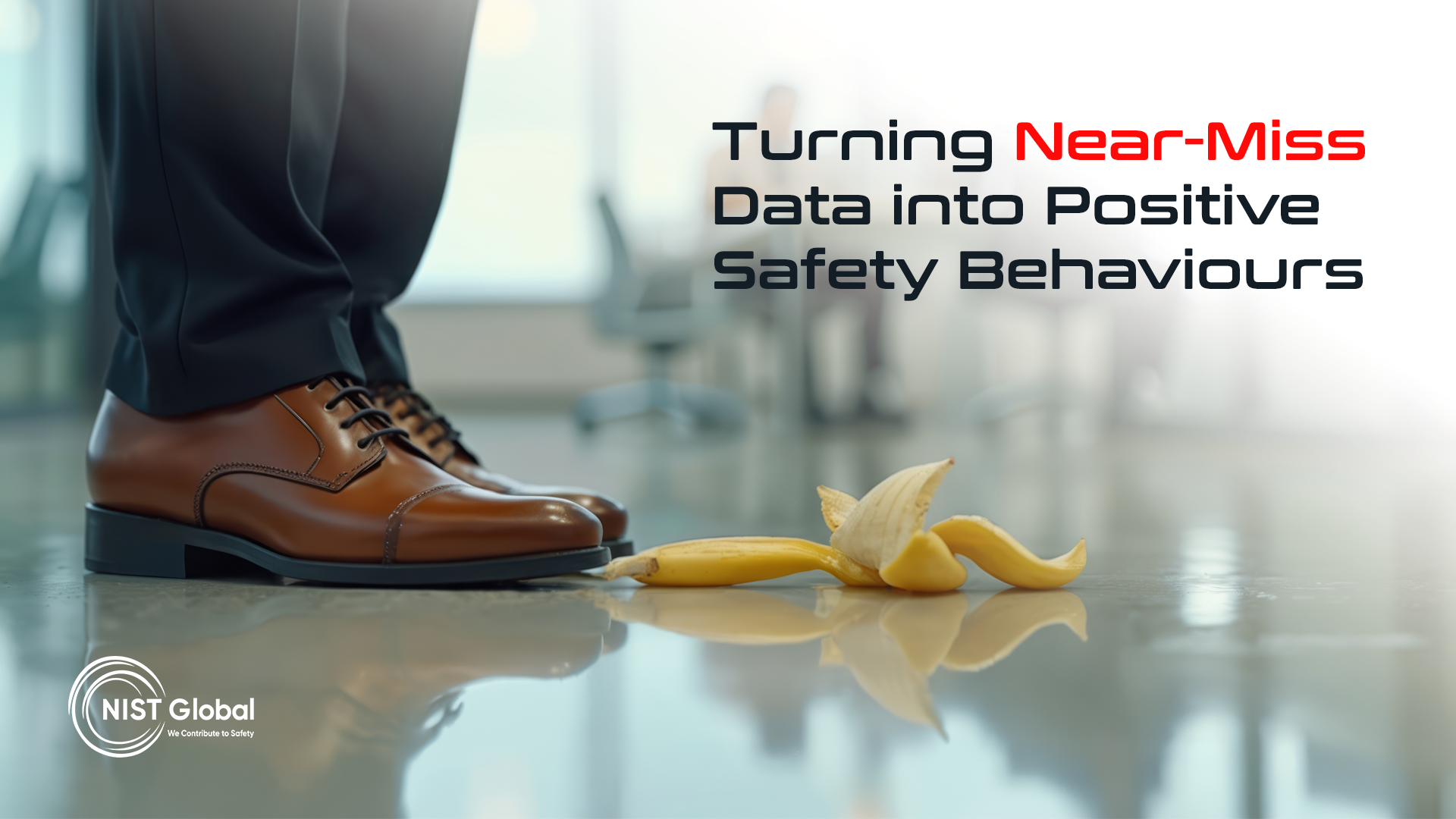
In a National Institute for Occupational Safety and Health (NIOSH) workplace study, 56% of reported near misses were classified as high or critical risk events. This highlights why organizations should treat near misses as leading indicators of workplace risk rather than isolated incidents.
Most workplace accidents are preceded by warning signs in the form of hazards, unsafe acts, and near misses. Organizations that recognize and act on these signals can prevent incidents before they occur.
In a heavily trafficked warehouse, near misses include an incident where a fork lift barely misses hitting a pedestrian because of blind corners. In construction, it can involve a heavy tool being dropped from a scaffolding structure but falls on an empty walkway. In manufacturing, it may be a pressure surge that goes back to normal before a valve malfunctions.
Why Near-Miss Reporting Matters?
Based on data from the National Safety Council (NSC), safety in the workplace results in a staggering yearly economic burden of $167 billion in terms of lost productivity, medical expenses, and administration costs. A significant amount of these expenses is avoidable with proactive near-miss reporting.
Many companies tend to shrug off such occurrences because they feel they have been saved by their luck, but they do not see these near-misses as key pieces of information. By ignoring the information from these near misses, the company is placing itself in great danger of accidents.
For creating an effective safety culture that is proactive and focused on minimizing the risks faced by the company, the corporate management along with EHS directors will need to change their approach. By integrating close-call data collection into the BBS system, you can turn close calls into learning experiences and improve your employees’ decisions.
Understanding the Safety Triangle: Why Close-Call Data Is Key
The reason why it is crucial for developing safety practices to keep track of close calls lies in the correlation between the numbers of close calls and major accidents.
How Does the Concept of the Safety Triangle Work?
The Safety Triangle concept suggests that major incidents are often preceded by a larger number of minor incidents, near misses, and unsafe behaviours. This highlights the importance of identifying and addressing risks at an early stage before they escalate into serious injuries or operational losses.
BBS methodology takes the opposite direction, putting its efforts directly at the bottom of the triangle. Through the identification, monitoring, and correction of near misses and at-risk behaviours, organizations can address the conditions that contribute to serious incidents.
The Risk of the “Lucky Break” Mindset
When an uncertified operator chooses to resolve a machine problem without going through the proper energy isolation processes and walks away unharmed, your human nature tricks your mind into seeing it as a success. If management overlooks such a near-miss incident, it turns into a regular behavior among all the team members. By tracking near-misses, safety coordinators will be able to notice this dangerous shift in behavior and intervene with preventative training.
Four Steps for Turning Near-Miss Information into Good Practice
Changing information obtained from incident reports into good practices takes a well-thought-out approach which is grounded in trust and communication.
Step 1: Developing a Culture of Non-Punitive Reporting
The main barrier for collecting reliable near-miss information lies in people’s fear. When employees have to consider that if they disclose an incident, they will be subject to a risk of punishment & criticism in front of others, unfavorable performance review, or even job termination, they will certainly not disclose the information.
Companies must create a culture where employees feel comfortable reporting near misses without fear of blame, punishment, or negative consequences. Reporting of a near miss should not be something employees dread doing, but should be a way to collaborate in finding a solution.
Step 2: Simplify the Process
If the process of reporting involves the need for complicated administration or completing several pages of paperwork, no operator is going to bother.
Keep the submission procedure fast and accessible.
Utilize convenient means of digital recording, place boxes around the facility, or use easy-to-use mobile applications to report.
Provide your workers with the option of remaining anonymous by including visual options, like submitting a photo from a mobile device.
Step 3: Interpret Your Near-Misses as Behavioural Patterns
Do not interpret your near-misses individually. Rather, enter your data into one common database that allows you to detect patterns within employee behaviour.
Your investigation of the near misses might show that, each Friday afternoon, the number of times you see chemical splashes in a specific department goes up. This can help you identify the problem and eliminate it, preventing a possible accident in the future.
Step 4: Closing the Feedback Loop through Immediate Action
Nothing demoralizes staff more than their comments simply going up in smoke. If an employee submits a near miss report, the company should take steps to immediately mitigate the situation.
Tackle the physical hazard, revise your process steps accordingly, and communicate these changes to the workers in question. Emphasizing these changes at pre-shift safety meetings will reinforce in employees’ minds how much they influence the changes within the company.
How Near-Miss Data Strengthens HIRA
The best way to do Hazard Identification and Risk Assessment (HIRA) is to update it regularly with observations taken in the workplace. Near misses can be very useful for gaining an understanding of hazards, unsafe actions, and system vulnerabilities which were not discovered during the original risk assessment process.
Recognizes Unknown Hazards
It is not uncommon for near misses to highlight hazards that haven’t been detected in a normal inspection or risk assessment. These events can be used to pinpoint potential risks that are not always visible at first, allowing organizations to avoid injuries, property damage and operational disruption.
Validates Existing Risk Assessments
Near-miss trends help determine whether current risk ratings accurately reflect actual workplace conditions. Frequent near misses associated with a particular task or area may indicate that the existing risk level has been underestimated.
Improves Control Measures
If near misses are occurring despite the presence of controls, it is a warning sign that the controls are not effective. This is a chance for safety teams to evaluate and reinforce engineering controls, administrative controls, safe work practices or training.
Highlights Recurring Unsafe Acts and Conditions
Near-miss data can identify trends like poor housekeeping, PPE violations, unsafeguarded equipment, or poor work practices. By addressing these constant problems, incidents can be avoided from becoming injuries.
Supports Data-Driven Corrective Actions
Organizations can use real-world near-miss information to determine what to focus on for corrective actions rather than going by the seat of their pants. This way, efforts are directed towards the most critical parts of the business where it can be most beneficial for their operation and safety.
Enhances Employee Participation in Risk Management
When this practice is encouraged, near-misses help to improve employee participation in hazard identification. Collaborating creates a more robust safety culture and gives the frontline a valuable input to enhance the quality of HIRA.
Promotes Continuous Improvement
When a near-miss happens, a feedback loop between the workplace and the risk assessment is established. HIRA can be updated regularly as new hazards and trends emerge, thereby enabling the organization to have a proactive and continuously improving safety management system.
How NIST Global Supports BBS and HIRA Programs
Building an effective safety culture requires more than identifying hazards—it requires influencing safe behaviors and proactively managing workplace risks. NIST Global supports organizations through practical Behavior-Based Safety (BBS) training, Hazard Identification and Risk Assessment (HIRA) programs, and corporate safety initiatives designed to strengthen workplace safety performance.
Our team works with organizations to help employees recognize hazards, report near misses, improve risk awareness, and adopt safer work practices. Through industry-focused training, workshops, and consulting support, we help businesses enhance workforce engagement, reduce unsafe behaviors, and build a proactive approach to accident prevention.
Key areas of support include:
-
Behavior-Based Safety (BBS) Training
-
Hazard Identification and Risk Assessment (HIRA)
-
Corporate Safety Training Programs
-
Industrial Safety Audits and Consulting
-
NEBOSH and IOSH Training
-
Safety Awareness and Competency Development
By combining behavioral safety principles with effective risk assessment practices, NIST Global helps organizations create safer workplaces and strengthen their overall safety culture.
Conclusion: Stop Accident Logging, Start Accident Prevention!
An effective Workplace Safety Program is not about how fast you move when an accident happens. It is about how well you identify, analyze, and respond to all the warnings your workplace sends out every single day.
To allow your near-misses to go unanalyzed is to allow your workforce to remain vulnerable to incidents that could have been prevented. With the help of NIST Global to make your near-misses work for you as interactive, behavior-based training tools, you convert near-miss insights into safer work practices, stronger risk awareness, and a proactive safety culture. Keep your workforce safe, prevent expensive down time in production, and cultivate superior workplace safety culture at your company.
Transform Your Behavioral Safety Practices Today
Are you ready to elevate your near miss reporting system into a more protective, compliant safety culture? Start moving towards a safer work environment with us today!
Learn About Our BBS Training Solutions: Look through our specialized NIST Global Behavior-Based Safety Training Program to see how we can assist you in transforming your near misses into safe behavior.
Schedule Your Corporate Safety Program Consultation: Speak with one of our safety specialists today to gain a customized corporate safety program based on your near miss information.
Get In Touch With NIST Global’s Safety Specialists Today!
FAQs
you might also like
Popular Safety Training Programmes
Behaviour Based Safety Training
Develop safe behaviours, strengthen safety culture, and reduce workplace incidents through proactive observation and intervention.
Fire Safety Training
Equip employees with the knowledge and practical skills to prevent fires, respond effectively, and protect people and assets.
Defensive Driving Training
Improve driver awareness, reduce road risks, and promote safer driving practices for employees operating vehicles.
The Right Safety Training Could Prevent the Next Workplace Incident
Explore our comprehensive range of workplace safety training programmes designed to reduce risks, strengthen safety culture, and improve workforce competence across all levels of your organization.