
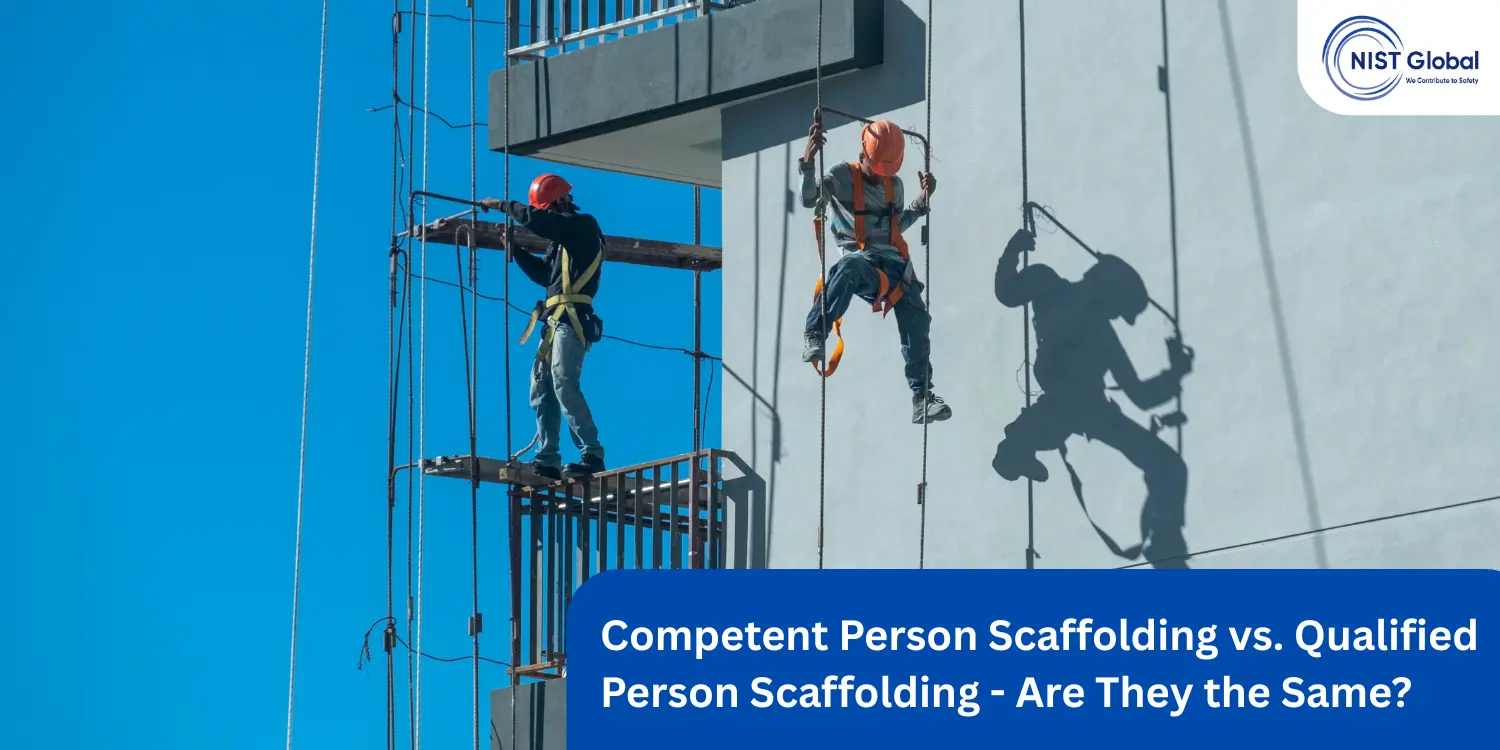
Competent Person Scaffolding vs. Qualified Person Scaffolding – Are They the Same?
The complexities at the construction sites are increasing and blurring several safety roles. However, there’s a very fine line between the Qualified Person and a Competent Person Scaffolding. Understanding this distinction is not just a matter of semantics. OSHA has defined their roles and responsibilities to understand how a safe project stands distinct from a catastrophic failure.
This comprehensive guide breaks down the roles, responsibilities and training requirements for both roles. This distinction helps employers and workers to maintain the required compliance and, most importantly, to protect their human assets.
Roles & Responsibilities: Competent vs. Qualified
OSHA (Occupational Safety and Health Administration) standard, specifically 29 CFR 1926.450(b) specifies the roles & responsibilities of a Competent Person and a Qualified Person. Both roles are distinct yet complementary.
What is a Competent Person in Scaffolding?
A Competent Person Scaffolding is a person designated by the employer to identify and predict surrounding hazards and working conditions. In essence, this person should possess complete authority and proactivity to take prompt corrective measures and eliminate those hazards.
Key Characteristics of a Competent Person Scaffolding:
- Hazard Recognition: They should be able to spot loose planks, faulty rigging, and shifting soil.
- Authority: They should be empowered to stop working immediately in case they detect a particular risk.
- Proactive Oversight: They should be able to regularly monitor the daily safety levels of the scaffold.
What is a Qualified Person in Scaffolding?
A Qualified Person in Scaffolding is a person who possesses a recognised degree, certificate and professional standing. They possess extensive knowledge, training and experience with a demonstrated ability to solve problems. They are the subject matter experts of the work or the project.
Key Characteristics of a Qualified Person in Scaffolding:
- Technical Expertise: They understand the structural integrity and engineering principles deeply.
- Design Focus: They are responsible for designing the complex scaffold systems.
- Credentialed: They often possess academic credentials, such as Civil Engineering or specialised certification.
Qualified Person vs. Competent Person Scaffolding
| Feature | Qualified Person | Competent Person |
|---|---|---|
| Primary Focus | System design, structural analysis, and problem-solving. | Daily safety, inspection, and hazard correction. |
| Authority | Focuses on technical resolution; may not have work-stop authority. | Must have the power to stop work and fix hazards. |
| Education | Often requires a degree, certificate, or professional standing. | Based on training and practical experience. |
| OSHA Task | Designs scaffolds that are over 125 feet tall or non-standard. | Inspects scaffolds before every shift. |
Competent Person Responsibilities
The “Competent Person Scaffolding” responsibilities are legal mandates and include:
Pre-Shift Inspections
Before the worker steps on a platform, it is the responsibility of the competent person to inspect the scaffold. This inspection pertains to visible defects such as:
- Structural damage or bent frames.
- Proper planking and guardrail installation.
- Stability of the foundation (mud sills and base plates).
Assembly and Alteration Supervision
The Competent Person should directly supervise or direct the erection, movement, dismantling or alteration of the scaffolds. They ensure that the crew follows the design set by the ‘Qualified Person’ and uses appropriate components.
Feasibility and Safety
The Competent Person decides whether a scaffold needs to be built near the power lines or during high winds. They decide when it is appropriate to proceed with this building and what extra care should be taken.
Scaffold Workers Training
OSHA mandates that employees erecting or dismantling scaffolding should undergo training under a competent person to recognise the hazards related to the tasks.
Qualified Person Responsibilities
The Competent Person manages day-to-day activities. The Qualified Person tackles the ‘heavy lifting’ of engineering and designing segments.
Scaffold Designing
A scaffolding exceeding 125 feet high (supported scaffolds) should be designed by a registered professional engineer. This engineer acts as a qualified person to calculate the load-bearing capacities. They ensure that the structure handles the intended weight, including personnel, tools, and materials.
Training Scaffold Users
While the Competent Person’s job is to train the erectors, the qualified person trains the scaffold users. This training majorly focuses on the nature of the electrical hazards, fall hazards, and the appropriate scaffold use.
Resolving Structural Issues
In case of component failure, the Qualified Person owes the technical expertise to ensure that the structure remains intact. They are also crucial points of contact if the scaffold is required to be attached to the building in a non-standard manner.
Scaffolding Inspection Training: Importance
Can one person handle both the roles? Yes, but the person should meet both criteria sets. Several companies consider the training of their supervisors and lead hands with a rigorous scaffolding inspection training.
NIST Global programs are articulated to bridge this gap between knowing the procedure of scaffold building and being competent to inspect it.
Why It Matters:
- Compliance: The training ensures scaffolding personnel compliance with the criteria set by OSHA. The heavy OSHA fines could be easily avoided by having designated and trained personnel in-house.
- Risk Mitigation: Properly trained personnel anticipate mistakes before they turn into accidental blunders.
- Efficiency: A Competent Person understands that the standards can prevent unnecessary work stops.
Synergistic Way of Working
Imagine your organisation working on a large-scale construction project where you have a 150-foot-tall supported scaffold.
The Qualified Person or the Engineer first creates a blueprint of this scaffold, ensuring that it can support about four times its maximum intended load.
The Competent Person supervises his crew as they continue building the scaffold according to the Qualified Person’s blueprints.
The Competent Person performs scaffold inspection every morning before the worker starts using it. This is a mandatory check to ensure that there are no loose bolts or slippery planks.
In case a storm damages the scaffold structure, the Competent Person stops work and may consult the Qualified Person to determine the best way to repair the structural integrity.
Competent Person Scaffolding in a Nutshell
‘Competent Person Scaffolding’ is not just a title but a designation granted by an employer. To stay truly competent, you should work on your:
- Knowledge: Gain and retain knowledge through experience and personalised training.
- Recognition: You should be detailed-eye to perceive what others miss.
- Action: You should proactively possess the authority to ‘Stop’ things until the situation is again safe.
Conclusion
The world of scaffolding revolves around safety and structural integrity. By having clearly demarcated roles of Qualified Person and Competent Person Scaffolding, you create a fall-safe environment for your workforce. Here, the technical design meets and accomplishes daily vigilance.
If you are looking to elevate the safety standards of your team, consider accomplishing a professional certification. Equip your workforce with the right knowledge and train them on how to retain it through their experience. It is one of the best investments you can make towards your organisational goals.
Connect with the NIST Global team for more information regarding expert-led training on scaffold safety and inspection. Ensure that your team accomplishes OSHA standards with NIST Global’s years of simulated training expertise.
Key Takeaways:
- A Qualified Person designs and engineers the scaffold structure, ensuring it meets technical and safety requirements for complex operations.
- A Competent Person inspects, supervises, and monitors scaffolding activities daily with the authority to stop unsafe work immediately.
- You need a qualified person to plan it and a competent person to ensure it stays safe every single day
FAQs:
1. What is the difference between a Competent Person and a Qualified Person in scaffolding?
A Competent Person handles daily scaffold inspection and hazard control, while a Qualified Person is responsible for scaffold design and structural engineering decisions.
2. Can one person serve as both a Competent Person and a Qualified Person?
Yes, a person can perform both roles if they meet the required OSHA training, experience, technical qualifications, and competency criteria.
3. Who has the authority to stop unsafe scaffold work?
The Competent Person has the authority to stop work immediately and take corrective action if unsafe scaffold conditions are identified.
4. Who is responsible for designing complex scaffolds?
A Qualified Person or registered professional engineer is responsible for designing complex or non-standard scaffolds, especially structures over 125 feet.
5. Why is scaffolding inspection training important?
Scaffolding inspection training helps workers identify hazards, improve compliance, prevent accidents, and maintain overall site safety standards.
Popular Safety Training Programmes
Behaviour Based Safety Training
Develop safe behaviours, strengthen safety culture, and reduce workplace incidents through proactive observation and intervention.
Fire Safety Training
Equip employees with the knowledge and practical skills to prevent fires, respond effectively, and protect people and assets.
Defensive Driving Training
Improve driver awareness, reduce road risks, and promote safer driving practices for employees operating vehicles.
The Right Safety Training Could Prevent the Next Workplace Incident
Explore our comprehensive range of workplace safety training programmes designed to reduce risks, strengthen safety culture, and improve workforce competence across all levels of your organization.