
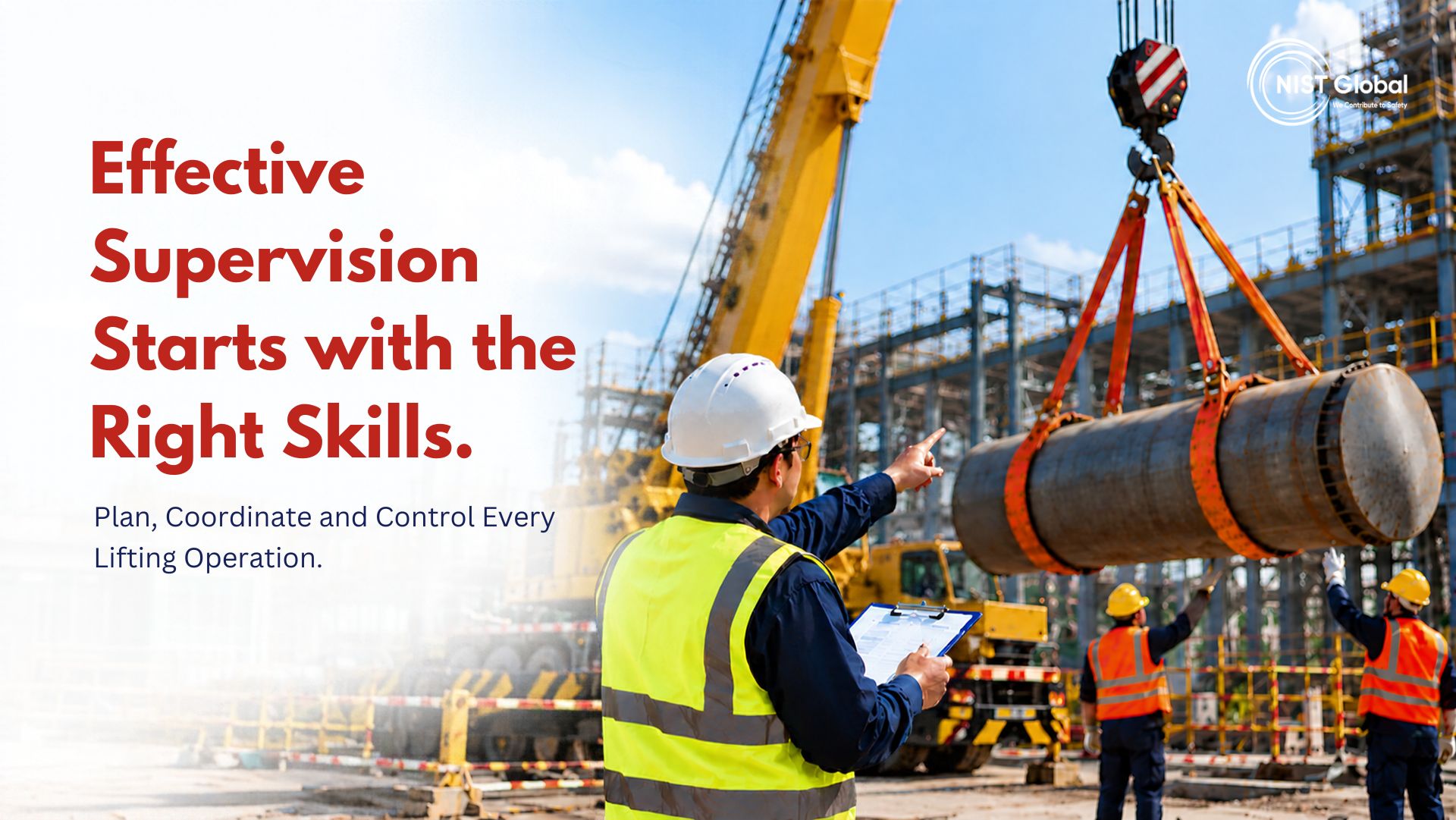
Lifting Supervisor: Roles, Responsibilities and How to Become One
Lift supervisor, who may be alternatively known as lift director or rigging supervisor, is the safety officer accountable for supervision of the lifting operations at industrial/construction sites. It is the duty of the lifting supervisor to organize all the lifting tasks while crane operators control the crane from the cabin and the riggers prepare slings to the cargo.
This blog offers general insight into the daily activities of the lift supervisor, explains the difference between normal and complex lifting and also identifies the qualifications required by field experts to get the certification as lift supervisors.
What Does a Lifting Supervisor Do?
The lifting supervisor should be responsible for making sure that every lift takes place according to the lifting plan, load charts, and the site safety criteria. As opposed to rigging itself, a lifting supervisor focuses primarily on four major issues:
1. Analysis of the Lifting Plan & Load Verification
- Calculation of Gross Load Weight: The gross weight calculation involves the addition of weight of the load, hook blocks, spreader beams, and rigging gear.
- Verification of Crane Load Charts: Make sure that the crane is capable of working within the required radius and boom length with the particular counterweight combination.
- Center of Gravity (CG) Verification: Make sure that the lifting point is consistent with the CG of the load.
2. Ground and Environmental Inspections
- Ground Bearing Pressure Test: Ensure that outrigger pads or wooden crane pads distribute machine weight correctly to the solid ground without excavation.
- Site Weather Conditions: Use an anemometer to determine if winds are blowing at speeds greater than those recommended by the crane manufacturer.
- Buffer Distance for Overhead Obstructions: юtermine that sufficient clearance distances exist from overhead cables, structural steel, and adjacent tower cranes.
3. Rigging Equipments Inspection
- WLL Tagging: Ensure that all wire ropes, synthetic slings, alloy chain, and shackles have correct Working Load Limit tags attached.
- Sling Angle: Ensure that all the legs of the slings do not have angles lower than 30° and always 45°.
- Edge Protection: Ensure that softener or corner guard is used where slings make contact with sharp edges of steel.
4. Site Coordination and Leadership of the Crew
- Lead Pre-lift Toolbox Briefing: Have pre-lift toolbox briefings with the crane operator, signal person, riggers, and tagline workers prior to commencing work.
- Exclusion Zone: Ensure the exclusion zones are established throughout the swing radius and the load path.
- Single Signal Method: Ensure there is only one certified signal person who will coordinate the crane operation, but bear in mind that any of the crew members has the right to stop the process in emergencies.
Ordinary Lifting Versus Critical Lifting: The Role of the Supervisor
While ordinary lifting operations follow routine procedures, critical lifts involve higher risks and require additional planning, risk assessment and supervision to ensure the load, equipment and lifting team remain safe throughout the operation.
| Operational Parameter | Standard Routine Lift | Critical / Complex Heavy Lift |
|---|---|---|
| Payload Threshold | Standard payloads within routine crane capacity. | Exceeds 20 tonnes or >80% of rated crane capacity. |
| Lift Plan Requirement | Standard site lifting procedure and safety checklist. |
Formal 3D engineered lift plan signed by a structural engineer. |
| Crane Configuration | Single mobile, gantry, or tower crane. |
Tandem crane picks, multi-crane systems, or specialized gantries. |
| Communication Method | Standard visual hand signals (line of sight). |
Dedicated, closed-loop two-way radio channels. |
| Supervision Level | General oversight covering multiple routine yard picks. | 100% dedicated, exclusive oversight of that specific pick. |
4 Common Lifting Hazards and Supervisor Interventions
Lifting operations can expose workers to hazards such as dropped loads, equipment failure, improper rigging and unsafe load movement. A lifting supervisor plays a key role in identifying these risks early and implementing the right controls to prevent incidents.
| Site Hazard | Root Cause | Supervisor Prevention Action |
|---|---|---|
| Using Untagged Gear | Slings or shackles missing WLL tags lead to guesswork and overloaded components. | Quarantine untagged gear immediately and conduct strict pre-shift equipment reviews. |
| Outrigger Punch-Through | Outriggers placed on soft or backfilled soil without sufficient load-spreading mats. | Verify soil stability, review ground-bearing calculations, and enforce adequate timber matting. |
| Conflicting Signals | Multiple workers shouting or gesturing at the operator simultaneously. | Enforce a strict single-signalperson policy before the crane hooks up to the load. |
| Dynamic Wind Shifts | High-altitude gusts catching large-surface loads, overloading boom sections. | Continuously monitor anemometer readings and enforce immediate stop-work authority when wind limits are hit. |
Becoming a Certified Lifting Supervisor
The first step in becoming a lifting supervisor is having basic site experience, knowledge of technical lift plans, and proper training.
Step 1: Accumulate Basic Site Experience
Supervisors usually begin their career as riggers, crane operators, banksmen, or site safety officers. This 2-3 year experience will teach you important site instincts.
Step 2: Learn Basic Math for Lift Plans
A good supervisor should be an expert in basic rigging mathematics before he starts working on his plans:
- Computing the load volume and weight based on material density.
- Determining the center of gravity for irregular, unbalanced machinery.
- Computing the tension multipliers to make sure that slings have safe angles.
Step 3: Undertaking Professional Lifting Supervisor Training
Training helps to fill the gap between practical fieldwork and regulatory management. Some key areas covered are:
- Regulatory Codes: Understanding OSHA 29 CFR 1926 Subpart CC, ASME B30.5, and Indian Standards (IS 13367 Part 1).
- Load Charts Interpretation: Interpreting the various types of load charts including those of main boom, jib, counterweights, and radius restrictions.
- Rigging Hardware Retiring: Recognizing when wire ropes are to be rejected due to damage, stretching of chain links, bending of shackle pins, and wear on synthetic ropes.
Step 4: Obtain Certifications with Regular Refresher Courses
The candidates take written tests and practical assessments in which scenarios with lifts and load charts are evaluated. The certificates obtained are normally renewed after every 2 to 3 years by taking refresher courses.
The site lifting operations are carried out within the context of the following safety standards:
- OSHA 29 CFR 1926.1419-1422 (USA): Provides safety standards for cranes, signalpersons, communication control, and operation monitoring.
- ASME B30.5: Provides clear roles for Lift Director, Crane Owner, and Crane Operator in industrial and commercial lifting operations.
- Indian Standard IS 13367 (Part 1): Provides safety operation standards for cranes, site supervision, pre-lift inspection, and travel planning.
- Workplace Safety and Health (Operation of Cranes): Provides internationally accepted standards requiring designated supervisors during crane operations on hazardous sites.
Enhance Site Supervision Skills through NIST Global
Safety while lifting on work sites demands proper technical skills and good leadership. NIST Global provides accredited safety training programs designed specifically for the industries, constructions, and manufacturing processes in India:
- Lifting Supervisor Safety Training: This is a specialized training that covers aspects of lift plan reviews, crane load charts, rigging hardware inspection, ground pressures, and site exclusion planning.
- Lifting Plan Approver Program: This advanced level engineering training is for site managers, project managers, and EHS managers who must audit and approve engineered lifts.
- Corporate & On-site Training Programs: The above training will be offered on-site using practical equipment and specific operational situations on-site.
NIST Global can offer you more information about lifting supervisor training and lift plan verification training.
Key Takeaways
- Lifting supervisor (lift director) has control over the crane operation, manages the crews, validates the lift plan, and manages the safety of the site.
- Lifting supervisor can stop the crane lift operation immediately whenever there are any dangers of ground, wind, rigging, or exclusion zones safety.
- Main tasks consist of 4 key areas including load and chart validation, ground and environment validation, rigging equipment validation, and managing the crews.
- Routine process is followed while lifting the crane; however, for critical lifts above 20 tonnes or 80% of crane capacity, lift engineering plans are needed and single pick supervisor.
- Certification requires 2-3 years of site rigging or crane experience along with the knowledge of the lift calculations and certified training program.
FAQs
Q1. How does a rigger differ from a lifting supervisor?
While a rigger deals with the physical equipment by inspecting slings, connecting shackles, making hitches and attaching loads, the lifting supervisor monitors the entire operation by reviewing lift plans, checking ground conditions, consulting load charts and directing all people in the pick zone.
Q2. Is it possible for a lifting supervisor to interrupt a crane lift in progress?
Yes, he or she possesses the stop-work authority. A lifting supervisor has to stop work at once if wind gusts become dangerous, if ground mats start sinking, if rigging equipment gets stressed or if someone who is not authorized enters the barricaded zone.
Q3. What are the prerequisites for joining the lifting supervisor training program?
Certification requirements usually include either a high school or technical diploma with 2 to 3 years of practical work as a rigger, crane operator, site engineer, or safety supervisor.
Q4. How often should a lifting supervisor be re-certified?
Certifications of lifting supervisors are usually valid for 2 to 3 years. To maintain their qualifications, supervisors have to undertake refresher training.
Q5. What is a critical lift plan?
A critical lift plan is an engineering plan that is required when a lift poses increased risks such as heavy load (over 20 tonnes), crane pick at 80% or more crane capacity utilization, tandem lifts using two cranes, and lifts above energized industrial facilities. It has to be developed by a lifting specialist and approved by an authorized supervisor/approver.
Popular Safety Training Programmes
Behaviour Based Safety Training
Develop safe behaviours, strengthen safety culture, and reduce workplace incidents through proactive observation and intervention.
Fire Safety Training
Equip employees with the knowledge and practical skills to prevent fires, respond effectively, and protect people and assets.
Defensive Driving Training
Improve driver awareness, reduce road risks, and promote safer driving practices for employees operating vehicles.
The Right Safety Training Could Prevent the Next Workplace Incident
Explore our comprehensive range of workplace safety training programmes designed to reduce risks, strengthen safety culture, and improve workforce competence across all levels of your organization.