
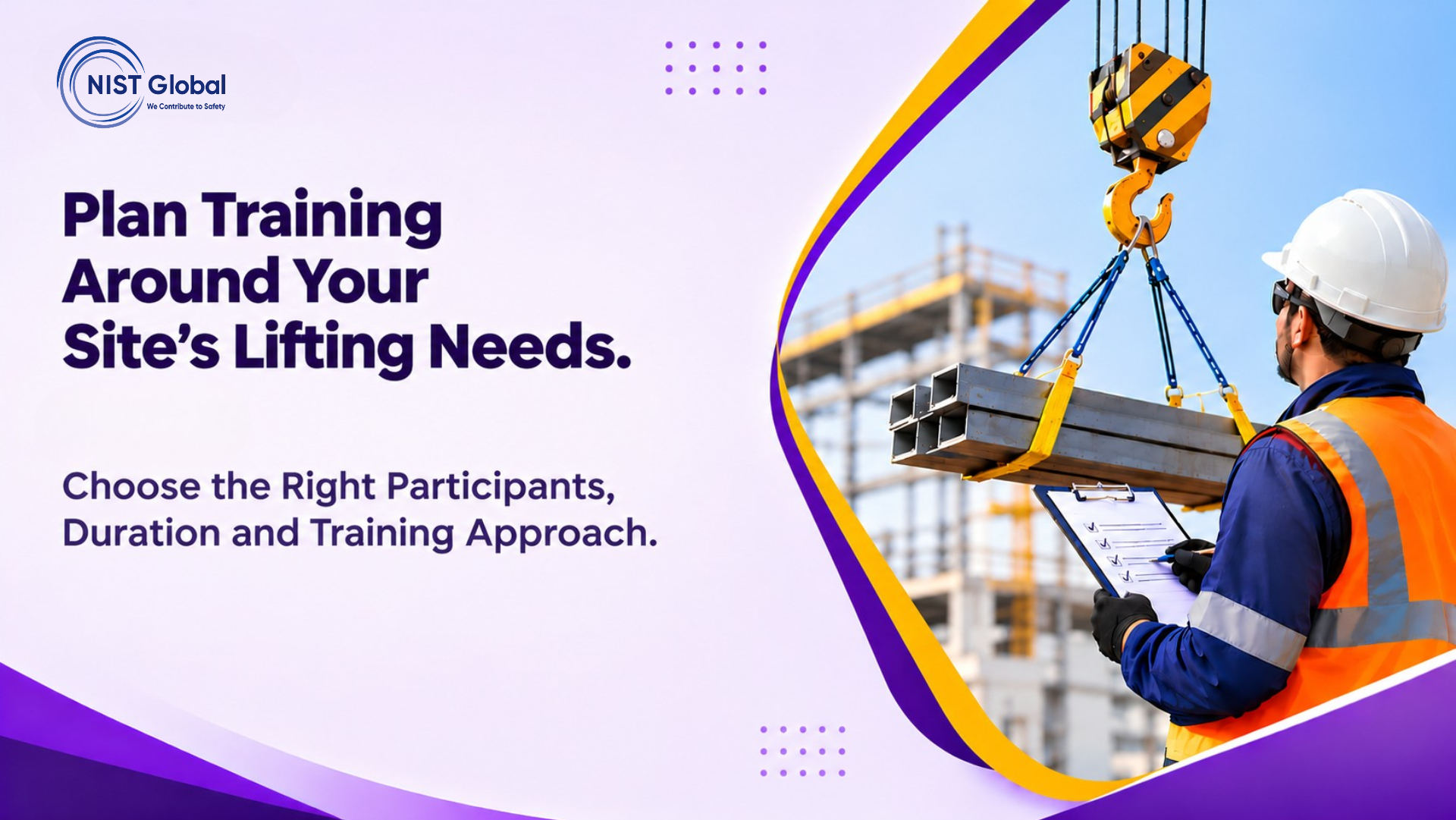
Corporate lifting and rigging training requires careful planning to ensure the right personnel receive appropriate instruction without disrupting site operations. Factors such as job responsibilities, batch size, training duration, delivery methods and equipment availability influence how effectively the programme can be organised.
This blog explains the key considerations for EHS managers, project managers and procurement teams planning lifting and rigging training for their workforce.
Key Aspects of Planning Corporate Lifting & Rigging Training
Effective planning starts with identifying the right participants, determining suitable batch sizes, assessing training requirements and understanding the practical and logistical factors involved.
1. Who Should Attend? Target Job Titles
Riggers who lift safely don’t depend on the rigger carrying out the lifting only. It takes cooperation from three different organizational levels: execution in the field, supervision at the site, and management in engineering.
Tier 1: Frontline Field Operators (Practical Orientation)
The frontline field operators physically prepare, link, and manipulate the load. The training of these individuals should be greatly inclined towards practical performance:
- Riggers and Slingers: Employees whose responsibility includes choosing the right slings, capacity tags, making hitches, placing shackles, and handling the taglines.
- Banksmen and Signalers: Employees whose responsibility lies in maintaining continuous communication with the crane operators via standard hand signals and special two-way radios.
- Crane Operators: Drivers who should have an understanding of the perspective of riggers, indication of load balance, and stopping mechanisms.
Tier 2: Direct Lift Coordinators (Operational Control)
These individuals control the lift environment and check the site conditions prior to lifting:
- Lift Supervisors and Foremen: Managers in charge of the lift process, establish exclusion zones, check weather limitations, and approve lift checklists.
- EHS Officers at Site Level: Professionals working for site safety who audit rigging equipment, review pre-use log sheets, and ensure compliance with regulations.
- Engineers and Construction Supervisors at Site Level: Field engineers who plan the positioning of the crane and access routes.
Tier 3: The Planning and Authorizing Authorities (Governance and Engineering)
While such people don’t sling slings themselves, they are legally and financially responsible for the safety of the operation:
- Technical authorities who approve engineered critical lifting plans, tandem crane lifts, and heavy industrial lifts.
- Maintenance managers who oversee plant shut-downs, refinery turn-around work, and replacement of heavy equipment.
2. How to Determine the Proper Batch Size
Having the proper ratio between participants and the trainer is crucial for safety training to be efficient. While classroom instruction can handle many more participants, practical rigging instruction must have small batches.
Factors to Consider When Determining Batch Size
The appropriate batch size for lifting and rigging training depends on the practical requirements of the course, available equipment and level of trainer supervision. Organisations should consider the following factors when planning participant groups:
- Nature of Training: Classroom-based sessions can accommodate larger groups, while practical exercises involving sling selection, hitching, equipment inspection and load handling require smaller groups.
- Equipment Availability: The number of available cranes, lifting accessories and practice stations influences how many participants can take part in hands-on activities at a time.
- Trainer Supervision: Group sizes should allow trainers to observe individual performance, provide guidance and assess participants effectively.
- Participant Experience: New riggers may require more individual attention than experienced personnel attending refresher or competency update sessions.
- Individual Assessment: Ensure that every participant gets an opportunity to demonstrate the required practical skills rather than simply observe others.
Rotation of Shifts and Working Sites
In order to conduct training without understaffing the operating site, the business clients usually utilize the rotating shift model:
- Shift Rotation Training Sessions: Class A is trained in the morning while Class B works in the site, and the next day they switch.
- Rotating Modular Sessions: Back-to-back training sessions of 2 days each week until all the site workers get trained.
3. Target Audience Based on Course Types
The training duration depends on the scope of responsibility and technical sophistication required for the job. However, the target audience are as follows:
Course Level & Title
Target Audience
- Basic Rigging & Slinging Practical
- New riggers, maintenance technicians, utility crews.
- Banksman & Signalman Qualification
- Designated signalpersons, crane spotters, banksmen.
- Lifting Supervisor Competency
- Rigging foremen, lift directors, site safety officers.
4. Critical Elements Influencing Cost for Corporate Rigging Training
The cost involved in the training will be dependent upon vendor fees, as well as the logistics and opportunity cost at the corporate site.
a. Delivery: Onsite vs. Offsite Training Center
Onsite Training for Clients (Most Economical for Larger Groups): The trainer comes to your facility. It saves cost on traveling and housing expenses for your staff while enabling training to take place on your crane and sling equipment and work environments.
Offsite Training Center (Recommended for Smaller Groups): Sending 2 or 3 staff members to an offsite training facility will be more economical than sending a trainer to a smaller group.
b. Equipment Mobilization and Yard Assignment
Practical training needs the use of physical equipment. The sites will need to budget for:
- Booking of either a mobile, overhead, or tower crane for the practical lifting training.
- Use of test loads such as concrete blocks or steel skids labeled with their actual weights.
- Provision of sample inventories of properly rigged tackle together with those that are defective or quarantined for visual inspection practice.
c. Degree of Program Customization
Standard courses have lower fees of delivery. However, complicated sites such as chemical refineries, offshore platforms, and heavy precast yards would do better with customized modules taking into consideration their special lift permitting system, special lifting beams, or crane load charts.
d. Accreditation and Assessment Costs
An accredited program that issues individual competency cards as well as formal assessments and evaluations comes at a fee but ensures the formal documentation needed during audit time.
e. Site Logistics: What the Facility Must Offer
In order for the corporate training program offered on-site to go well, the facility must have everything set up before the trainer comes.
Rigging Training Zone (Exclusion Area): Rigging exercises cannot be done in a traffic lane within the plant. The location needs to establish a private training area by putting cones and warning tapes up so that no unauthorized persons may walk under the boom and load of the training crane.
Crane Equipment: Make sure that there will be a crane and a licensed crane operator available during the hands-on training period for the necessary hours. Any interruptions by the production schedule during the training period will stop the practical training.
Damaged Sample Set for Inspection: Perhaps one of the most important training components involves the ability of riggers to recognize defective equipment and not use them. It would be helpful to make sure that you have some sample sets of damaged slings, cut webbing, bent shackles, or stretched chain from your isolation locker.
Corporate Lifting and Rigging Training at NIST Global
Planning effective lifting and rigging training requires the right combination of technical knowledge, practical instruction and site-specific learning. NIST Global delivers corporate Lifting and Rigging Safety Training designed around organisational requirements, workforce responsibilities and operational conditions.
Our programmes help employees develop the competencies required to handle lifting equipment, assess loads, inspect rigging gear and coordinate lifting operations safely.
Through our corporate training programmes, organisations can benefit from:
- Lifting and Rigging Training: Practical instruction covering load assessment, sling selection, rigging equipment inspection, sling angles and safe lifting techniques.
- Lifting Supervisor Training: Training for supervisors, engineers and EHS professionals on lift planning, load charts, hazard identification and team coordination.
- Banksman and Signalman Training: Developing clear communication and standard signalling practices between crane operators and ground personnel.
- Lifting Plan Preparation and Approver Training: Building technical competence in preparing, reviewing and approving lifting plans.
- Customised On-Site Training: Programmes tailored to your industry, site conditions, equipment and workforce requirements.
NIST Global offers on-site and virtual training delivery, with programme duration and content customised according to client requirements.
Prepare your workforce for safer lifting operations. Connect with NIST Global to discuss your training requirements, participant groups and suitable programme options.
Explore our Corporate Safety Training Programmes or learn more about Lifting and Rigging Safety Training.
Key Takeaways
- Choose Riggers, slingers, crane operators, banksmen, lifting supervisor, EHS personnel, and any related engineering personnel as an audience depending on the job responsibilities.
- Decide on the size of the batches according to the practical requirements, availability of equipment, trainers supervision and individual assessment necessities.
- Choose programme length based on the scope, experience and competency needs of the participants.
- Consider the cost aspects including trainer mobilisation, onsite or offsite delivery, equipment availability, customisation and programme assessment.
- Set up appropriate training locations, equipment to lift, practical training items and safety controls prior to programme commencement.
FAQs
Q1. What is covered in lifting and rigging training?
Training on sling selection, load assessment, rigging, equipment inspection, hazard identification and safe lifting practices.
Q2. Who should attend lifting and rigging training?
Anyone involved in lifting operations, including riggers, slingers, crane operators, banksmen, signalmen and lifting supervisors.
Q3. Can lifting and rigging training be customised for different industries?
Yes. Training can be tailored to industry-specific hazards, equipment, operational procedures and workforce requirements.
Q4. What is the difference between lifting and rigging training and lifting supervisor training?
Lifting and rigging training focuses on practical equipment handling and load preparation, while supervisor training covers lift planning, coordination and operational oversight.
Q5. What should organisations arrange before onsite lifting and rigging training?
Organisations should arrange suitable training areas, required lifting equipment, practical resources and necessary site safety controls.
Popular Safety Training Programmes
Behaviour Based Safety Training
Develop safe behaviours, strengthen safety culture, and reduce workplace incidents through proactive observation and intervention.
Fire Safety Training
Equip employees with the knowledge and practical skills to prevent fires, respond effectively, and protect people and assets.
Defensive Driving Training
Improve driver awareness, reduce road risks, and promote safer driving practices for employees operating vehicles.
The Right Safety Training Could Prevent the Next Workplace Incident
Explore our comprehensive range of workplace safety training programmes designed to reduce risks, strengthen safety culture, and improve workforce competence across all levels of your organization.