
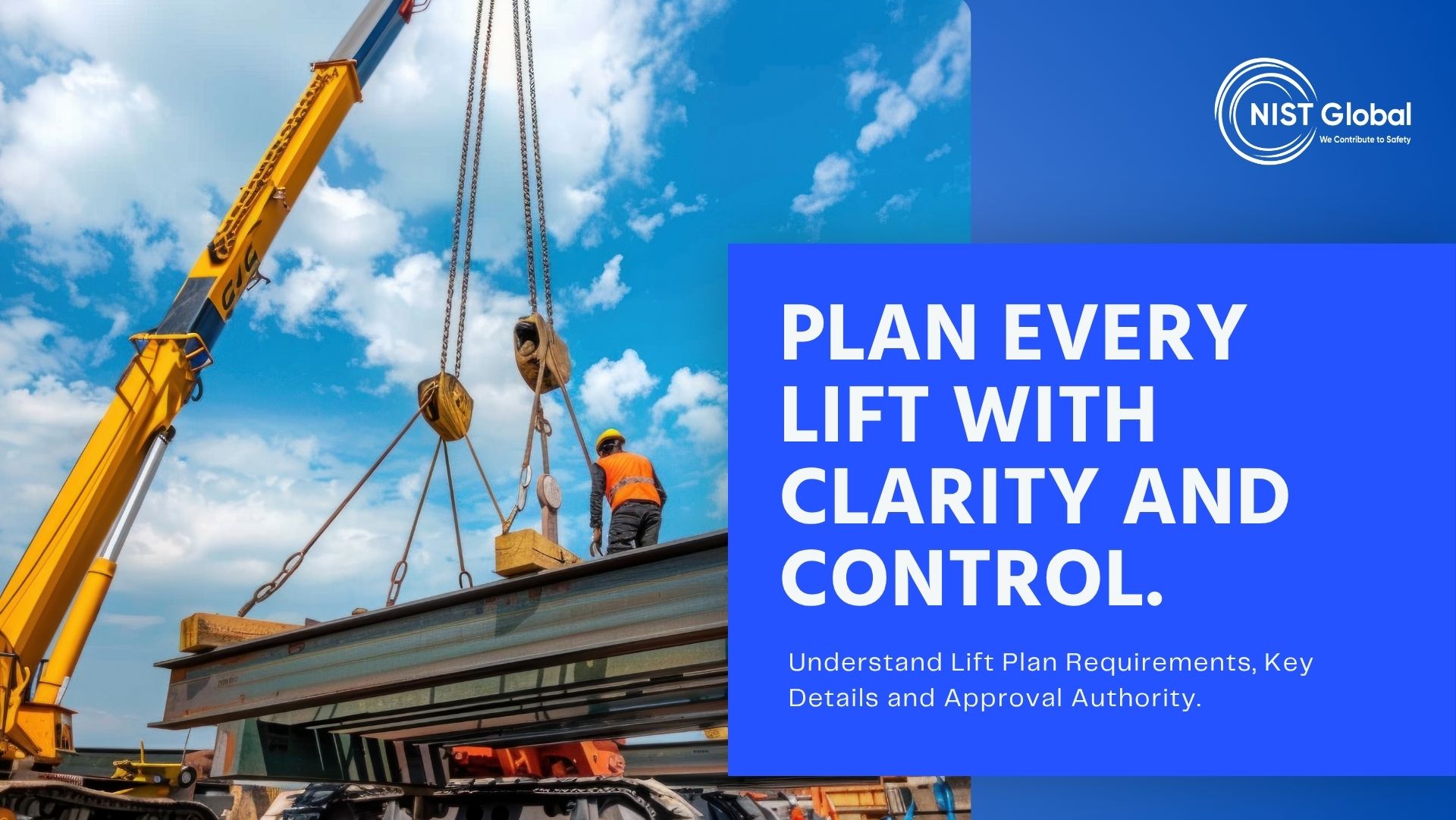
A lift plan is a documented procedure with an explanation of how a load will be lifted, moved and placed in a safe manner using a crane or other lifting equipment. It identifies the load characteristics, equipment requirements, lifting arrangement, load path, site hazards, risk control measures, and responsibilities of the lifting team. A proper lift plan diminishes the chance of equipment overload, dropped loads, crane instability, collisions and other lifting related incidents.
The level of detail should be based on the complexity of the lifting action and risks. This guide explains what a lift plan must contain, who is qualified to prepare and approve it, when a detailed plan is needed, and how to review it before a lifting operation begins.
What Is a Lift Plan?
A lift plan is a task-specific document that sets out the equipment, method, sequence and safety controls required to complete a lifting operation. It provides a common reference for the people planning, supervising and carrying out the lift.
Depending on the task, a lift plan may include a risk assessment, method statement, crane configuration details, load calculations, rigging drawings, lifting equipment information and an emergency response arrangement.
A lift plan should be designed to reflect the conditions at the worksite itself, not based on a generic template. The planner should include load, equipment capabilities, ground conditions, surrounding structures, environmental conditions and the skill of lifting team.
Why Is a Lift Plan Important?
A lift plan helps identify foreseeable hazards before lifting equipment is put into operation. It also establishes how the lifting team will manage those hazards and coordinate the work.
A properly prepared plan helps to:
- Select lifting equipment suitable for the load and operating conditions.
- Verify load weight, lifting points and rigging arrangements.
- Check crane capacity at the required working radius and configuration.
- Identify ground instability, underground services and overhead obstructions.
- Establish the load travel path and restrict access to hazardous areas.
- Define the responsibilities of the operator, rigger, signalman and lifting supervisor.
- Establish communication methods, stop-work conditions and emergency arrangements.
- Provide a documented basis for reviewing and authorising the operation.
The UK Health and Safety Executive (HSE) states that lifting operations should be properly planned by competent people, appropriately supervised and carried out safely. The amount of planning should reflect the complexity and risk of the operation.
What Must a Lift Plan Contain?
A lift plan should contain enough information for the lifting team to understand the task, verify the equipment and follow the agreed method safely. The level of documentation will vary according to the equipment, site conditions, existing legislation and the complexity of the lift.
1. Load Details and Weight Calculation
The plan should inform the load, weight, dimensions, centre of gravity and designated lifting points.
Include:
- Description of the load and the item to be lifted.
- Accurate weight and dimensions of loads.
- Centre of gravity (if applicable).
- Lifting positions and attachments approved.
- Weight of any rigging accessory which adds to the suspended load.
- Any special handling requirements, such as fragile components or uneven load distribution.
2. Crane Selection and Configuration
The plan should designate the crane/other lifting equipment to be used and ensure the equipment can lift to the appropriate size.
Relevant information may include:
- Type, model and identification of crane.
- Length of crane boom, counterweight and operating configuration (where applicable).
- Minimum lifting radius and boom angle.
- A graphical representation of the maximum capacity possible for the planned configuration and radius.
- Outrigger arrangement and supporting requirements.
- Applicable capacity reductions and manufacturer restrictions (e.g., engine size, horsepower, torque).
- Inspection and examination records of equipment, as per requirement.
3. Rigging Arrangement and Lifting Accessories
The plan should provide details of how the load will be attached, supported and controlled during the lift.
It may include:
- Sling type, material, length and rated capacity.
- Shackle, hook, spreader beam and other accessory details.
- Sling angles and their effect on leg tension.
- Connection points and attachment methods.
- Load distribution and rigging configuration.
- Inspection status and suitability of lifting accessories.
- Rigging drawings or sketches showing the arrangement.
4. Crane Positioning and Ground Conditions
The plan should identify the area where the crane will be used, and ascertain if the surface on which the crane will be erected is capable of supporting the loads applied.
Consider:
- Crane standing position and orientation.
- Ground bearing capacity and stability.
- Outrigger positions, mats or other supporting arrangements.
- Underground utilities, drains, voids and nearby excavations.
- Slopes, uneven surfaces and proximity to edges.
- Access routes for the crane and supporting vehicles.
- Nearby buildings, structures and other equipment.
5. Load Path and Placement Location
The lift plan should indicate how the load is to be moved from pick-up to final position.
Include:
- Load pick-up and set-down locations.
- Travel route and required lifting height.
- Clearance from structures, machinery and other obstructions.
- Overhead power lines and other overhead hazards.
- Areas where people or vehicles could enter the load path.
- Requirements for tag lines or other load-control methods, where suitable.
- Final positioning, landing and load-securing arrangements.
6. Risk Assessment and Control Measures
The plan should apply to the hazards that have been identified in the lifting operation and specify how the risks associated with these hazards will be addressed.
Potential hazards include:
- Overloading or crane instability.
- Dropped, swinging or uncontrolled loads.
- Equipment or rigging failure.
- Contact with overhead power lines.
- Poor ground conditions.
- Adverse wind or weather conditions.
- Restricted visibility and communication failures.
- Simultaneous operations in the same work area.
- Unauthorised access to the lifting zone.
Control measures can range from making exclusion zones to installing appropriate barriers, assigning a designated signalman, operating limits for weather conditions, based on manufacturer instructions, and stopping the lift when conditions change.
The plan should also specify, define and outline the action to take if the load, equipment, site conditions or lifting method is different to what was assessed.
Who prepares and approves a lift plan?
A competent lift planner develops the lifting method and identifies the equipment, load parameters, hazards and control measures. The required level of expertise depends on the task.
Where the lift is simple and routine, a suitable trained and experienced person may be able to plan the lift using an established procedure. A complex lift, for example a tandem lift involving multiple cranes, might need a detailed written plan or specialist engineering input.
The plan should be reviewed and authorised by the person designated under the organisation’s lifting procedure, with competence appropriate to the operation.
Depending on the site’s arrangements, this may be an appointed person for lifting operations, a competent lifting specialist, an authorised lifting engineer or another designated technical authority.
Build Lift Planning and Approval Competence with NIST Global
Preparing a technically sound lift plan requires more than completing a form. Professionals involved in lifting operations need to understand load parameters, crane capacity, rigging arrangements, load paths, site hazards, risk controls and the review process.
NIST Global’s Lifting Plan Preparation & Approver Training is designed for professionals involved in preparing, reviewing and authorising lifting plans. The programme covers load assessment, equipment selection, crane positioning, rigging arrangements, exclusion zones, risk assessment and supporting documentation, with reference to relevant standards and practical lifting scenarios.
Key Takeaways
- Plan Every Lifting Operation: A lift plan outlines the load, equipment, rigging arrangement and safe lifting sequence.
- Verify Equipment and Site Conditions: Check crane capacity, ground stability, lifting accessories and load path before starting the lift.
- Ensure Competent Planning and Approval: Lift plans must be prepared, reviewed and authorised by personnel with the appropriate competence and authority.
- Review Risks and Changing Conditions: Identify hazards, establish control measures and reassess the plan whenever site conditions or lifting requirements change.
Frequently Asked Questions
1. Is a lift plan mandatory for every lifting operation?
Documentation requirements for lifting operations will differ depending on legislation, risk level, and site procedures but it must be planned in an appropriate way. Complicated and risky lifts will usually need a well-explained and written plan.
2. Can a crane operator approve a lift plan?
A crane operator may contribute to planning or approval if competent and authorised to do so. Operating experience alone does not automatically qualify them to approve every lift plan.
3. What is the difference between a lift plan and a method statement?
A lift plan covers load details, crane configuration, rigging, load path and lifting controls. A method statement explains the sequence of work and how the task will be completed safely.
4. Does a lift plan need to be signed?
The sign-off criteria will vary according to the regulations in force, site procedures and the nature of the lift. Documented approval from designated competent personnel may be necessary for critical lifts.
5. What should happen if site conditions change after approval?
If the change might impact safety or the plan, stop the lift. Evaluate the change, revise and reapprove where necessary and brief lifting team prior to continuing.
Popular Safety Training Programmes
Behaviour Based Safety Training
Develop safe behaviours, strengthen safety culture, and reduce workplace incidents through proactive observation and intervention.
Fire Safety Training
Equip employees with the knowledge and practical skills to prevent fires, respond effectively, and protect people and assets.
Defensive Driving Training
Improve driver awareness, reduce road risks, and promote safer driving practices for employees operating vehicles.
The Right Safety Training Could Prevent the Next Workplace Incident
Explore our comprehensive range of workplace safety training programmes designed to reduce risks, strengthen safety culture, and improve workforce competence across all levels of your organization.