
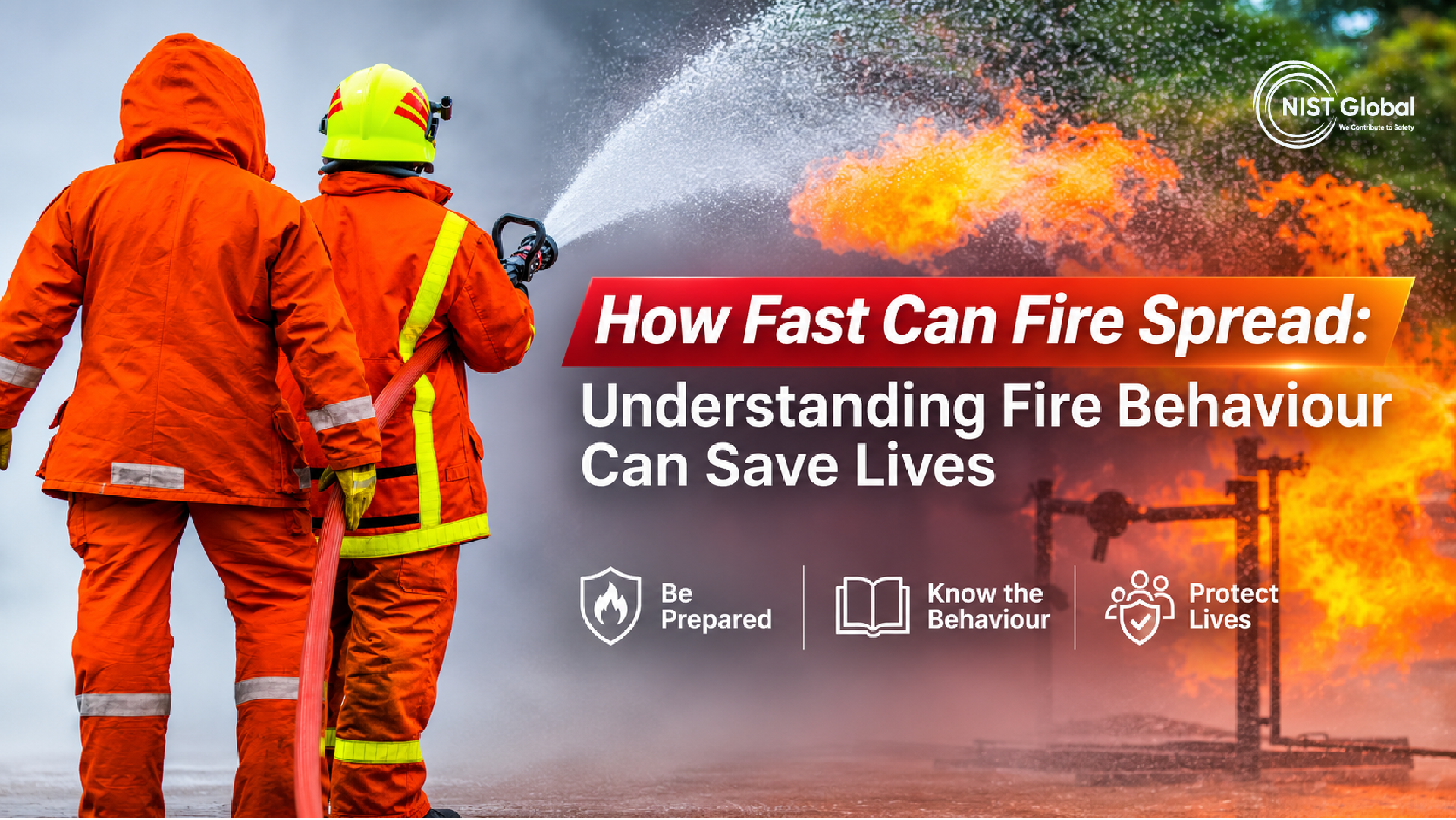
It takes very little to develop a dangerous fire situation from a small spark or fire breakout in an electrical outlet or from malfunctioning equipment. Today’s work environments consist of many synthetic objects, foam padding, plastics, and paper packing materials. Synthetic products generate a lot of heat and burn much quicker than natural products such as wood or fabric. Therefore, the fire and its deadly smoke can fill up an entire room very quickly.
According to the Occupational Safety and Health Administration (OSHA), it notes that fires and other emergency situations can reach dangerous levels in seconds, highlighting the importance of immediately reporting a fire and activating the workplace alarm.
Due to the fact that the nature of fire depends on different factors such as room size, air flow, and materials used, the growth rate of the fire is not constant.
Basics of Fire Dynamics
- Fire Tetrahedron: Four basic components of fire are necessary for its creation and existence:
- Fuel: Fuel in the form of flammable substances in the environment (e.g., paper, cardboard, plastic furniture, solvents).
- Heat: Heat source or enough energy to heat fuel to its burning point.
- Oxygen: Oxygen from surrounding air, needed for burning.
- Chemical Reaction: Process of self-propelled burning of fuel.
Eliminating any component leads to extinguishing of the fire process.
How Quickly Can a Workplace Fire Become Dangerous?
The rate of spread of a workplace fire varies, and there is no fixed time limit. The velocity is determined by combustible material type and quantity, ventilation, room configuration, oxygen availability, as well as the rate of detection and control.
A small fire can rapidly become a large fire when it has a continuous supply of fuel and air. Heat and smoke may accumulate during the development of the fire, making it more difficult and dangerous for occupants to survive.
This is why the first few moments of a fire are critical. It is important that people are able to be evacuated before the conditions become critical if early detection and immediate alarm can be achieved and evacuation is prompt.
If a fire is noticed or smoke is seen, do not wait to see how serious it is, employees should follow their work place emergency procedures.
What Determines How Fast a Fire Spreads?
A number of factors in a workplace have an impact on the rate at which a fire can spread. By knowing these factors, organisations can determine the risks and put proper measures in place.
| Factor | How It Can Affect Fire Spread |
|---|---|
| Fuel | Packaging, plastics, and furniture can be fuel sources for an expanding fire. |
| Ventilation | The movement of air can affect the progress of fire and disperse smoke and heat away from the initial fuel. |
| Room & Building Layout | Open spaces, connected areas and inadequate fire separation can facilitate the spread of fire and smoke. |
| Housekeeping & Storage | Accumulated waste, poorly stored materials and excessive combustible storage can increase the potential for fire growth. |
| Detection & Suppression | Early warning systems, fire alarms and suitable fire protection systems can help detect and control a fire before it escalates. |
| Human Response | Delayed alarm activation, poor evacuation practices or unsafe attempts to fight a fire can increase the risk to employees. |
These factors also show why fire safety cannot depend on a single measure. The impact of a workplace fire is greatly diminished by good housekeeping, effective fire protection systems, clear escape routes and trained employees.
Proactive Workplace Fire Prevention Tactics
Fire prevention necessitates good and consistent workplace practices:
- Control Electrical Hazards: Overload circuits, faulty wires, and unmaintained machinery account for a large percentage of fires in the workplace. Make it a point to conduct regular thermal inspections and equipment checks.
- Practice Good Housekeeping: Make sure that all dust, cardboard boxes, waste papers, and wooden pallets are cleared up. Ensure all flammable substances are stored in proper safety cabinets.
- Hot Work Safety: Make sure to obtain proper permits for cutting, welding, and grinding operations. Make it a point to conduct a fire watch immediately after the job is done.
- Clear Exit Pathways: Always keep the pathways to corridors, stairs, and exit doors clear of any obstructions.
Emergency Evacuation and Preparedness
When the fire escalates beyond the burning process, a quick implementation of an emergency plan becomes necessary to save lives:
- Alarm: Pull the fire alarm as soon as you notice any fire or smoke.
- Containment: Shut the doors on your way out to prevent the entry of oxygen and heat.
- Evacuation: Exit via the indicated escape routes to designated assembly points outside the building without taking the elevators.
- Responsibility: Floor wardens should ensure that all work areas, washrooms, and common areas have been swept thoroughly before conducting headcounts at the assembly points.
Why Practical Fire Safety Training Matters
Fire prevention and protection systems are crucial, but they are only effective if people know what to do in the event of a fire. Staff should identify fire hazards, sound the alarm, use firefighting equipment correctly and ensure that they are safe when evacuating in the event of a fire.
Practical fire safety training gets employees ready to take action. This can cover the recognition of fire hazards at work, awareness of the different kinds of fire, choosing the appropriate extinguisher for different fire types, evacuation procedures and dealing with fire emergencies.
Staff are also familiar with their responsibilities, escape routes, assembly points and emergency procedures as a result of regular drills and hands-on training. This can help minimise confusion and facilitate a quick and organised response in the event of a fire.
It’s not just about the equipment available; it’s about the people that know what to do in case of fire!
Build Fire-Ready Teams with NIST Global
NIST Global’s Fire Safety Training is designed around the actual risks, workplace conditions and workforce needs of each organisation. The training can cover fire hazard identification, fire behaviour, correct extinguisher selection and use, emergency evacuation procedures, fire protection systems and workplace fire safety responsibilities.
The programme combines interactive learning with practical application, including hands-on extinguisher practice, hazard identification, scenario-based activities and assessments. Training can be delivered onsite or virtually, with options to support different workforce and language requirements.
For organisations looking to strengthen workplace fire preparedness and build confident emergency responders, practical, customised training can help turn fire safety knowledge into effective workplace action.
Explore NIST Global’s Fire Safety Training and equip your workforce with the knowledge and practical skills to respond when it matters most.
Key Takeaways
- A workplace fire can become dangerous quickly, but the rate of spread depends on fuel, ventilation, layout, detection and human response.
- Good housekeeping, safe storage and control of ignition sources can reduce fire risk.
- Early detection, alarm activation and prompt evacuation are critical during a fire emergency.
- Fire safety equipment and emergency procedures are most effective when employees know how to use them.
- Practical fire safety training and regular drills help employees respond with greater confidence during emergencies.
FAQs
Q1. How quickly can a workplace fire become dangerous?
A workplace fire can become dangerous within minutes, depending on the available fuel, ventilation, layout and fire protection systems. Early detection and immediate evacuation are critical.
Q2. What factors affect how quickly a workplace fire spreads?
Fuel, airflow, building layout, housekeeping, fire protection systems and human response can all influence fire spread. Controlling these factors can help reduce fire risk.
Q3. What should employees do when they discover a fire?
Raise the alarm immediately, alert others and follow the workplace emergency evacuation procedure. Use designated escape routes and proceed to the assembly point without taking unnecessary risks.
Q4. When should a fire extinguisher be used?
A fire extinguisher should only be used on a small, early-stage fire when the person is trained and it is safe to do so. Always ensure there is a clear escape route before attempting to fight a fire.
Q5. What is the PASS method for using a fire extinguisher?
PASS stands for Pull the pin, Aim at the base of the fire, Squeeze the handle and Sweep from side to side. Employees should receive practical training before attempting to use an extinguisher.
Q6. Why is fire safety training important in the workplace?
Fire safety training helps employees recognise hazards, respond appropriately and evacuate safely during an emergency. Practical training and drills can improve confidence and reduce confusion during a fire.
Popular Safety Training Programmes
Behaviour Based Safety Training
Develop safe behaviours, strengthen safety culture, and reduce workplace incidents through proactive observation and intervention.
Fire Safety Training
Equip employees with the knowledge and practical skills to prevent fires, respond effectively, and protect people and assets.
Defensive Driving Training
Improve driver awareness, reduce road risks, and promote safer driving practices for employees operating vehicles.
The Right Safety Training Could Prevent the Next Workplace Incident
Explore our comprehensive range of workplace safety training programmes designed to reduce risks, strengthen safety culture, and improve workforce competence across all levels of your organization.