
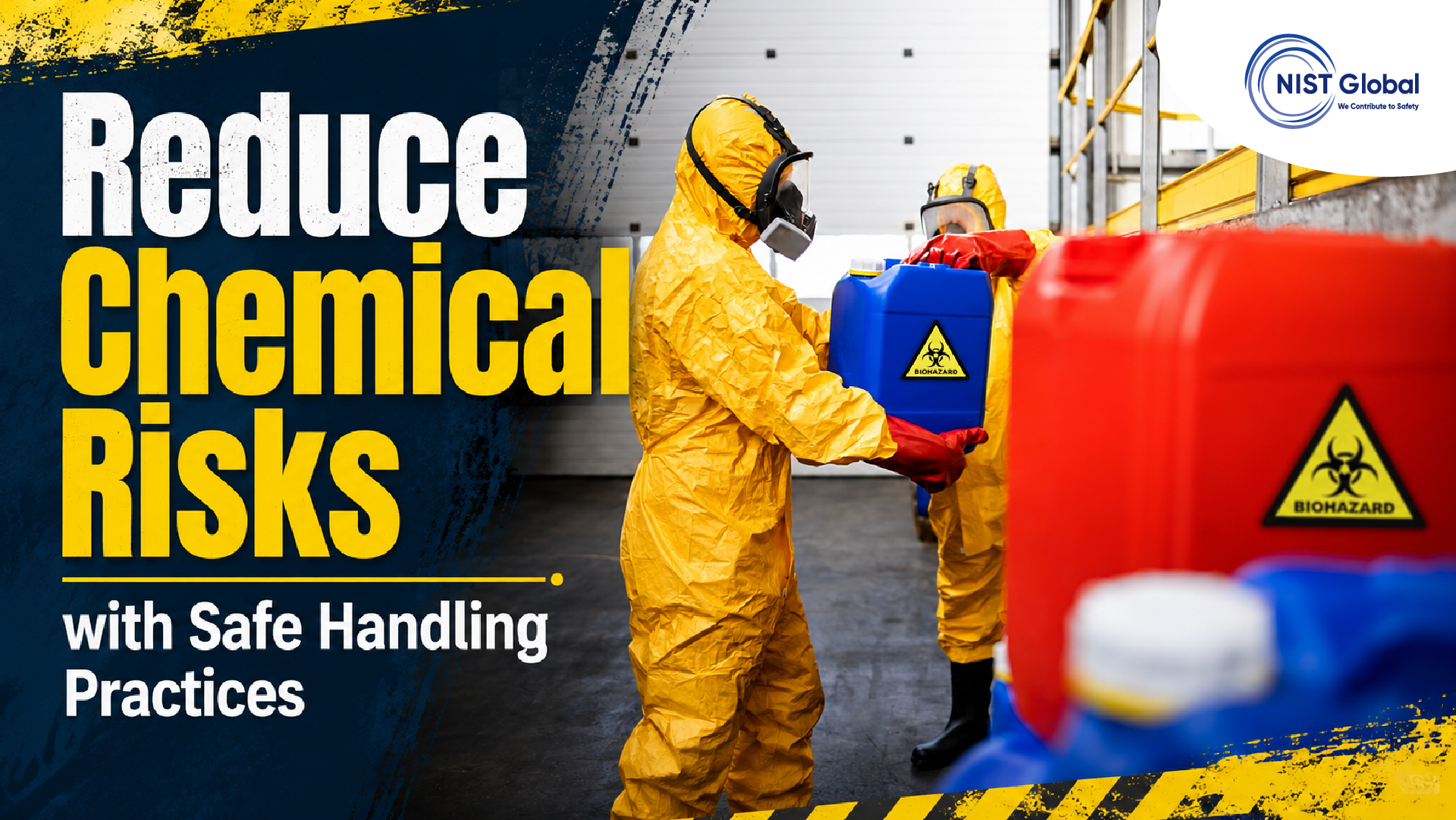
Just one mistake in handling chemicals can lead to serious consequences; but most of the chemical related incidents are fully preventable. Chemicals are an integral part of operations across industries such as manufacturing, pharmaceuticals, healthcare, laboratories, construction, oil and gas, and logistics. While chemicals are the major support for productivity and innovation. However, without proper handling and storage, they can lead to dangerous injuries, fires, toxic exposures, costly disruptions, and environmental damage.
The good news is that safe practices, employee awareness, and regular training can significantly reduce these risks. By adopting the right approach to chemical handling safety, organizations can protect their people, maintain compliance, and create safer workplaces. In this blog, we’ll explore five essential chemical safety tips that every organization should follow to ensure the safe handling and storage of chemicals.
Why Safe Chemical Handling and Storage Matter
Every hazardous chemical has unique physical, chemical, and health hazards. Without proper controls, even routine tasks involving chemicals can quickly become dangerous.
Effective chemical storage safety and handling practices help organizations:
- Protect employees from chemical exposure, burns, poisoning, and respiratory hazards.
- Prevent fires, explosions, and dangerous chemical reactions.
- Reduce damage to equipment, facilities, and inventory.
- Minimize environmental pollution caused by spills or leaks.
- Meet regulatory and workplace safety requirements.
- Build a proactive workplace chemical safety culture.
Organizations that invest in preventive measures experience fewer incidents, lower operational risks, and greater employee confidence in their work environment.
5 Essential Safety Tips for Safe Handling and Storing of Chemicals
Maintaining workplace chemical safety requires more than simply providing protective equipment. It involves understanding chemical hazards, following safe work procedures, and preparing employees to respond effectively during emergencies.
1. Always Read Labels and Safety Data Sheets (SDS) Before Handling Chemicals
Before using any chemical, employees should understand the hazards associated with it. Product labels and Safety Data Sheets (SDS) provide critical information needed to work safely.
Always review:
- GHS hazard labels and pictograms.
- Hazard statements and precautionary statements.
- Recommended handling procedures.
- Storage requirements.
- Required Personal Protective Equipment (PPE).
- First aid instructions and emergency response measures.
Employees should never use chemicals stored in unidentified or improperly labeled containers. Missing or incorrect labels can significantly increase the risk of accidental exposure or improper use.
Making SDS readily accessible to employees is a fundamental part of effective chemical handling safety.
2. Wear the Right Personal Protective Equipment (PPE)
Personal Protective Equipment acts as the last line of defense against chemical exposure. However, PPE is only effective when it matches the specific hazards involved.
Depending on the chemical and the task, employees may require:
- Chemical-resistant gloves.
- Safety goggles or face shields.
- Protective clothing or chemical-resistant aprons.
- Respiratory protection.
- Safety footwear.
PPE should be inspected regularly for wear, contamination, or damage before use. Organizations should also train employees on the proper selection, use, maintenance, and limitations of PPE to ensure maximum protection.
3. Store Chemicals Properly and Segregate Incompatible Substances
Proper chemical storage safety is one of the most effective ways to prevent workplace incidents.
Organizations should always:
- Follow manufacturer recommendations and SDS storage guidelines.
- Store chemicals in approved, clearly labeled containers.
- Keep containers tightly sealed when not in use.
- Maintain recommended temperature, ventilation, and humidity conditions.
- Conduct regular inspections of storage areas.
Equally important is segregating incompatible chemicals. Certain substances can react violently when mixed, resulting in fires, toxic gas releases, or explosions.
For example, acids should not be stored with alkalis, and oxidizers should be kept away from flammable materials. Proper segregation significantly reduces the likelihood of accidental chemical reactions.
4. Handle Chemicals Carefully and Follow Safe Work Procedures
Safe chemical handling begins with following established Standard Operating Procedures (SOPs). Employees should never improvise when working with hazardous substances.
Good chemical handling safety practices include:
- Following documented work instructions.
- Using appropriate transfer and dispensing equipment.
- Avoiding direct contact with chemicals.
- Keeping work areas clean and organized.
- Cleaning spills immediately using approved procedures.
- Restricting hazardous chemical handling to trained and authorized personnel.
Maintaining good housekeeping is equally important. Cluttered workspaces increase the chances of accidental spills, contamination, and unsafe chemical interactions.
Organizations should reinforce safe behaviors through supervision, routine inspections, and continuous training.
5. Be Prepared for Chemical Spills and Emergencies
Despite preventive measures, emergencies can still occur. Preparedness helps minimize injuries, environmental damage, and operational downtime.
Every workplace should:
- Maintain easily accessible chemical spill kits.
- Train employees in spill containment and response procedures.
- Establish emergency communication protocols.
- Provide emergency eyewash stations and safety showers where required.
- Conduct regular spill response and emergency evacuation drills.
Employees should know exactly how to respond to chemical leaks, accidental exposures, fires, or hazardous spills. A well-practiced emergency response plan allows organizations to react quickly and effectively during critical situations.
Common Mistakes to Avoid When Handling and Storing Chemicals
Many workplace incidents occur because basic safety practices are overlooked. Recognizing these common mistakes can significantly reduce chemical-related risks.
Some of the most frequent errors include:
- Ignoring chemical labels or Safety Data Sheets before use.
- Mixing incompatible chemicals without understanding their reactions.
- Storing chemicals in unsuitable or unapproved locations.
- Using damaged, leaking, or unlabeled containers.
- Failing to wear appropriate PPE.
- Allowing untrained employees to handle hazardous chemicals.
- Neglecting routine inspections of storage areas and emergency equipment.
Avoiding these mistakes strengthens overall workplace chemical safety and reduces the likelihood of serious incidents.
How Chemical Safety Training Strengthens Workplace Safety
Even the best safety procedures are effective only when employees understand and consistently follow them. Regular chemical safety training equips workers with the knowledge and practical skills needed to recognize hazards, work safely, and respond appropriately during emergencies.
Effective training helps organizations:
- Improve hazard identification and risk awareness.
- Promote safe handling and storage practices.
- Strengthen understanding of SDS, GHS labels, and hazard communication.
- Enhance chemical spill response and emergency preparedness.
- Improve regulatory compliance.
- Foster a proactive safety culture where employees take ownership of workplace safety.
Regular refresher training also ensures employees remain updated on changing procedures, new chemicals, and evolving workplace risks.
Conclusion
Safe chemical handling starts with the right knowledge, safe work practices, and a strong commitment to prevention. By following these essential chemical safety tips, organizations can reduce workplace risks, protect employees, and create a safer working environment.
To strengthen your organization’s workplace chemical safety, NIST Global offers practical Chemical Safety Training and Hazardous Spill Prevention & Control Training designed to equip employees with the skills and confidence to handle hazardous chemicals safely and respond effectively during emergencies.
Key Takeaways
- Always review chemical labels and Safety Data Sheets before handling any chemical.
- Select and wear the appropriate PPE based on the specific hazards involved.
- Follow proper chemical storage practices and segregate incompatible substances.
- Adhere to established SOPs and safe handling procedures during every task.
- Prepare employees for chemical spills and emergencies through regular drills and response planning.
- Invest in ongoing chemical safety training to strengthen workplace safety and regulatory compliance.
Frequently Asked Questions (FAQs)
Popular Safety Training Programmes
Behaviour Based Safety Training
Develop safe behaviours, strengthen safety culture, and reduce workplace incidents through proactive observation and intervention.
Fire Safety Training
Equip employees with the knowledge and practical skills to prevent fires, respond effectively, and protect people and assets.
Defensive Driving Training
Improve driver awareness, reduce road risks, and promote safer driving practices for employees operating vehicles.
The Right Safety Training Could Prevent the Next Workplace Incident
Explore our comprehensive range of workplace safety training programmes designed to reduce risks, strengthen safety culture, and improve workforce competence across all levels of your organization.