
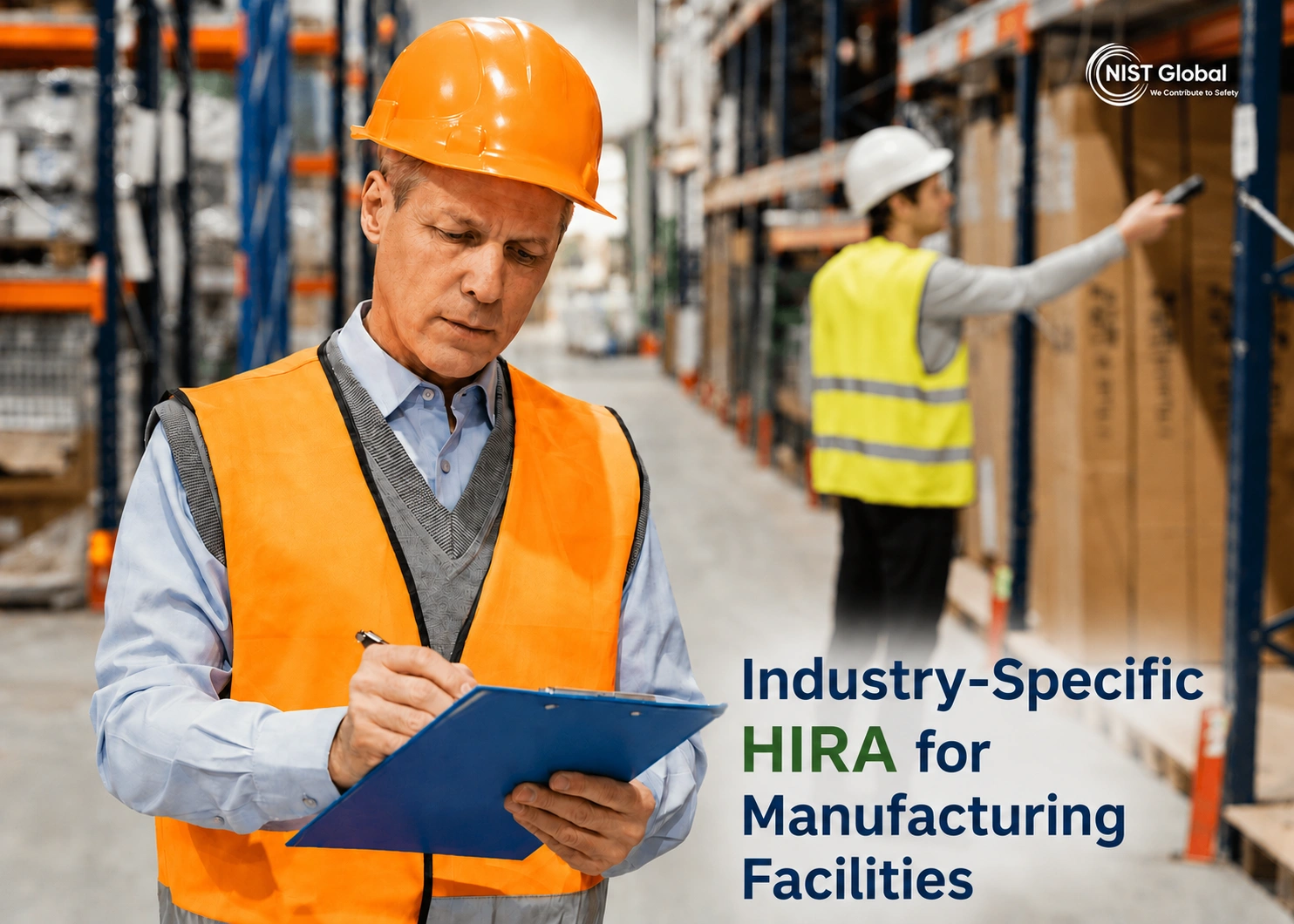
Modern manufacturing facilities operate as highly efficient ecosystems, incorporating a combination of high-speed automated machinery, bulk materials movement, high voltage electricity infrastructure, and dangerous chemicals operations in the process of their operation. While this combination makes them extremely effective in today’s market reality, it also places a huge burden of inherent risks on the facility and its staff.
Under such circumstances, standard generic risk checklists simply won’t cut it. A generic safety inspection will be unable to adequately address potential threats posed by a specialized stamping machine, a fully automatic welding robot, or a chemical batch preparation unit.
For proper risk identification and mitigation purposes, along with protecting operational continuity and complying with legal requirements, facility managers should implement industry-specific HIRA methodology. This guide is dedicated to the most crucial hazards of modern manufacturing and explains how to leverage HIRA to enhance workplace safety.
Why HIRA Matters?
According to the International Labour Organization (ILO), nearly 2.9 million workers die each year due to occupational accidents and work-related diseases, while millions more suffer non-fatal injuries.
Manufacturing environments present a combination of mechanical, electrical, chemical, and ergonomic hazards, making systematic Hazard Identification and Risk Assessment (HIRA) essential for preventing incidents and improving operational safety.
Primary Hazard Quadrants in Modern Manufacturing
In order to design an efficient HIRA for manufacturing plants, one must start by identifying and separating the floor area into four quadrants based on exposure to specific primary hazards.
Mechanical and Machine Trapping Points
High-speed, automated mechanized movement is the basis of modern manufacturing. It poses substantial risks of crushing, pinching, drawing-in, shearing, and high-energy cuts.
Exposure to unprotected flywheels, open conveyors, and unsheltered automated stamping dies is extremely dangerous. One can suffer serious injuries due to a momentary lack of attention when trying to resolve a jam without completing the proper isolation procedure.
Electrical Risks and Energy Isolation Deficiencies
Manufacturing facilities use enormous amounts of electricity to power up all their equipment and HVAC systems. It creates a considerable risk of electrocution, arcing, burning, and fires caused by electrical energy.
All of these risks increase sharply in situations involving regular machine maintenance, re-tooling work, and emergency repairs. In such scenarios, an incorrect Lockout/Tagout procedure can lead to re-energization and severe injuries.
Chemical, Thermal, and Environmental Stressors
Surface-finishing acids, toxic solvents, and heat from metal casting furnaces and plastic extrusion machines are common workplace hazards that manufacturers’ employees encounter.
These exposures may result in acute chemical burns, respiratory complications due to the inhalation of toxic vapors, or chronic diseases. In addition, the high environmental temperature close to processing machines will result in heat stress, heat exhaustion, and heat stroke, affecting the behavior safety of employees.
Ergonomic Strain and Repetitive Motion Injuries
All types of hazards do not necessarily occur suddenly but may also be gradual, leading to the same effect on the performance and health of the workers.
Manufacturing companies usually involve assembly line workers, heavy parts handlers, and packaging staff who execute repetitive motions for extended periods and assume awkward postures in their jobs while undergoing vibrations from air-operated devices. The cumulative effect of these physical stressors leads to MSDs in employees.
Regulatory Considerations for Manufacturing HIRA in India
A manufacturing HIRA should not only identify workplace hazards but also support compliance with applicable safety regulations. In India, manufacturing facilities are required to implement measures that protect workers from mechanical, electrical, chemical, and ergonomic risks.
Key regulatory frameworks that influence hazard identification and risk assessment include:
Factories Act, 1948
The Factories Act places responsibility on employers to provide a safe working environment, maintain machinery safeguards, manage hazardous processes, and ensure worker welfare. A structured HIRA helps organizations identify risks and implement suitable controls to meet these obligations.
Occupational Safety, Health and Working Conditions (OSHWC) Code, 2020
The OSHWC Code emphasizes workplace safety, risk prevention, worker health, and emergency preparedness. Manufacturing organizations can use HIRA findings to strengthen compliance efforts and demonstrate proactive risk management.
Hazardous Chemical and Process Safety Requirements
Facilities that handle chemicals, solvents, gases, paints, or other hazardous substances must identify exposure risks, evaluate emergency scenarios, and establish appropriate control measures. HIRA supports safer storage, handling, transportation, and response planning.
Machine Safety and Energy Isolation
Manufacturing operations involving presses, conveyors, robotic systems, and automated equipment require effective machine guarding and energy isolation practices. HIRA helps identify areas where additional engineering controls, Lockout/Tagout procedures, or operator training may be necessary.
By aligning HIRA activities with regulatory requirements, organizations can strengthen compliance, improve audit readiness, and reduce the likelihood of workplace incidents.
Step-by-Step Implementation: Using HIRA in Manufacturing
A common approach to implementing HIRA in manufacturing includes the following steps.
Step 1: Carry out Detailed Job Hazard Analysis (JHA)
One cannot assess a whole line of production sitting in one’s office. One should walk across the plant and analyze every single manufacturing position step by step in chronology.
Watch workers as they perform their duties, including equipment setup, standard activities, cleaning and maintenance of machines, as well as note every mechanical movement, tools applied, environmental factors and opportunities for human mistake in each case.
Step 2: Assess Risk Level with Probability and Severity
When the hazards associated with manufacturing are identified, their level can be determined via a matrix that combines probability with severity.
| Manufacturing Process Area | Identified Hazard | Risk Rating (P × S) | Required Priority | Control |
|---|---|---|---|---|
| Robotic Welding Cells | High-intensity UV arc radiation, weld spatter, fumes. | Medium-High Risk | High Priority | Deploy automated optical shielding, local exhaust ventilation (LEV). |
| Hydraulic Press Lines | Unintentional mechanical descent, crushing injuries. | High Risk | Critical Priority | Enforce dual-hand control interlocks, light curtains, and zero-energy LOTO. |
| Parts Degreasing Stations | Chronic inhalation of volatile organic solvents. | Medium Risk | Medium Priority | Switch to non-toxic aqueous cleaners or mandate full respiratory protection. |
| End-of-Line Packaging | Repetitive lifting of heavy boxes, awkward bending. | Low-Medium Risk | Scheduled Review | Implement pneumatic lift assists, adjust conveyor heights. |
Step 3: Employ Controls through the Hierarchy of Controls
In implementing controls in accordance with your manufacturing HIRA, always follow the rigid order of the Hierarchy of Controls.
Avoid the easy solution of just giving your people Personal Protective Equipment (PPE) every single time. Start with eliminating the hazard, if possible (automating the process of lifting a dangerous substance). If that cannot be done, try to substitute one risk for another (substituting a hazardous liquid solvent for a non-toxic cleaning solution). Next comes engineering control (installing mechanical interlocking devices on machinery), followed by administrative controls (such as job rotation), and then PPE.
Step 4: Assess Shift-related Competency and Manpower Gaps
What works perfectly well during the day shift could fail at 3 AM. Your HIRA should consider risks in the context of the various shifts in your plant.
Find out if your late-shift workgroups enjoy equal access to your safety officers, technical support staff, and professional first responders. If your night shift workers operate with less supervision and greater risk of circadian fatigue, then you need to implement additional administrative and engineering controls.
Step 5: Plan Continuous Re-Evaluation Cycle
The manufacturing unit undergoes change regularly; lines can be re-equipped with different machinery or workflow adjustments.
Your HIRA registry must be kept up to date. A thorough risk assessment exercise should occur in case of a new installation, after a near-miss incident or injury at the workplace, or when process data shows that there is an increase in behavioral safety problems.
Common HIRA Mistakes in Manufacturing Facilities
Even well-intentioned risk assessments can fail to deliver meaningful results if common mistakes are overlooked. Manufacturing organizations should avoid the following pitfalls:
Using Generic Risk Registers
Many facilities rely on standardized risk assessment templates that fail to capture the unique hazards associated with their equipment, processes, and work environment. HIRA should always be tailored to actual plant conditions.
Ignoring Contractor Activities
Maintenance contractors, cleaning crews, and temporary workers are often exposed to significant risks. Excluding these activities can leave critical hazards unidentified.
Over-Reliance on PPE
Personal Protective Equipment should be considered the final layer of protection. Organizations often miss opportunities to eliminate hazards or implement engineering controls before depending on PPE.
Failing to Review HIRA After Process Changes
New machinery, production modifications, layout changes, and process upgrades can introduce new hazards. Risk assessments should be reviewed whenever significant operational changes occur.
Missing Startup, Shutdown, and Maintenance Hazards
Many incidents occur during non-routine activities such as equipment setup, maintenance, troubleshooting, and shutdown operations. These tasks require dedicated hazard assessments.
Limited Worker Participation
Frontline employees often possess valuable knowledge about operational risks. Involving operators, technicians, and supervisors improves hazard identification and strengthens safety ownership.
Avoiding these common mistakes can significantly improve the effectiveness of a manufacturing HIRA and ensure that identified controls remain practical and sustainable.
Working Together with NIST Global: Achieving Operational Excellence
Tailored Safety Courses Based on Your HIRA Findings
- Plant-Specific Simulation Exercises: Training programs are structured based on your facility’s layout, machinery used, and chemical exposure, allowing workers to apply their learnings immediately on-site.
- Risk Competency Through Practical Experience: Instead of focusing solely on theory, NIST Global’s trainers teach workers about safety through practical sessions where they isolate hazardous energies, conduct machine guard checks, and perform exercises simulating chemical emergencies.
Training Portfolio for Manufacturing Operations
At NIST Global, we offer a wide range of accredited classes aimed at addressing those risks you identify through your risk analysis processes:
- HIRA and JHA Masterclasses: Educate your safety committee members, line managers, and shift supervisors to conduct audit-quality risk analysis and apply the hierarchy of controls approach.
- LOTO and Energy Isolation Training: Comprehensive technical programs aimed at energy isolation from electrical, pneumatic, hydraulic, and thermal sources to eliminate accidental re-starts.
- Behavior-Based Safety Programs focus on improving safe work practices, hazard awareness, communication, and employee engagement.
Conclusion: Make Your Risk Assessment Work for You by Putting it into Action
Using HIRA results to create highly effective training programs with NIST Global will translate all theoretical safety knowledge into practical protection for your plant workers. Shield your employees, avoid expensive manufacturing downtime, and develop the best workplace safety culture in the business.
Are you ready to improve your factory hazard awareness skills and convert your risk analysis into practical workplace safety training programs?
Visit: https://www.nistglobal.com/risk-assessment-hira.php.
Contact us for personalized safety audit and training solutions based on your facility’s manufacturing environment.
Key Takeaways
- Manufacturing HIRA should address mechanical, electrical, chemical, ergonomic, and emerging technology risks.
- Risk assessments should be reviewed whenever processes, equipment, or layouts change.
- Compliance requirements should be integrated into hazard identification activities.
- Worker participation is essential for identifying practical and sustainable control measures.
FAQs
What is HIRA in manufacturing?
HIRA (Hazard Identification and Risk Assessment) refers to a systematic procedure that is applied to the workplace to identify hazards and to assess the risks. It supports manufacturing businesses to make effective controls in place before an incident.
Why is HIRA important for manufacturing facilities?
Manufacturing areas are filled with mechanical, electrical, chemical and ergonomic hazards that may lead to serious injuries. HIRA assists in the prioritization of risks and enhances workplace safety, compliance and operational reliability.
How often should a manufacturing HIRA be reviewed?
HIRA should be reviewed whenever there are changes in the equipment, process, materials and facility layout. Periodic safety audits, regular reviews are also recommended after incidents, near misses.
What are the common hazards identified during a manufacturing HIRA?
Some of the most frequent risks are entanglement in machinery, electrical contact, exposure to hazardous materials, heat stress, manual handling accidents and maintenance hazards. Early identification of these hazards allows organisations to take suitable measures to prevent them.
Popular Safety Training Programmes
Behaviour Based Safety Training
Develop safe behaviours, strengthen safety culture, and reduce workplace incidents through proactive observation and intervention.
Fire Safety Training
Equip employees with the knowledge and practical skills to prevent fires, respond effectively, and protect people and assets.
Defensive Driving Training
Improve driver awareness, reduce road risks, and promote safer driving practices for employees operating vehicles.
The Right Safety Training Could Prevent the Next Workplace Incident
Explore our comprehensive range of workplace safety training programmes designed to reduce risks, strengthen safety culture, and improve workforce competence across all levels of your organization.