
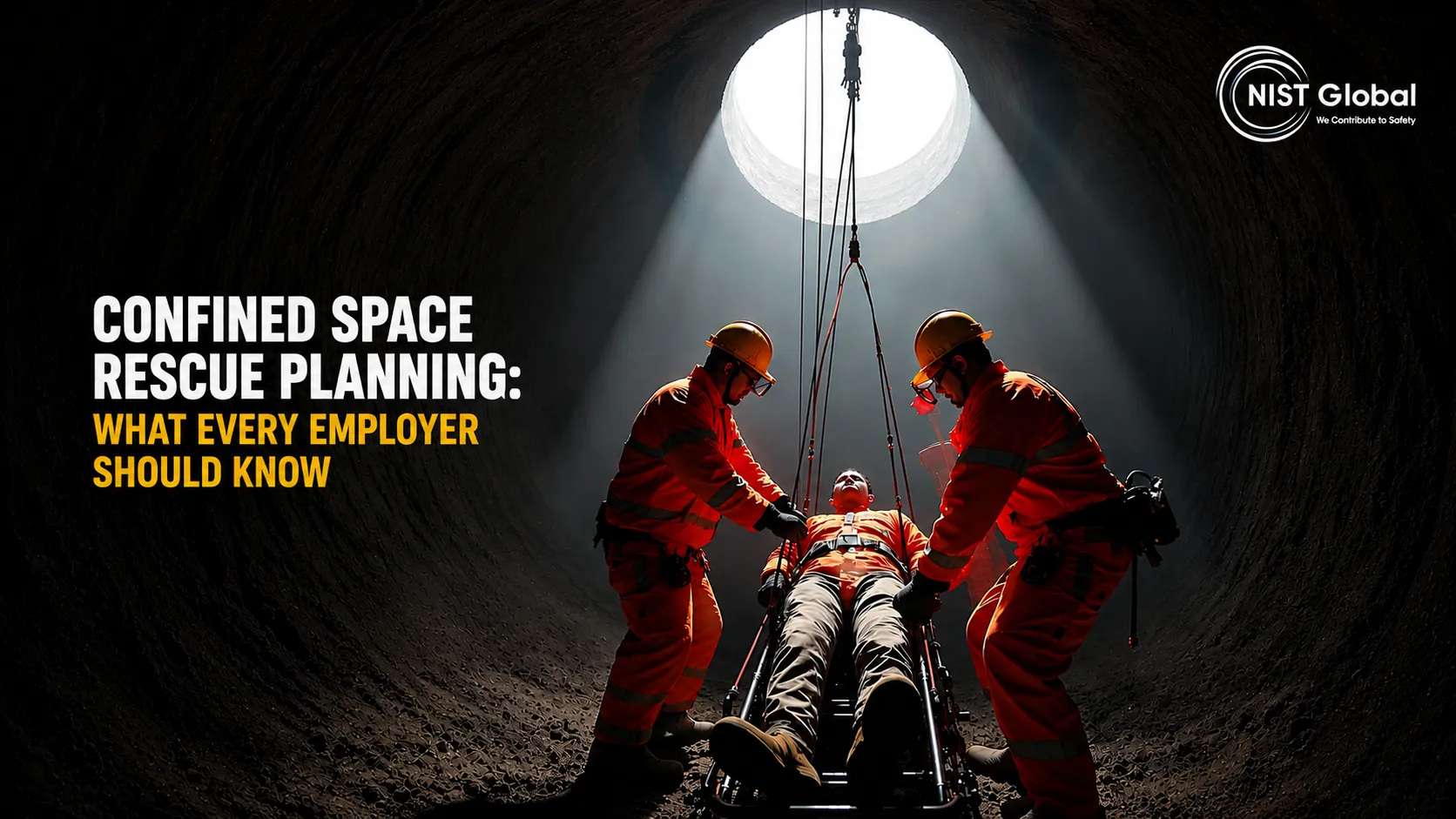
Do you know? Approximately 60% of confined space fatalities involve would-be rescuers who attempt rescue without proper training or equipment. (OSHA)
Work operations in industries regularly involve personnel entering an environment that is by nature hostile. Whether the activity involves inspecting a city’s sewer line or working on maintaining a petrochemical tank or cleaning up grain from inside an agricultural silo, there exist high risks involved in the process.
Confined spaces are generally described as work spaces that are spacious enough for entry, have restrictions to enter or exit, and are not meant for continuous human habitation. In a sense, these places being cut off from regular surroundings mean that any error may turn out to be fatal in a few seconds’ time.
In case of any emergency happening inside a vessel, tank, or pit, regular public emergency response may not be able to reach the site of accident and stabilize the victim within the golden hour. A truly planned emergency involves the presence of a dedicated rescue plan for such circumstances.
To all EHS Directors, Facility Management, and Executives – constructing a compliant confined space rescue plan isn’t simply a legal requirement; it is a necessity.
Understanding Confined Space Hazards
Workplace injury records demonstrate that unorganized and spontaneous rescues are among the key triggers for multi-victim industrial catastrophes.
Organizations that implement permit systems, atmospheric monitoring, and rescue planning can significantly reduce confined space risks.
Before drawing up a successful rescue scheme, one must first appreciate the physical and atmospheric forces at play which render these spaces particularly dangerous.
Atmospheric Hazards in Confined Spaces
The most dangerous aspects of being inside an industrial vessel are invisible to the naked eye. Atmospheric dangers typically fall into three categories:
- Oxygen Starvation: Takes place if oxygen levels become dangerously low – below the safe level of 19.5%. Oxygen starvation may occur due to natural rusting in metal tanks, biological breakdown in waste dumps or simply because of the displacement by nitrogen or argon.
- Deadly Concentrations of Gas: The enclosed nature of the space makes it easy for high amounts of deadly gas to build up. Industrial activities can generate potentially fatal concentrations of H2S, CO, or VOCs.
- Explosive Atmosphere: Methane emissions and fine organic particles can create an explosion risk in confined spaces. In fact, a simple spark from a non-extrinsically safe tool can cause an explosion.
The Risks of Unauthorized Rescue Attempts
The most heartbreaking aspect of confined space disasters is the number of casualties that usually occur when such incidents happen. Once an employee loses consciousness in a tank or manhole, his colleagues outside would naturally want to come to his rescue.
But because they lack safety equipment, respirators, or retrieval systems, they tend to venture into space without the necessary precautions only to find themselves succumbing to the same deadly atmosphere or poison gas.
Essential Confined Space Rescue Equipment
Nearly 1,000 confined space fatalities were recorded in the U.S. over an eight-year period. (BLS)
A confined space rescue plan is only effective when supported by appropriate rescue equipment. Organizations should ensure that rescue equipment is readily available, inspected regularly, and suitable for the specific hazards associated with the confined space.
Common confined space rescue equipment includes:
- Multi-Gas Detectors: Used to continuously monitor oxygen levels, flammable gases, and toxic substances.
- Full-Body Harnesses and Lifelines: Allow workers to be retrieved safely without entering the confined space whenever possible.
- Rescue Tripods and Winches: Essential for vertical entries such as tanks, pits, and manholes, enabling non-entry rescue operations.
- Self-Contained Breathing Apparatus (SCBA): Required for rescue teams operating in oxygen-deficient or contaminated atmospheres.
- Communication Systems: Radios or intrinsically safe communication devices help maintain constant contact between entrants and standby personnel.
- First Aid and Emergency Medical Equipment: Supports immediate medical assistance until professional emergency services arrive.
Regular inspection, maintenance, and testing of rescue equipment are critical to ensure reliability during emergencies.
Regulatory and Compliance Considerations
Atmospheric hazards remain one of the leading causes of confined space incidents. (OSHA Research Reviews)
Confined space rescue planning should align with applicable safety regulations and management system requirements. Standards such as OSHA 1910.146 (Permit-Required Confined Spaces) require organizations to identify confined space hazards, implement permit systems, conduct atmospheric testing, and establish rescue procedures before entry.
Similarly, ISO 45001 emphasizes emergency preparedness, response planning, competency development, and periodic drills to ensure organizations can respond effectively to workplace emergencies.
Employers should ensure that confined space entry activities are supported by:
- Risk assessments
- Permit-to-Work procedures
- Atmospheric monitoring
- Rescue equipment
- Trained entrants, attendants, and rescue personnel
- Periodic rescue drills and reviews
A compliant rescue plan not only helps meet regulatory expectations but also strengthens worker protection and operational safety.
How to Develop an Effective Confined Space Rescue Plan
Your rescue approach has to be well designed and complete prior to an employee crossing into a confined space. The corporate blueprint needs to cover four pillars:
Pillar 1: Implement a Permit-to-Work System
Employees must never cross into a limited workspace after a casual verbal agreement. Each work procedure has to involve a written permit-to-work system which acts as a thorough safety checklist, proving that:
- It has been physically and chemically separated from the production processes.
- All the valves leading to the area have been blinded, plugged, or locked out.
- Mechanical forced-air ventilation is in operation for maintaining the atmosphere inside the room.
Pillar 2: Assign a Competent Standby Attendant
All confined spaces require a complete crew, but the most important function will be that of the Standby Attendant or Buddy. This individual must never enter the enclosed space at all under any conditions.
Pillar 3: Prioritize Non-Entry Rescue Methods
The safest rescue strategy is the one in which you never have to go into the potentially deadly space yourself. You should make this your first priority:
- Entrants should be wearing specially designed full body harnesses and mechanical lifelines attached to their gear.
- Your non-entry rescue equipment such as mechanical rescue tripods should be set up immediately adjacent to vertical entry points like manholes or storage tanks.
- With this system, you can hoist the unconscious worker out of a confined space very quickly without risking your own safety.
Pillar 4: Establish Entry Rescue Procedures
For situations where a wounded person becomes entrapped at a corner of structure or behind an interior baffle, it would not be possible to conduct a rescue that does not entail an entry. An entry based rescue operation should be conducted in such cases.
The entry based rescue could be done only by a certified highly trained rescue group having SCBAs or supplied air respirators, who should know precisely how to enter, stabilize and bring out casualty from confined doors.
Partnering with NIST Global: Build On-Site Rescue Skills
NIST Global offers a variety of certified training programs to get at the core of occupational accidents:
- Confined Space Technical Training: Training program that includes hazard identification, air monitoring, entry permit arrangements, and ventilation systems.
- Confined Space Rescue Program: Hands-on program that teaches intermediate and advanced skills on deploying rescue tripods, SCBA management, and casualty evacuation under strict physical pressure.
- Standby Attendant Classes: Specialized training program highlighting the responsibilities of the safety monitor, including communication, air monitoring, and non-entry evacuations.
Conclusion: Stop Putting People at Risk – Be Prepared for the Unexpected
Your Confined Space Rescue Plan is not merely a requirement—it’s an essential investment in the resilience, employee morale, and values of your organization. You should never have a workplace emergency before your staff starts searching for a monitor or attempting to piece together how to put together a rescue tripod.
Ensure that your team has access to the necessary skills, scenario-based training, and certification from NIST Global in order to ensure that they have what they need at their fingertips when danger strikes. Protect your facilities, prevent lost-time accidents, and create a culture of empowerment throughout your organization.
Take the Next Step: Strengthen Your Confined Space Rescue Preparedness
Ready to make a difference in your emergency planning and turn hazard identification into actual rescue efforts? Work with our EHS specialists to keep your team safe.
Check Out Our Training Solutions: Take a look at our training courses and see which one best fits your technical requirements as a company.
Design an On-Site Supervisor Coaching Program: Speak with our safety specialists about designing a coaching plan for supervisors specific to your industry.
Contact Our Safety Professionals from NIST Global Now For Your Personalized Corporate Safety Consultation!
FAQs
Q1: What is a confined space rescue plan?
A: A confined space rescue plan is a documented procedure that outlines how an organization will respond to emergencies occurring in confined spaces. It helps ensure that workers can be rescued quickly and safely while minimizing risks to rescuers.
Q2: Why is confined space rescue planning important?
A: Confined spaces can contain hazards such as toxic gases, low oxygen levels, restricted access, and limited escape routes. A rescue plan helps organizations prepare for emergencies and protect workers from serious injuries or fatalities.
Q3: Who should be involved in confined space rescue planning?
A: Employers, supervisors, safety professionals, entrants, attendants, and rescue personnel should all play a role in confined space rescue planning. Clear responsibilities and proper training are essential for an effective emergency response.
Q4: What equipment is commonly used during confined space rescue operations?
A: Common equipment includes gas detectors, rescue tripods, winches, full-body harnesses, lifelines, communication devices, breathing apparatus, and first aid equipment. The specific equipment required depends on the nature of the confined space and associated hazards.
Q5: How can organizations improve confined space rescue preparedness?
A: Organizations can improve preparedness by conducting risk assessments, implementing permit-to-work systems, providing appropriate rescue equipment, training employees, and regularly conducting emergency drills to test rescue procedures.
Popular Safety Training Programmes
Behaviour Based Safety Training
Develop safe behaviours, strengthen safety culture, and reduce workplace incidents through proactive observation and intervention.
Fire Safety Training
Equip employees with the knowledge and practical skills to prevent fires, respond effectively, and protect people and assets.
Defensive Driving Training
Improve driver awareness, reduce road risks, and promote safer driving practices for employees operating vehicles.
The Right Safety Training Could Prevent the Next Workplace Incident
Explore our comprehensive range of workplace safety training programmes designed to reduce risks, strengthen safety culture, and improve workforce competence across all levels of your organization.