
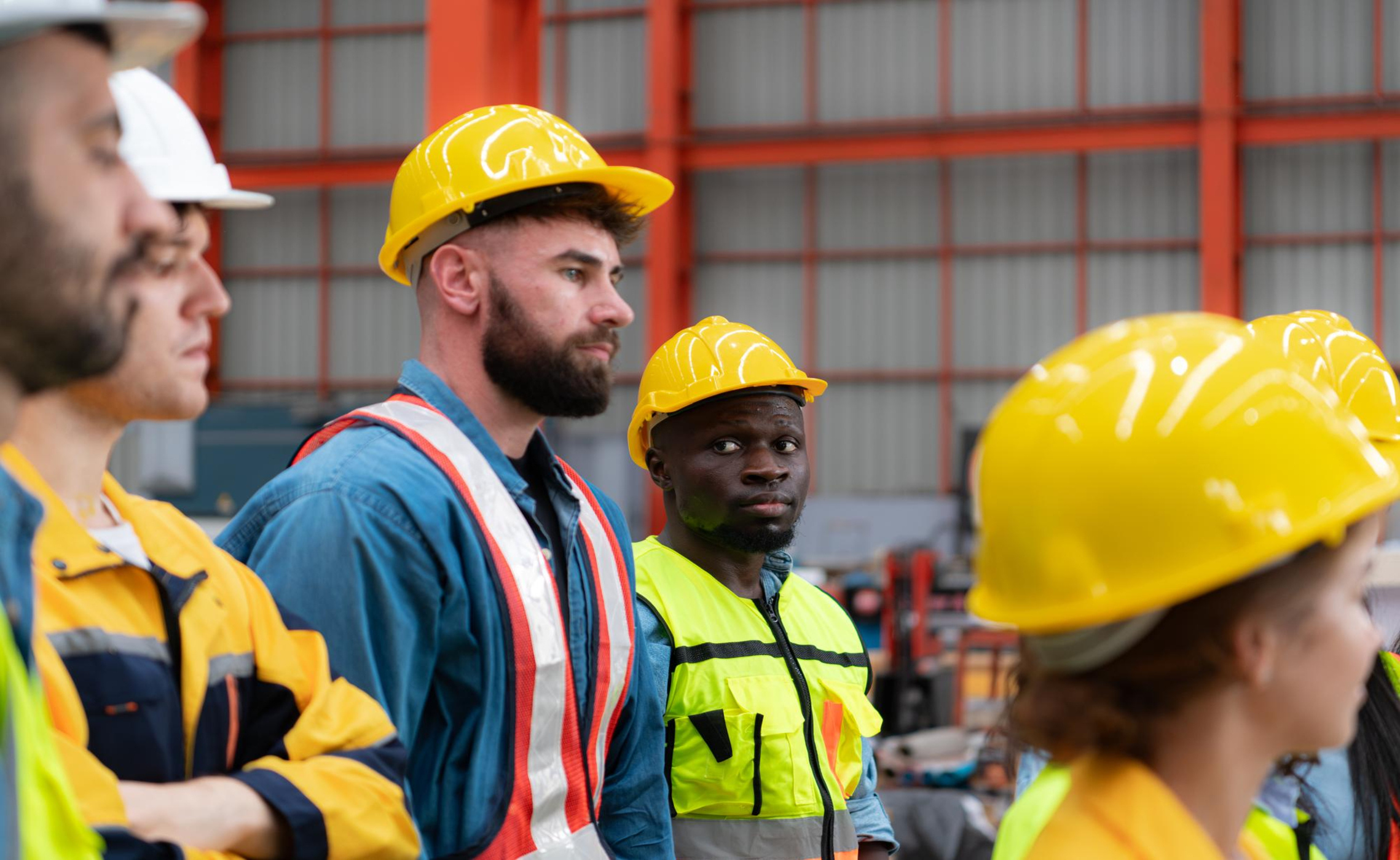
In India’s rapidly expanding industrial sector, workplace safety is no longer just a compliance requirement — it has become a critical factor in protecting lives, improving operational continuity, and reducing workplace incidents.
Studies indicate that nearly 80% of workplace incidents are linked to unsafe behaviors and human error rather than equipment failure, making behavior-based safety programs increasingly important for modern industries.
While safety management at one factory may prove to be quite challenging, safety management at ten factories, each located in a different geographical region or even different countries, and with various safety policies in place at each location, proves to be an even greater challenge because this creates a “safety gap.”
This safety gap is filled by NIST behaviour-based safety training, which is focused more on individual action rather than documentation.
Common Challenges in Managing Multisite Safety Programs
Expanding a business is no mean feat, but it will definitely strain the limits of any safety program. When you have a safety team overseeing facilities hundreds of miles apart from each other, it is effortless to adopt the “out of sight, out of mind” mentality. However, without a standardised system, a single error made at a distant site might result in a safety catastrophe for the whole business.
-
Distance: Managers cannot be in all places at once.
-
Cultural Differences: Risks are seen differently in different regions.
-
Third-Party Workers: Contractors might not know about your safety protocols.
-
Difficult Reporting: It is hard to see safety trends when you have multiple reporting systems.
NIST Behaviour-Based Safety Training – A Complete Global Approach
To ensure that there is standardization of safety practices in a wide geographic location, it will take more than just ensuring that one manual is being used. The traditional approach of policing, when it comes to safety, should be abandoned in favor of an approach in which the system operates the same way whether it is adopted in an advanced lab or even on a faraway construction site. With a common language of safety, everybody will know what is expected of them all the time.
Custom Program Design
NIST Global does not follow a “one-size-fits-all” training approach. They analyze your risks. Subsequently, they create a BBS program tailored to your industry, which can be oil and gas, construction, or manufacturing.
Training for All
While safety pertains to employees, it also concerns managers. NIST provides the following services:
-
Employees: Training on hazard identification and peer safety observation.
-
Managers: Training on positive reinforcement and constructive safety feedback.
-
Contractors: Orientation that will ensure they perform safely, like your regular employees.
Applying Cutting-Edge Technologies
In managing several sites, it is important to use cutting-edge technologies. NIST Global provides the following services:
-
E-learning: Quality training for everyone through the Internet.
-
Mobile applications: Employees will be able to report any safe or unsafe behaviors via their mobile devices.
- Real-time dashboards: Leaders will be able to check the safety scores in all sites from a single platform
Contractor Integration
Third-party contractors are often among the most vulnerable groups in high-risk work environments. Before stepping foot on the project, contractors have to undergo NIST behaviour-based safety training.
The Real-World Impacts of NIST Behaviour-Based Safety Training
As soon as organizations adopt this methodology, results become evident. For example, a global manufacturing company saw its accident rate reduced by 30% in just one year. Because of a focus on behavior, the company was able to prevent accidents from happening.
Metrics for Success: Not Just Numbers
Traditional safety programs base their metrics on “Lagging Indicators,” i.e., injury statistics for the past month. In contrast, NIST behaviour-based safety training bases its metrics on “Leading Indicators.”
NIST Global helps you measure:
-
Observation Frequency: How often are workers keeping an eye out for each other?
-
Safe-to-At-Risk Ratio: Is there an increase in safe behaviors over time?
-
Quality of Feedback: Do managers provide their employees with constructive feedback?
By concentrating on these small wins, companies can anticipate potential injuries in the future.
Psychological Safety: The Backbone of BBS
If an employee feels like they could be reprimanded for reporting an error, then they won’t report it. During our training workshops, NIST Global places great emphasis on Psychological Safety.
We train leaders to:
-
Listen Without Pointing Fingers: Look at what caused a behavior, not who did it.
-
Peer Reporting: Encourage employees to actively look out for the safety and well-being of their co-workers.
-
Trust: Guarantee that the information gathered from observations is used for coaching, not reprimanding.
With this approach, workers will act as your company’s eyes and ears.
Sustainability: Ensuring Long-Term Safety
While many safety programs get off to a good start, they often lose steam after a few months. NIST Global makes sure that your investment pays off by developing internal capacity. Rather than depending on external experts indefinitely, we practice “training the trainers.”
We help you:
-
Recruit Safety Champions: Identify internal leaders who can drive the BBS program at a local level.
-
Develop Feedback Loops: Organize regular meetings where employees see how their ideas for improvement have resulted in tangible changes, such as new equipment or improved lighting.
-
Continuous Engagement and Refresher Training: Conduct energizing training sessions to reignite the passion and motivation for safety.
Benefits of NIST Behaviour-Based Safety Training
- Reduced workplace incidents and unsafe behaviours
- Improved employee participation in safety programs
- Better reporting of near misses and hazards
- Stronger safety culture across multiple worksites
- Enhanced contractor safety management
- Improved compliance with HSE and ISO safety standards
- Better communication between workers and management
Conclusion
Safety must not differ if you cross the borders or employ a contractor. At NIST Global, all employees, regardless of who they are paid by, will remain safe. Using professional mentoring and advanced technology, they guide you from being “rules compliant” to becoming “people caring.”
With NIST behaviour-based safety training, organizations build a sustainable workplace safety culture that focuses on proactive risk reduction, employee engagement, and long-term safety performance. In doing so, each employee will become a safety officer, while each contractor will be considered your trusted partner.
The result will be a workplace where safety becomes more than a duty – it becomes your brand, your performance, and above all else, your responsibility towards people. Regardless of how many working sites you have, NIST Global guarantees that your safety message will stay clear and consistent.
Key Takeaways
-
NIST Global helps organizations standardize safety practices across multiple worksites and contractor teams.
-
By using standardized digital tools, coaching, and data collection, NIST ensures that all employees, including third-party contractors, follow the same safety practices everywhere.
-
Behavior-based safety training helps strengthen workplace safety compliance and employee engagement.
FAQs About NIST Behaviour-Based Safety Training
Popular Safety Training Programmes
Behaviour Based Safety Training
Develop safe behaviours, strengthen safety culture, and reduce workplace incidents through proactive observation and intervention.
Fire Safety Training
Equip employees with the knowledge and practical skills to prevent fires, respond effectively, and protect people and assets.
Defensive Driving Training
Improve driver awareness, reduce road risks, and promote safer driving practices for employees operating vehicles.
The Right Safety Training Could Prevent the Next Workplace Incident
Explore our comprehensive range of workplace safety training programmes designed to reduce risks, strengthen safety culture, and improve workforce competence across all levels of your organization.