
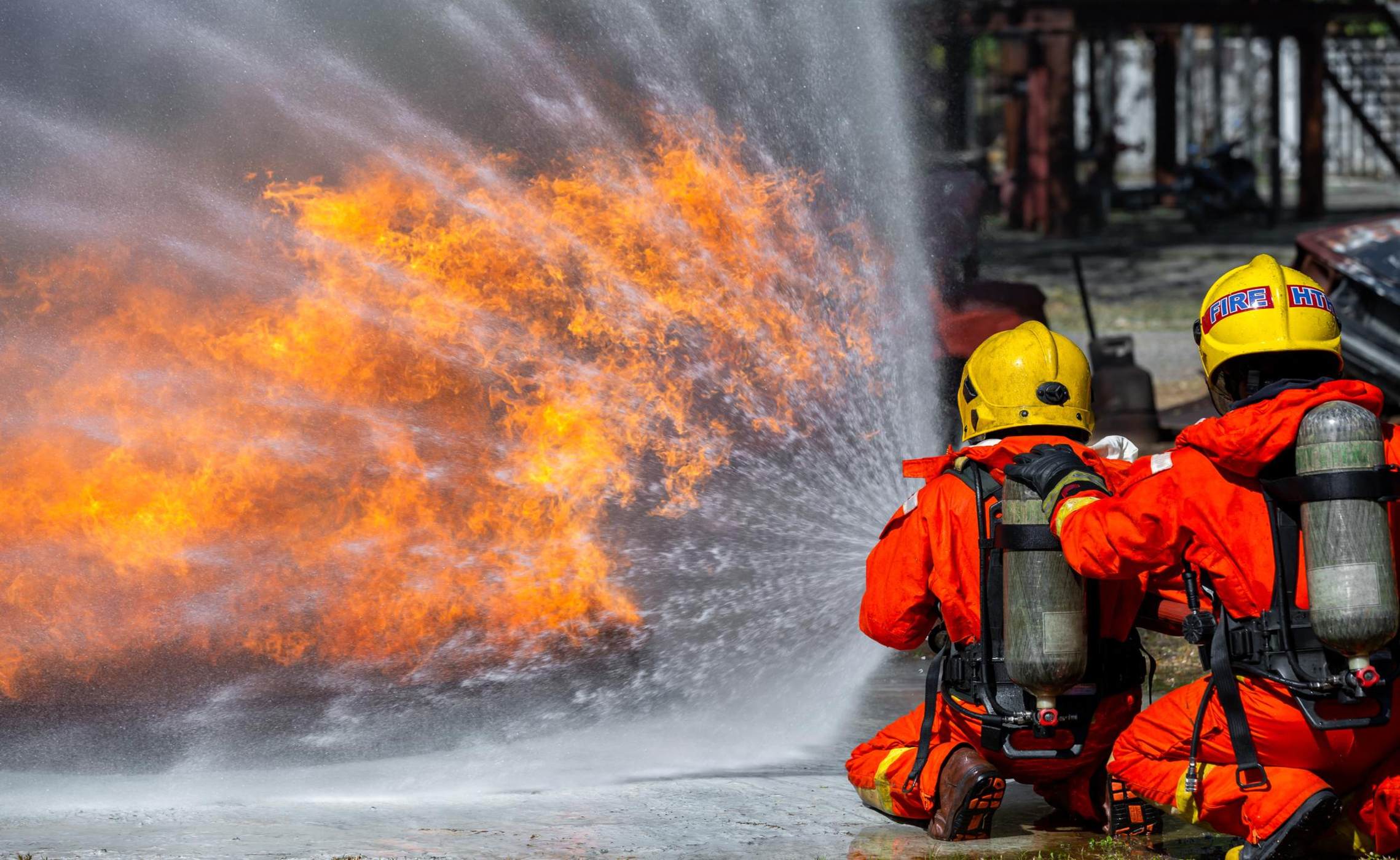
Did you know that the National Crime Records Bureau (NCRB) reports fire accidents as one of the major reasons for loss of lives and property damage across the Indian industrial and construction sector? An average of 35 people die every day in such reported fire accidents. The risk compounds within high-density urban locations and the complex industrial processes. Catastrophic losses, such as a single spark in the Surat textile mill or an electrical short circuit at Mumbai.
In this blog, we will discuss what is onsite fire fighting training India, why it is required, legal requirements, challenges associated and benefits.
What Is Workplace Fire Safety Training?
Workplace onsite fire fighting training India is a structured program designed to deliver the right knowledge and training to the entire workforce to prevent, identify and respond to emergencies. It involves a deeper understanding of the practical instruction on fire fighting equipment and executing safe evacuation procedures.
The examples of such training include:
- 1
Learning how to operate portable fire extinguishers on small incipient fires.
- 2
Understanding safe evacuation procedures and responsibilities of a fire warden.
- 3
Acquainting with emergency response protocols for electrical or chemical fires.
Why On-Site Fire Fighting Training is Critical for Industrial & Construction Sites
The first 120 seconds are very crucial, especially in high-risk environments such as manufacturing plants or construction sites. In this timeframe, a fire outcome could either stay as a minor disruption or transform into a national news headline. With the spark occurring near a diesel generator or a chemical vat, hesitation turns catastrophic. In such a scenario, the training replaces your workplace panic with precision to ensure that your workforce acts as a disciplined first-response unit.
The specific importance of these sectors includes:
1.Prevention of Mass Casualties in Zones of High-Occupancy: Industrial sites have the majority of the contractual workforce. They may or may not be familiar with the complex site layouts. A robust fire fighting training ensures that every individual knows what the exact evacuation route is. This awareness helps to prevent mass casualties.
2.Protection of High-Value Assets and Infrastructure: Construction sites and factories house expensive machinery, raw materials, and tower cranes. Many of these items could even be highly combustible. An early intervention by a trained workforce with the correct extinguisher class can prevent a localised fire from engulfing your entire facility.
3.Mitigating the “Chain Reaction” Risk: The oil, gas and chemical plants can witness a small fire, eventually leading to a secondary explosion. On-site training trains workers on how to isolate fuel sources to activate emergency shutoffs.
4.Ensuring Business Continuity and Regulatory Standing: Sometimes, a major fire incident can turn into a prolonged sealing of the premises by authorities for investigation. An effective fire management program and training ensure that the blaze is quickly contained, allowing operations to resume faster and maintain the reputation of the organisation with compliance and clients.
5.Empowering the “First Responder” Mentality: In remote construction or logistics hubs, external fire services may not arrive quickly enough. On-site training empowers your workforce to bridge this critical gap to handle the high-pressure emergencies effectively.
Real Challenges for Industrial & Construction Sites
Several Indian organisations invest heavily in fire fighting hardware. However, on high-intensity industrial and construction sites, the equipment presence does not always equate to preparedness.
The primary challenges faced by HR leaders and plant managers include:
1.Lack of Fire Risk Recognition in Daily Tasks
2.The Contract Labour Dilemma
3.Ineffective “Tick-Box” Training Programs
4.Poor Safety Culture and Complacency
5.Communication Gaps and Language Barriers
Benefits of On-Site Fire Safety Training India
A comprehensive on-site fire safety training India offers a tangible and long-term advantage to safeguard your workforce and organisational bottom line.
1.Reduced Workplace Incidents & Risks
2.Seamless Regulatory Compliance
3.Stronger Safety Culture & Morale
4.Improved Employee Behaviour & Confidence
5.Enhanced Productivity
How to Implement On-site Fire Fighting Training India at Your Site
A fire-secured industrial or construction site works with a systematically designed ongoing strategy rather than a one-time session:
-
Identify Industry-Specific Risks: Start your pre-assessment with a small risk management audit of your facility. Identify the risks associated with high-zones such as electrical panels, chemical storage areas, and fuel depots.
-
Organise Realistic Practical Drills: Go beyond the dimensions of theory. Plan on-site ‘live fire’ simulations and evacuation drills. These drills force your employees to navigate through the workplace under simulated conditions.
-
Comprehensive Training for Entire Workforce: Opt for an inclusive training program. It is important to train your entire workforce, including contract labour and temporary staff. This training ensures a uniform emergency response across the site.
-
Conduct Regular Refresher Sessions: Safety awareness fades if the refreshers are overlooked. Schedule refresher courses periodically. Add a few unannounced drills to ensure preparedness amongst all your staff.
-
Maintain and Audit Fire-Fighting Equipment: Your training turns useless if your hardware fails. Plan regular inspections and maintain first aid kits, hydrants, extinguishers and AEDs to ensure that they are fully functional and easily accessible.
Choosing the Right Training Partner
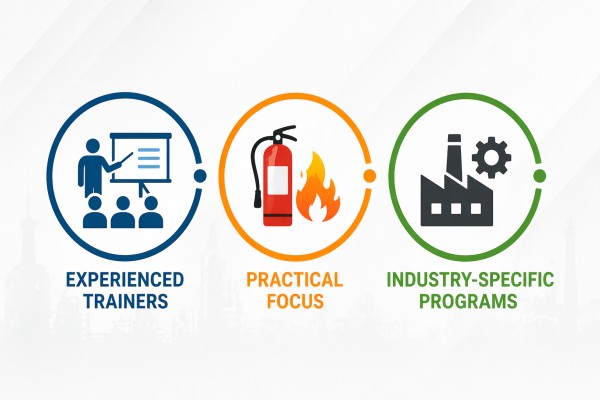
Industrial safety is paramount and a generic training often lacks depth. Hence, HR leaders and safety managers should search for a global program with:
-
Experienced Trainers
-
Practical Focus
-
Industry-Specific Programs
NIST Global is a leading safety training service provider to deliver high-impact fire fighting training India. The programs offered at NIST are designed specifically to focus on practical emergency response and compliance with the local regulations, like the Factories Act. Our training programs are expertly instructed with trainers carrying deep-rooted field experience to ensure all safety protocols are met. Partnering with NIST Global transforms the organisational safety culture from a passive compliance follower into an active shield against disasters.
Conclusion
For the manufacturing and construction sites in India, fire safety should not be restricted to a compliance ‘check box’ activity only. Your organisation needs to imbibe it as the backbone of your operational resilience. The high-risk industrial landscapes are equipped with high-tech machinery and heavy infrastructure. They remain safe as long as they are operated by safe people. A fire-safe workplace is not the one with expensive hydrants but the one with a workforce that is instinctively prepared to use them.
By investing in NIST’s Global fire fighting training India, your organisation could fulfil the mandates of the Factories Act (1948). These programs are specifically designed to build a safe culture with shared responsibilities. They leverage a globally diverse safety perspective drawing the attention towards international best practices of rooting a robust safety culture. This global initiative ensures that you workforce is well-prepared for the emergency with world-class response techniques.
Key takeaways:
1.Critical Need: Indian industrial fires contribute to massive property damage and life loss. Early intervention is a prerequisite.
2.Challenges: Indian industries deal with risks related to electrical faults and hot work. Majorly, these industries lack basic safety awareness amongst their contractual labour.
3.Solution: A practical and on-site fire fighting training India reduces such fire incidents to improve the safety culture. It ensures a rapid emergency response.
Popular Safety Training Programmes
Behaviour Based Safety Training
Develop safe behaviours, strengthen safety culture, and reduce workplace incidents through proactive observation and intervention.
Fire Safety Training
Equip employees with the knowledge and practical skills to prevent fires, respond effectively, and protect people and assets.
Defensive Driving Training
Improve driver awareness, reduce road risks, and promote safer driving practices for employees operating vehicles.
The Right Safety Training Could Prevent the Next Workplace Incident
Explore our comprehensive range of workplace safety training programmes designed to reduce risks, strengthen safety culture, and improve workforce competence across all levels of your organization.