

Home Fire Prevention & Safety Tips
Industrial or commercial space is not the only area of fire safety. The same is true of homes which are equally susceptible to the dangers of fire mostly because of the daily activities that include cooking, use of electricity, and storage of flammable materials. There are numerous residential fires that happen due to the absence of simple fire prevention precautions.
Knowing the most frequent causes of home fires and preventing actions can greatly decrease the risk of injuries, deaths, and damaging of property that can be caused by fires.
Common Causes of Fires in Homes
Most residential fires are preventable. Some of the most common causes include:
-
Unsafe cooking practices
-
Malfunctioning or overloaded power wiring
-
Poor usage of LPG cylinders and gas stoves
-
Smoking materials that have not been attended
-
Candles, incense sticks or oil lamps used unattended
-
Substandard storage of inflammable home products
Identification of such risks is the initial step towards effective fire prevention in the house.
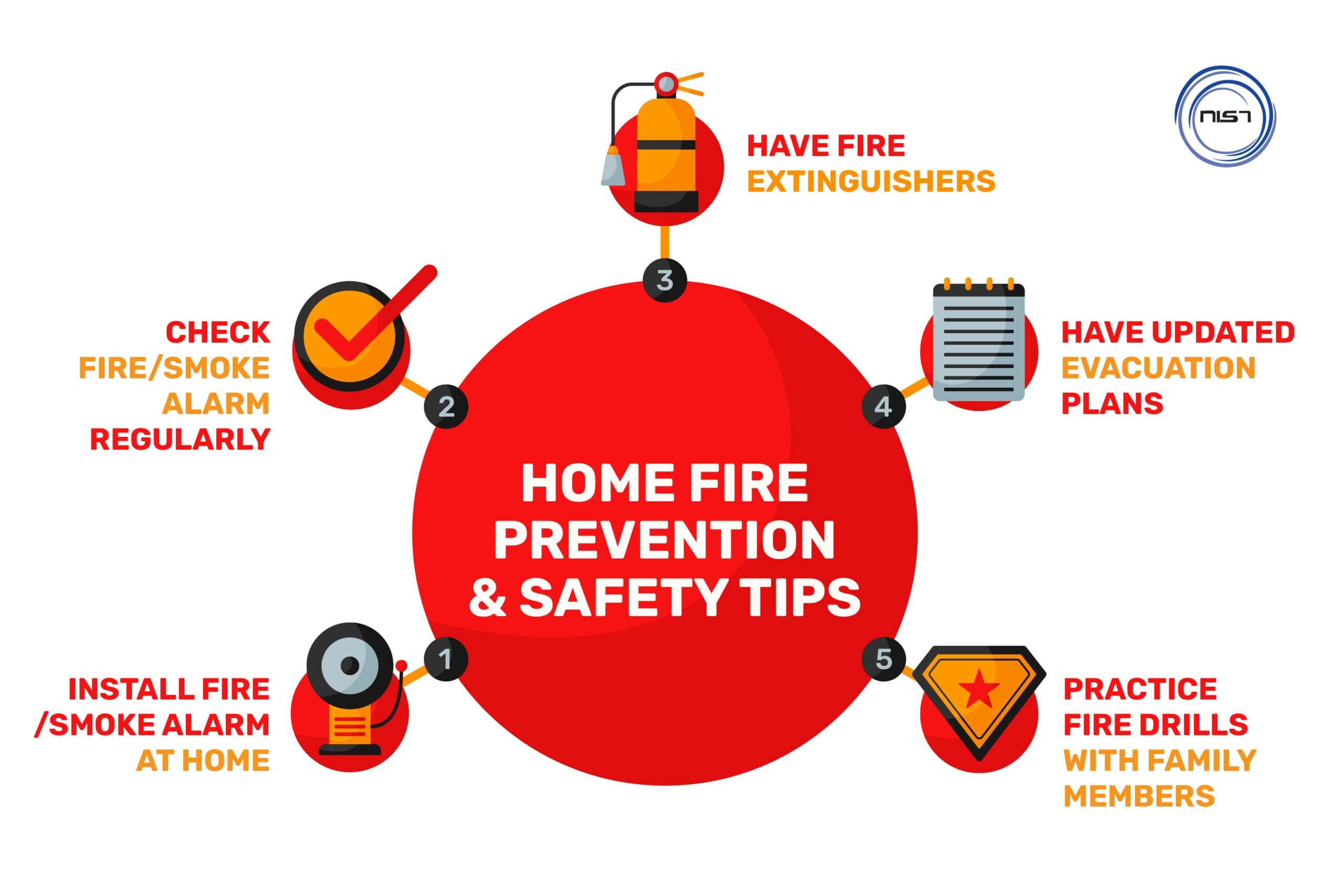
Home Fire Prevention Tips
Electrical Safety at Home
Among the major causes of residential fires are electrical faults.
-
Do not overload plug points and extension cords.
-
Install damaged or loose wiring immediately.
-
Turn off the electric devices when not in use.
-
Install certified electrical fitting and appliances.
Kitchen Fire Prevention
The kitchen is also one of the most likely places in a house to catch fire.
-
Always do not leave the cooking alone.
-
Store flammable objects in fire-free places.
-
Make sure that LPG cylinders and gas pipelines are inspected on a regular basis.
-
Switch off the gas when you are done cooking.
Safe Use of Open Flames
-
Candles, incense sticks, and oil lamps are common in many homes.
-
Keep open flames away from curtains, papers, and furniture
-
Never leave candles or lamps unattended
-
Ensure children cannot access open flames
Smoking-Related Fire Risks
Carelessness while smoking can easily lead to fires.
-
Do not smoke in bed or near flammable materials
-
Ensure cigarettes are fully extinguished
-
Use proper ashtrays instead of disposing of cigarette butts casually
Storage of Flammable Materials
Many everyday household items can fuel a fire.
-
Store flammable liquids away from heat sources
-
Avoid clutter that can increase fire spread
-
Keep matchsticks and lighters out of children’s reach
Importance of Smoke Alarms in Homes
Smoke alarms play a crucial role in early fire detection, giving occupants time to react before a fire spreads.
-
Install smoke alarms in key areas of the home
-
Test alarms regularly to ensure they are working
-
Replace batteries as recommended
Early detection is one of the most effective fire prevention and safety measures for residences.
Creating a Fire-Safe Home Environment
Home fire prevention is concerned with awareness, caution, and consistency. The most effective and everyday routines like turning off appliances, healthy cooking methods, and storage can significantly alleviate the risks of fire.
The education of the family members (children, in particular) that may lead to the better living conditions can help to avoid the panic-dependent behaviours that may deteriorate the situations.
Conclusion
Home fires may cause devastating results, and the majority of home fires are preventable. The houses can safeguard life, property, and personal safety by recognising regular fire risks and implementing preventative measures.
Prevention of fire, instead of responding to it, will mean that the risks are minimised before they grow into emergencies. The best way of ensuring that families are safe is the proactive method of home fire safety.
About us!:
A good educational institute will always guide you in the right direction. NIST is India’s first NEBOSH Gold Learning Partner, as well as an ISO:9001 certified company. NIST offers a one-day/8-hour fire safety training that can be customised to meet the needs of individuals/employees.

you might also like
Popular NEBOSH Courses
NEBOSH International General Certificate (IGC)
For beginners and supervisors wanting a strong foundation in health & safety.
NEBOSH International Diploma (IDip)
For experienced safety professionals aiming for senior HSE roles.
NEBOSH Process Safety Management (PSM)
For those in high-hazard industries focusing on process safety management.