
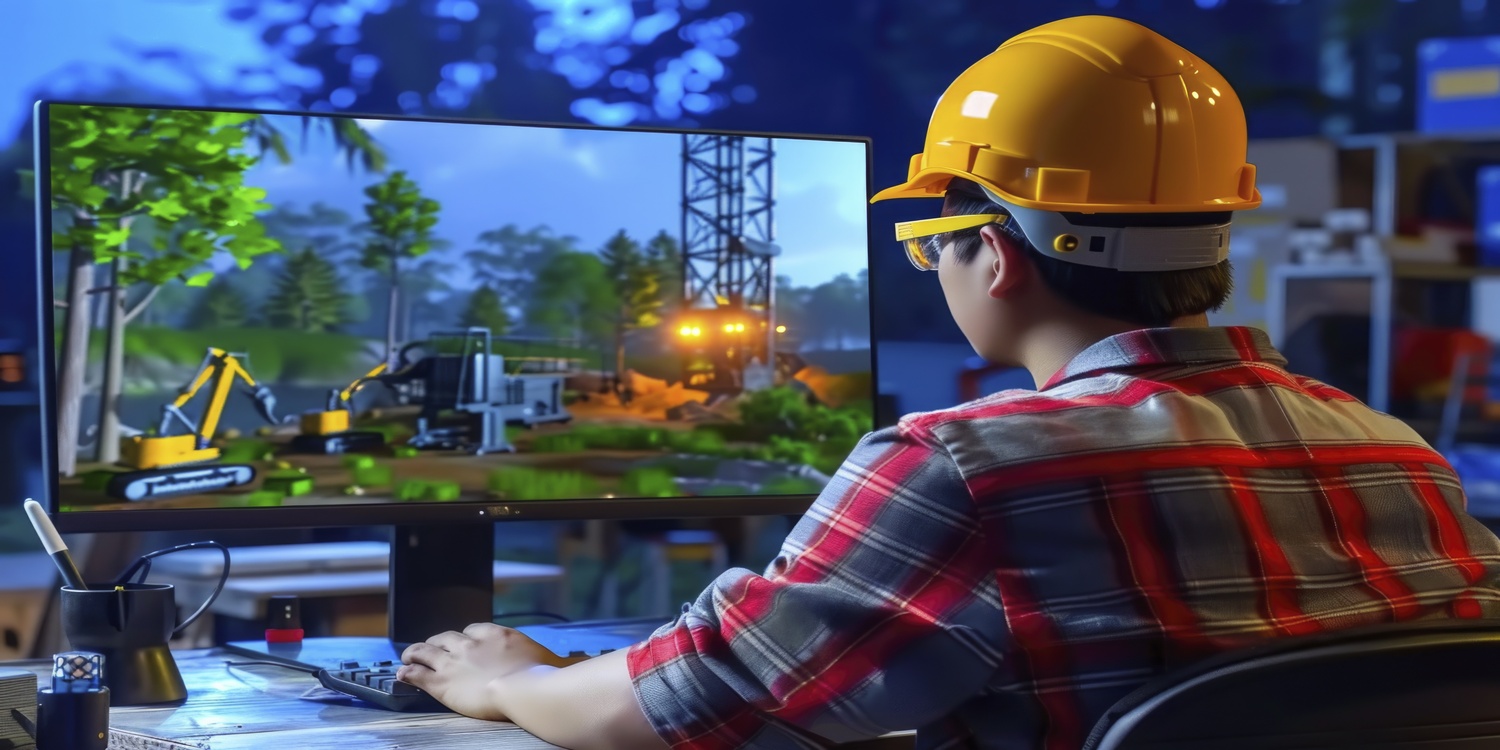
What if learning safety didn’t mean sitting through long presentations or flipping through endless slides?
What if employees could experience safety — make decisions, identify risks, and see consequences — all within a safe, virtual environment?
This is exactly where gamification and simulation-based learning are transforming the future of HSE training.
Research findings state that gamification boosts participation in safety training by 50-60% and improves overall engagement. (Source: LinkedIn Research Insights)
From Passive Learning to Active Participation
The conventional classroom-based safety training tends to be informational, yet it cannot capture the interest. Students hear, make notes, and walk away, but when real-life situations arise, the ability to remember and reply might not be enough.
Modern HSE learning needs more than awareness. It needs engagement, practice, and behavioral change.
Probably, this is the reason why many organizations have been embracing interactive digital training as an effective way of delivering safety training, where employees learn by doing, not just listening.
Gamification: Making Safety a Fun Experience
One powerful reason gamified HSE training works is simple human psychology: no one likes to lose a game. By making the process of learning safety a form of the game, learner will automatically get more concentrated. With scores, levels, or outcomes, they will get motivated to do well. Such a competitive spirit helps to be more focused and makes informed decisions.
Over time, this translates into meaningful behavioral change — employees begin to approach real-life safety situations with the same alertness and determination, significantly strengthening safe work habits.
Gamification essentially means bringing the game aspects, such as challenges, scores, time limits, and instant feedback, to the learning environment. In HSE training, it entails that learners are no longer passive recipients — they become active participants.
To mention an instance, instead of being informed about unsafe conditions, learners can identify hazards in real time, react under pressure, and see the consequences of their decisions.
Our Innovative HSE Gamification Approach
This interactive safety game, designed by NIST Global, enhances hazard identification skills by encouraging players to recognize and prevent unsafe actions before accidents occur. Through fast decision-making and visual awareness, learners experience how small, unsafe behaviors can lead to serious incidents if ignored.
🕹️
How to Play the Safety Game:
- Step 1: Click Start to begin your safety challenge.
- Step 2: Observe the balls falling from the top of the screen.
- Step 3: Identify unsafe acts and unsafe conditions.
- Step 4: Move left or right using the arrow keys to control the game.
- Step 5: Prevent the accidents by catching the unsafe acts/conditions.
- Step 6: Missed unsafe acts/conditions will result in accidents, so stay alert and prevent the accidents as much as possible!
The more hazards you catch, the higher your safety performance score. Become a safety champion!
In this game-based environment, learners are encouraged to catch unsafe acts and conditions, thus reinforcing hazard recognition skills in a fun and memorable way. Though minimal in design, the learning impact is still considerable — learners get more alert, engaged, and focused on safety behaviors.
Simulation-Based Learning: Practice Without Risk
Simulation is actually a step beyond gamification, whereby it allows for the recreation of real-life workplace scenarios. It places employees in situations where they have to face job emergencies, unsafe acts, or high-risk tasks — and subsequently, they make decisions on the spot.
At NIST, simulation-based HSE learning is designed and validated by Subject Matter Experts (SMEs) to reflect actual workplace conditions. Learners receive immediate feedback, helping them understand not just what to do, but why it matters.
This method builds confidence, sharpens decision-making, and prepares employees for situations that are difficult or dangerous to recreate in real life.
Why Gamified HSE Learning Works
In gamified HSE learning, playing with a timer is very similar to the actual situations in the workplace where there are situations when one has to make a decision in a short period of time. The timed challenges will be used to teach learners to notice the hazards quicker, analyze risks correctly, and act without needing to be hesitant.
This practice will assist in reflexive safety skills, ensuring that in a real field scenario, employees will know how to react appropriately and in a timely manner, which is essential to avoid incidents and reduce the risk in a health and safety environment.
When learning feels like an experience rather than a requirement, results improve:
- Higher engagement and attention
- Better retention of safety procedures
- Stronger hazard awareness
- Improved response during real-life incidents
Gamification and simulations turn compliance training into something employees want to participate in, rather than something they are required to complete.
The NIST Approach to Game-Based HSE Learning
At NIST Global, gamification and simulation are integrated into our Level 3 eLearning modules, combining:
- Scenario-based learning
- Interactive challenges
- Simulations and gamified assessments
- SME-driven content aligned with global standards.
Our goal is simple: bridge the gap between knowledge and action.
Because in safety, knowing the rules isn’t enough — practicing them makes the difference.
The Future of Safety Learning
As work environments change, safety training also needs to change. Implementing gamification and simulations is not merely a trendy move but rather a fundamentally necessary tool in the creation of safer and more intelligent workforces.
By engaging in games and simulations, employees make safety instinctive, memorable, and real.
And that’s how learning truly saves lives.