
Do you know that nearly 98% of the Indian population lacks basic life-saving training in techniques such as CPR? It means that when a medical emergency arises, the survival chances are quite low across the nation.
With cardiovascular deaths accounting for around 27% in India (especially the productive age group of 30 to 60 years), workplace safety becomes the frontliner for life-saving interventions. (Source: National Library of Medicine)
HR leaders, safety managers and plant heads should therefore consider a First Aid, CPR & AED training India program for their organisation. It is no longer a compliance checkbox but a strategic investment in your organisational human capital and resilience.
In this blog, we have covered the essential aspects of First Aid, CPR & AED training and how NIST Global plays a vital role in shaping an organisation with the adequate first aid training knowledge.
Why Indian Organisations Struggle During Health Emergencies
The health risks are quite clear. Yet, several Indian organisations face significant hurdles to maintain a stringent workplace safety culture.
1.The Contract Labour Dilemma: The sectors, such as construction and manufacturing, have a major portion of the contractual labour workforce. This workforce often lacks access to high-quality training programs. A clear miss of workforce safety awareness creates ‘safety blindspots’ across the organisation.
2.Compliance vs. Competence: Some firms treat first aid as a ‘paperwork’ compliance required to fulfil safety norms of the Factories Act, 1948. This approach again causes inadequate training sessions that fail to provide workers with the actual ‘muscle memory’ they need to respond to a health crisis.
3.The Bystander Effect: It is often a deep-seated hesitation amongst employees to intervene during health emergencies. Legal repercussions or a simple lack of understanding of how to respond could be the underlying reasons.
In such scenarios, a comprehensive first Aid, CPR & AED training India program helps bridge these gaps. These training programs are of utmost importance to turn your passive workforce into a proactive, life-saving team.
What Comprehensive Training Programs at NIST Global Covers

NIST Global’s professional-grade training programs go beyond the theoretical dimensions. They are structured to handle and mitigate the unique workplace challenges of the Indian industrial landscapes.
1. Fundamental First Aid Skills
Such programs start by rooting the basics of stabilising a patient even before the professional medical help arrives.
1.Wound Management: It is important for the manufacturing and logistics sectors, where your workforce is constantly exposed to sharp objects and heavy machinery.
2.Fracture Immobilisation: Fracture immobilisation is critical for the construction industry, where falls from heights or crush injuries are common.
3.Burn Care: Burn care is tailored for the oil and gas or chemical-based industries. Here, thermal and chemical burns are quite common scenarios.
2. High-Quality CPR (Cardiopulmonary Resuscitation)
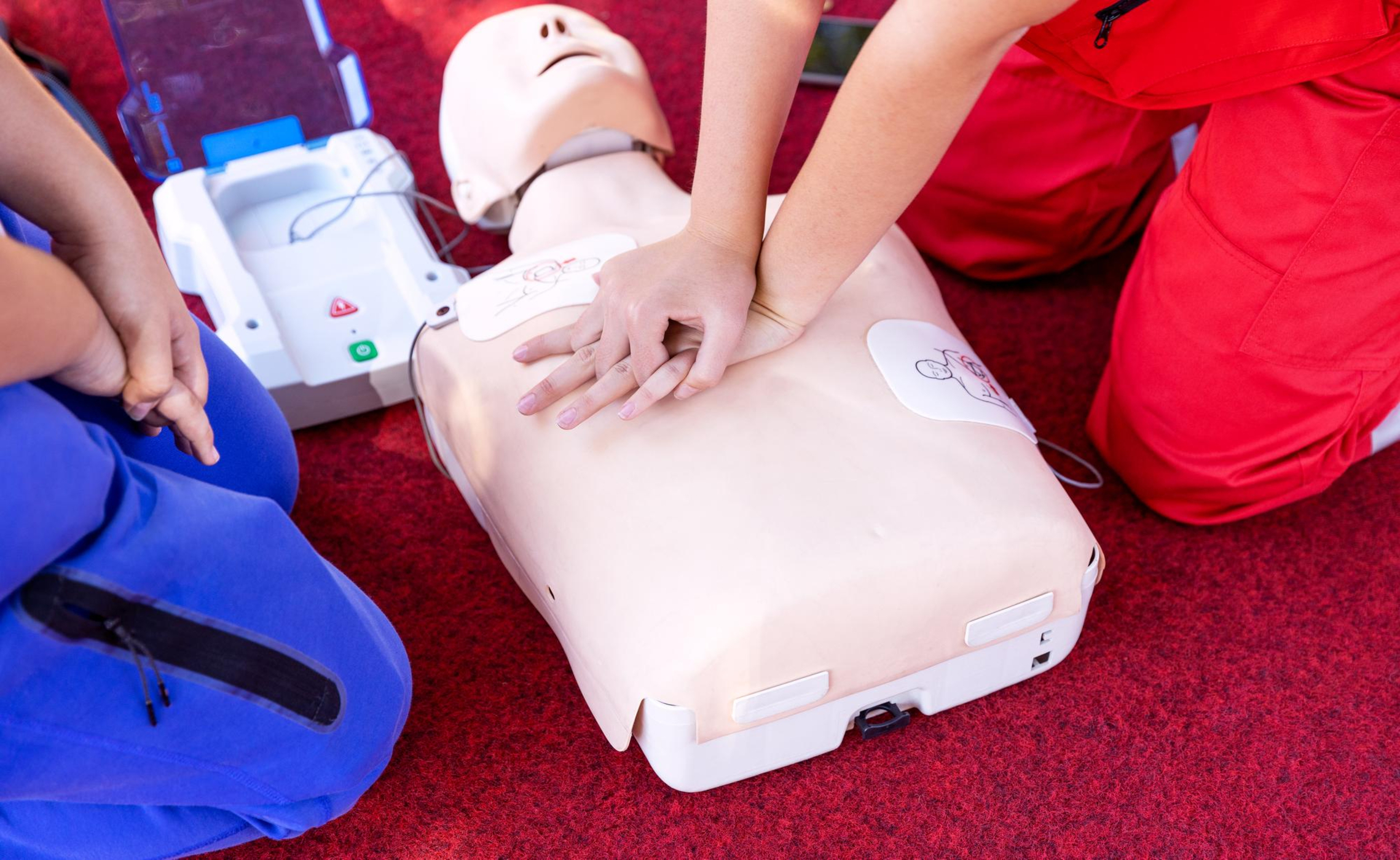
CPR is the heart of life-saving practice. In India, an ambulance delay of 20 to 30 minutes could be fatal. In such a scenario, CPR by a bystander is the only survival option.
1.Technique: Our CPR training provides an in-depth understanding of your chest compression rates (100 to 120 minutes).
2.Rescue Breathing: You learn how to provide oxygen to the lungs without interrupting its compressions.
3. Automated External Defibrillator (AED) Training
An Automated External Defibrillator (AED) is a portable device to restart your heart’s rhythm. A training in AED helps in –
1.Deployment: It ensures that your staff can easily locate and operate an AED within the “Golden Hour.”
2.Integration: It teaches you how to seamlessly switch between AEDs and CPRs to maximise the survival odds of the victim.
What Can HR and Safety Managers Do?
The main point of action for the HR and Safety Managers is to first move from their ‘paper compliance’ approach to the ‘real-world preparedness.’ They can consider implementing the following steps –
-
Conduct a Risk Audit: Identify specific health risks that are likely to occur within your organisation. These risks may include heat stroke in outdoor logistics and electrical shocks in IT maintenance.
-
Incorporate Contract Labour: Ensure that the organisation incorporates safety training programs for temporary and contractual staff too. They are the ones who are closer to the hazardous tasks.
-
Regular Refresher Courses: Regular refresher courses could be life-saving and are perishable. Plan bi-annual or annual refresher courses to retain the muscle memories of your staff.
-
Simulated Drills: Plan unannounced workplace medical emergency drills to check the response times and behaviours of your trained first aid staff.
Your Commitment Towards Workplace Safety
In today’s fast-paced world, Indian corporates often prioritise productivity over preparedness. However, the true investment of an organisational leadership is in its ability to handle workplace safety.
Providing a First Aid, CPR & AED training India program is not about complying with your statutory requirements. It is about creating an empowered and safe workforce. Equipping your team with the tools to mitigate the ‘Golden Hour’ is your organisational reflection of not just managing your workplace but protecting your community.
Do not let the ‘Golden Hour’ slip away. Equip your staff today with NIST Global’s First Aid, CPR & AED training India and strategically invest in your employees’ well-being.
Key Takeaways:
-
Around 98% of the Indian population lacks basic First Aid training. A strategic investment in First Aid, CPR & AED training in India ensures your organisation adheres to the Factories Act (1948) requirements.
-
This comprehensive training builds the ‘muscle memory’ in your employees, temporary and contractual staff, needed to positively respond during the Golden Hour.
-
HR and Safety Managers should move beyond the checklist of Risk Audits to practical preparedness in mitigating workplace safety.
FAQs