
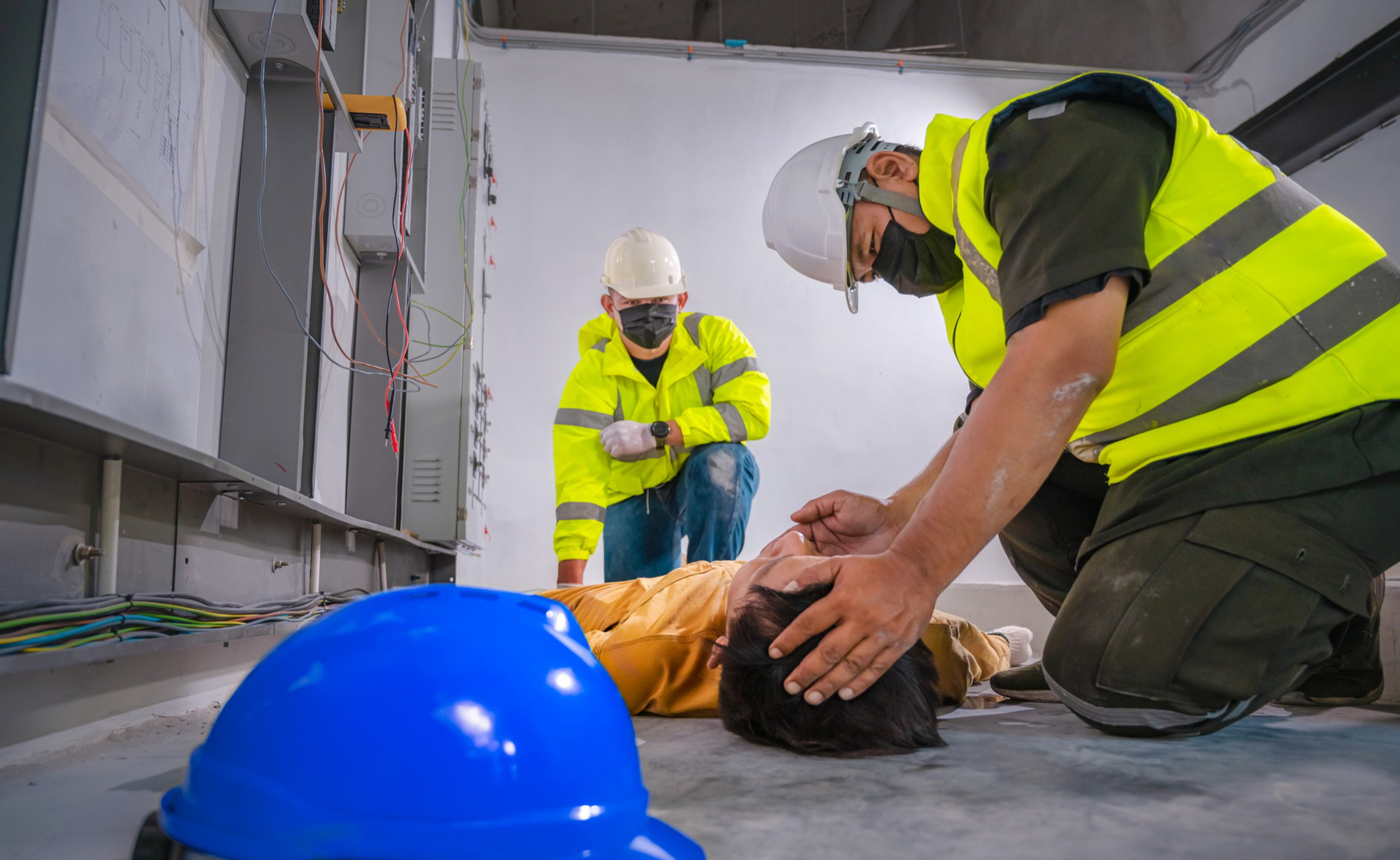
What if workplace accidents weren’t caused by machines but by human behaviour?
Across industries, safety experts consistently point to a powerful reality: nearly 80–90% of workplace incidents are linked to unsafe behaviour at work. While faulty equipment and hazardous environments do contribute, it is often a momentary lapse, a shortcut, or a small decision that turns a risk into a real accident.Simultaneously, this idea continues to evolve. Traditional safety approaches tend to focus on individual mistakes, while modern thinking looks deeper; at how systems, workplace culture, and leadership influence human actions. In reality, both perspectives matter. Behaviour plays a critical role, but it is always shaped by the environment people work in.
In this blog, we will break down why unsafe behaviour workplace accidents happen so frequently, how human error workplace safety India impacts organizations, and what practical steps can help reduce these risks.For professionals and organizations looking to understand truly and control unsafe behaviour, the right knowledge makes all the difference. That’s where NIST comes in; helping learners build real-world safety expertise and develop the skills needed to create safer, more responsible workplaces.
What is Unsafe Behaviour in the Workplace?
Unsafe behaviour is simply any action that increases risk or ignores safety rules. It doesn’t always happen on purpose; sometimes people don’t realize the danger, and other times they choose to take a shortcut. But in both cases, these actions can quickly lead to accidents.
Types of Unsafe Behaviour
To understand it better, unsafe behaviour usually falls into three simple categories:
These are unintentional mistakes; like slipping, forgetting a step, or misjudging a situation.
Most of the time, at-risk behaviour happens when someone takes a shortcut in the thought of saving time or effort, thinking “nothing will happen.”
These are deliberate actions where safety rules are ignored, even when the workers know the risk well.
Recognizing these behaviours is important because it helps organizations better manage human error workplace safety India and prevent incidents before they happen.
Real Workplace Examples
Unsafe behaviour shows up in everyday situations, such as:
Individually, these actions may seem small or harmless. But over time, they build up and become one of the biggest reasons behind unsafe behaviour at workplace accidents.
Why Do Workers Engage in Unsafe Behaviour?
Individual Factors
Human behaviour is influenced by several personal factors:
-
Risk perception: Workers may underestimate dangers
-
Habits: Repeated shortcuts become normalised
-
Fatigue and stress: Reduce focus and decision-making ability
-
Overconfidence: Past success without incidents creates false security
Organizational Factors
More importantly, the workplace environment strongly shapes behaviour:
-
Poor safety culture: Safety is not prioritised
-
Time pressure: Workers rush to meet deadlines
-
Lack of training: Employees don’t fully understand risks
-
Weak supervision: Unsafe actions go unchecked
This highlights an important truth: Unsafe behaviour is often influenced by systems; not just individuals.
Unsafe Behaviour vs Unsafe Conditions
Many people think accidents happen only because of unsafe conditions, like faulty equipment or dangerous environments. But in reality, it’s not that simple. Most accidents happen when unsafe conditions and unsafe behaviour come together.
Unsafe behaviour: contributes to about 80–90% of accidents
Unsafe conditions: contribute to about 10–20%
Think of it this way:
A wet, slippery floor is dangerous; but it may not cause an accident unless someone runs, ignores warning signs, or isn’t paying attention.
That’s why modern safety thinking looks at the bigger picture. Instead of blaming people alone, organizations now understand that behaviour, environment, and systems are all connected.
When companies improve both the workplace conditions and the way people act, they can prevent accidents much more effectively.
The Role of Behaviour-Based Safety (BBS)
What is Behaviour-Based Safety?
Behaviour-Based Safety (BBS) focuses on observing, analysing, and improving worker behaviour to prevent incidents before they occur.
Key Principles of BBS
BBS works on a few practical ideas:
-
Positive reinforcement: Encourage and appreciate safe behaviour instead of only pointing out mistakes
-
Data-driven observations: Watch daily activities to spot patterns and common risks
-
Continuous improvement: Keep improving safety practices based on real observations
Why BBS Works
BBS is effective because it focuses on the small, everyday actions that often lead to bigger problems:
-
It helps correct unsafe habits before they turn into accidents
-
It makes workers more aware of their actions and surroundings
-
It builds a proactive safety culture where everyone takes responsibility
When organizations apply BBS consistently, they often notice fewer accidents and stronger overall safety performance.
The Hidden Truth: Behaviour is Not the Only Cause
While unsafe behaviour contributes to most accidents, it is not always the root cause.
Often, unsafe actions are symptoms of deeper issues:
-
Management failures: Lack of clear policies or enforcement
-
System design flaws: Unsafe processes or equipment
-
Poor communication: Workers to be unaware of risks
This leads to a powerful insight:
Fix the system, and behaviour improves automatically.
Blaming workers alone does not solve the problem. Instead, organizations must create environments where safe behaviour becomes the natural choice.
Impact of Unsafe Behaviour on Organizations
Unsafe behaviour does not just affect individuals; it impacts entire organizations.
Human Impact
-
Injuries and fatalities
-
Long-term physical and mental health effects
Financial Impact
-
Compensation costs
-
Legal penalties
-
Increased insurance premiums
Operational Impact
-
Downtime and project delays
-
Reduced productivity
Reputational Impact
-
Loss of trust
-
Damage to brand image
These consequences highlight why addressing unsafe behaviour in workplace accidents should be a top priority for every organization.
How to Reduce Unsafe Behaviour at Work
Organizations can take practical steps to minimize unsafe behaviour:
- 1
Build a Strong Safety Culture : Make safety a core value, not just a requirement.
- 2
Leadership Commitment : Leaders must actively demonstrate and enforce safe practices.
- 3
Training & Awareness Programs : Provide regular, practical training focused on real-world risks.
- 4
Encourage Reporting : Promote reporting of near misses without fear of blame.
- 5
Implement Behaviour-Based Safety Systems : Use observation and feedback to improve daily behaviours.
- 6
Improve Work Environment : Design safer systems, processes, and workflows.
The key is to combine behavioural improvement with system-level changes for lasting results.
Advance Your Safety Career with NIST
Understanding the connection between unsafe behaviour, workplace accidents, and human error, workplace safety India is essential for every safety professional.
At NIST, we equip learners with the knowledge and practical skills needed to:
-
Identify and control unsafe behaviours
-
Implement Behaviour-Based Safety strategies
-
Build strong safety cultures across organizations
Conclusion
Unsafe behaviour plays a major role in workplace accidents; but it does not exist in isolation. It is shaped by workplace culture, leadership, and systems.Organizations must move beyond blaming individuals and focus on preventing unsafe behaviour through better systems, training, and leadership. When companies take this approach, they not only reduce incidents but also build a safer and more productive work environment.