
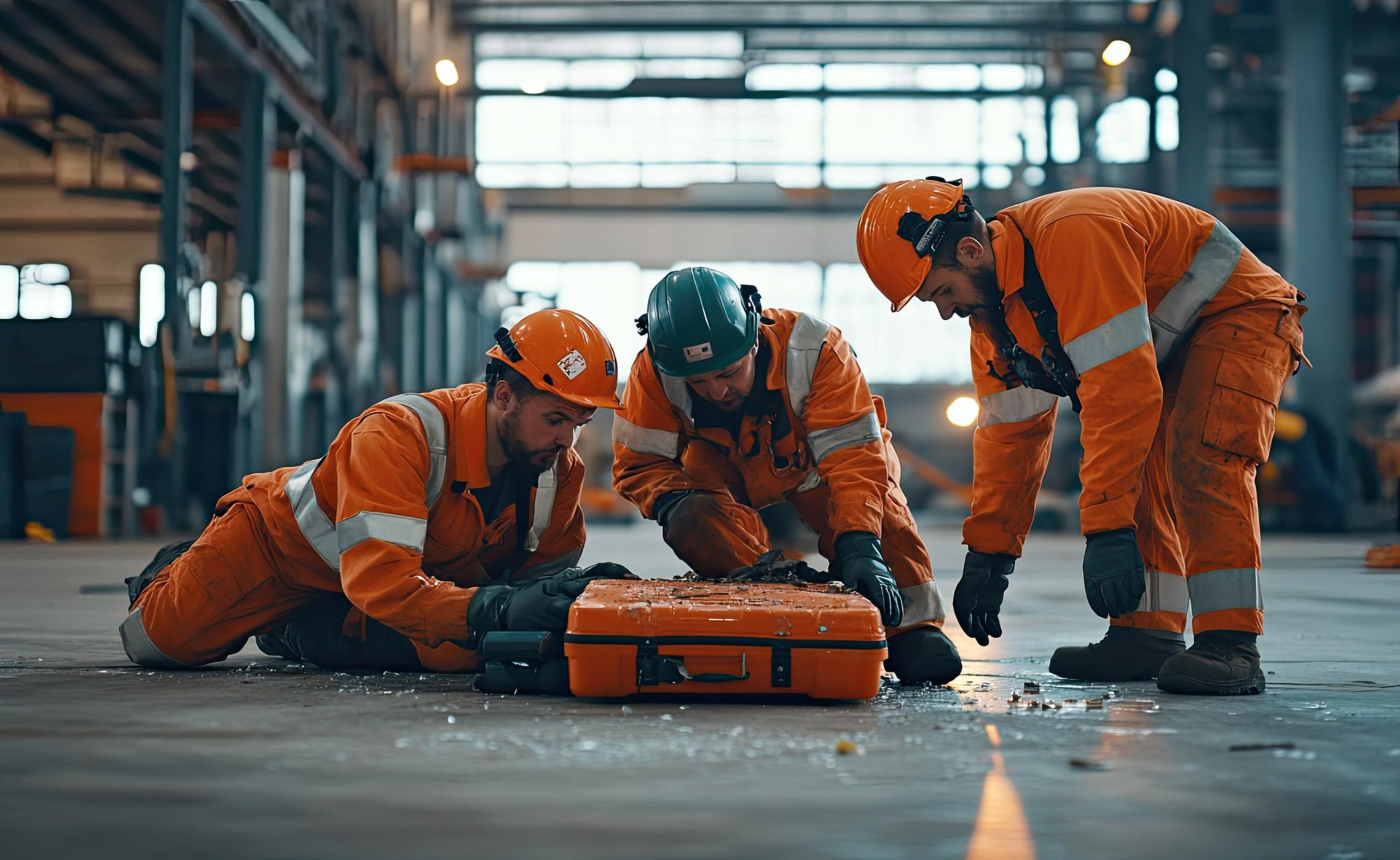
With approximately 27 million workers driving the manufacturing sector across India, there is an immense scale of industrial operations. Yet a majority of these employees lack the basic safety skills to respond to a medical crisis. Imagine you are working in a busy logistics hub where you witness a worker suffering from a deep laceration caused by a falling crate.
With blood loss becoming critical, the bystanders might stand frozen, unsure whether to act or not. What would you do in such a scenario where even a minute spent waiting for an ambulance counts? This is a dicey situation where your single step could either lead the victim towards an ultimate recovery or permanent disability.
Workplace first aid becomes your vital bridge here. The buffer between the moment an injury occurs and the arrival of your professional medical service is important. This first aid at the workplace functions as a bridge.
Thus, HR leaders, Safety Managers, and Operations Heads should focus on building a robust first-aid programme. It is not just your secondary task but a core operational necessity to protect your people.
This blog focuses on the general awareness, best practices, and the importance of first aid in workplaces. Organisations are encouraged to refer to relevant regulatory authorities or approved training providers for specific compliance requirements.
What Is First Aid in the Workplace?
Workplace first aid is an immediate yet temporary treatment offered to an employee who is injured or falls ill while performing their job. The primary purpose of first aid is to protect life by preventing the condition from worsening further. It promotes recovery until proper medical assistance is received.
In corporations or industries, first aid is not only about applying a basic bandage. It encompasses how to manage severe bleeding caused by machinery and how to treat thermal or chemical burns. It is also helpful in stabilising fractures that result from falls and slips.
Modern first aid includes critical interventions to save lives. A few examples here are administering CPR or using an Automated External Defibrillator (AED) to treat cardiac arrest.
Why Is First Aid Training Important?
According to early intervention studies by Blaya et al. (2025), the first instance of emergencies is extremely important. It determines how long the impact of an injury will last. This is the reason why you should have a trained safety staff in your organisation.
First-aid training ensures that you respond quickly to significantly reduce the severity of workplace accidents. It saves the person’s life by helping your safety staff identify the signs of life-threatening conditions, such as heart attacks and severe allergic reactions. Proper care at the initial stage is quite essential to prevent permanent tissue damage or infection. This care could include cooling a burn or elevating a limb to reduce the overall impact of the injury.
Common Workplace Emergencies
Safety experts report that different industries face unique risks. However, certain emergency types remain universal across several Indian sectors, including manufacturing, construction, and oil & gas. Here are some of the common ones –
Recognizing these behaviours is important because it helps organizations better manage human error workplace safety India and prevent incidents before they happen.
Real Workplace Examples
Unsafe behaviour shows up in everyday situations, such as:
Challenges in Workplace Safety
Despite several legal mandates, organisations only focus on a ‘paper-only’ safety culture. The good thing is that the compliance is documented in such organisations, but might not be effectively grounded in practice. A few of the key challenges to establishing a robust safety shielded environment are –
Benefits of First Aid Training for Organisations
Investing in a robust, accredited first-aid certification is a clear return on your investment. It protects both your employees and your organisation’s bottom line. The ISO 45001 standard highlights the following benefits of first-aid training:
How to Implement First Aid Training in the Workplace
To implement a truly effective first-aid training programme, you need to develop a system of systematic and ongoing learning process. Remember, it is not a one-time event.
- You should identify the specific risks by performing site inspections. These inspections are crucial to know the hazards related to heights, machinery, and chemicals.
- The moment these risks are identified, your next step is to train your employees through a programme offering practical and hands-on experience.
- Such experiences may include CPR and AED usage.
- Your Safety Managers should ensure timely first-aid kit audits as well as timely plan mock emergency drills to test your response times and the effectiveness of your communication channels.
Conclusion
To prioritise your workplace first aid is not only about ticking a checklist box to complete your compliance exercise. It is your fundamental commitment to the safety and dignity of all your employees and perhaps your organisation. However, you need to move from theoretical knowledge to practical and action-oriented training. In this way, you are better prepared to effectively mitigate risks and improve your employee behaviour. It also helps to foster a resilient safety culture. HR Leaders and Safety Managers should understand their employee safety goals clearly to ensure that their safety team is equipped to handle the critical early minutes of the emergencies.
Explore NIST Global’s workplace first aid training programs designed to build practical emergency response skills through hands-on learning. Our hands-on CPR/AED practice programs are conducted by certified professionals to offer high-impact simulations with a real-world safety crisis.
Key Takeaways
Workplace first aid is a quick medical aid you provide to an injured employee, even before professional help arrives.
Adequate training reduces emergency risks by improving the response times for common emergencies. This includes falls, burns, and electric shocks.
Corporate safety culture strengthens when your HR and Safety Managers work together to obtain accredited first aid certification.