
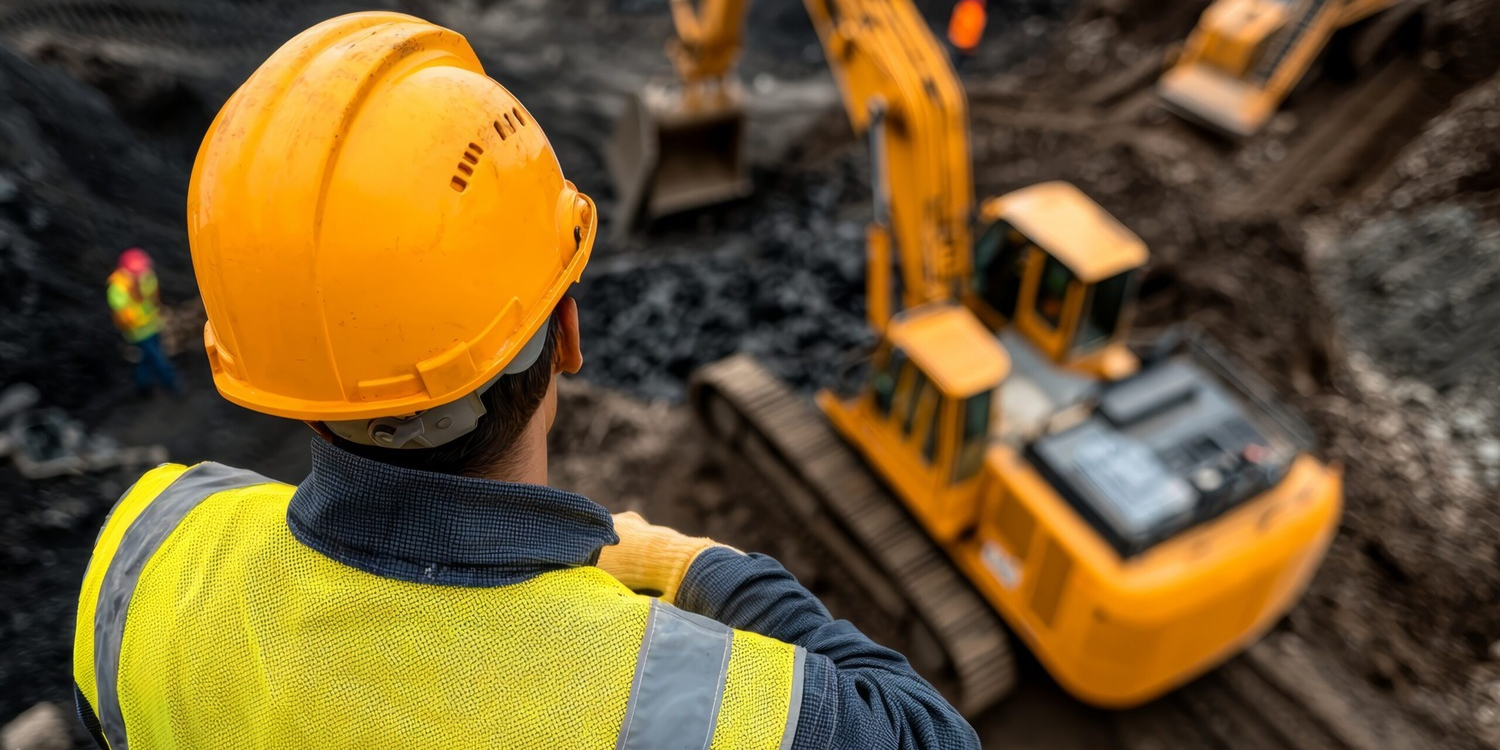
Introduction to Excavation Safety in Construction Work
Every construction project requires excavation work to build its infrastructure, utility systems, and industrial facilities. The work involves excavating earth material to build foundations and create trenches and tunnels and construct underground structures.
Excavation work presents multiple dangers which need to be handled because workers face unstable soil conditions and heavy machinery and hidden underground utilities.
Why Excavation Safety Is Critical on Construction Sites?
The dangers which come with excavation work make excavation safety essential because workers face multiple uncontrollable dangers which include cave-ins and falling objects and deadly atmospheric conditions and potential mortality.
Proper safety precautions will be helpful in preventing collapses, protection of workers against underground services, reducing the risks of equipment and falling material, and fulfilling the legal safety requirements.
The blog presents essential information about excavation safety and the reasons for implementing excavation safety training programs at the workplace.
What Is Excavation and Trenching?
Definition of Excavation Work
Excavation can be described as the act of clearing the soil in order to create trenches, foundations, tunnels or subterranean areas. It is popular in the construction, mining and utility work to install pipelines, foundations, cables and drainage systems among others.
Difference Between Excavation and Trenching
Trenching is a certain kind of excavation when the width of the excavation is lower than the depth. According to OSHA standards, a trench is considered to be an excavation the width of which at the bottom is not more than 15 feet. Trenching has existed over a long period of time in construction, farming, and the army.
Importance of Excavation Safety Awareness & Risk Management
One of the most dangerous operations in construction and industrial project is the excavation work. Inadequate risk management and safety awareness during excavation may result in severe injuries, loss of lives, project delays as well as legal implications. Effective risk management practice and good excavation safety awareness should therefore be built to save the lives, property and business.
1.Prevents Fatal Accidents and Serious Injuries
The most frequent reasons for excavation work deaths result from cave-ins and falling materials and equipment rollovers and underground utility strikes. The workers learn to implement safety measures through brief safety training which teaches them to recognize early warning signs that include cracks and water leaks and vibration risks.
2.Improves Hazard Identification and Control
Risk management enables organizations to identify excavation dangers through a structured process which includes detecting soil instability and dangerous atmospheric conditions and mechanical hazards and environmental dangers.
The risk identification process enables organizations to implement suitable controls which reduce risk to acceptable boundaries through methods like shoring and shielding and sloping and secure access points.
3.Ensures Legal and Regulatory Compliance
The excavation operations need to follow both national safety regulations and international safety regulations. Organizations which implement proper risk management together with employee awareness programs will achieve legal compliance while preventing penalties and demonstrating their commitment to worker safety.
4.Protects Infrastructure and Underground Utilities
Proper risk assessment will help prevent damage to underground systems which include electric wires and gas mains and drinking water pipes. The system reduces the likelihood of fires and explosions and flooding and service interruptions and costly repairs.
5.Enhances Emergency Preparedness
Workers develop essential emergency response skills through safety awareness training which helps them handle situations such as trench collapses and gas leaks and floods. The risk management strategies include rescue operations and communication systems and response teams which are trained to protect lives during emergencies.
6.Improves Productivity and Project Efficiency
Safe excavation practices minimize work stoppage due to accidents, investigation and damage of equipment. An excavation site that is well controlled is effective, timely and within the budget.
7.Builds a Strong Safety Culture
The employees develop safer working practices when they learn about excavation hazards and their job duties because they develop a common understanding of safety as a fundamental value instead of viewing it as a task to be completed.
The results of this process establish better methods of working together which lead to increased responsibility and improved safety achievements that persist over time.
8.Reduces Financial Losses
Accidents result in medical costs, compensation claims, equipment damage, legal liabilities, and reputational harm. Proactive risk management significantly lowers these costs and protects business continuity
Protective Systems Used in Excavation Safety
1.Sloping and Benching Methods
Sloping involves cutting trench walls at an angle away from the excavation. Benching creates horizontal steps in the trench walls. Both methods reduce collapse risk by reducing soil pressure.
2.Shoring Systems for Excavation
Shoring requires hydraulic and timber and mechanical supports to stop soil movement from occurring. Shoring systems find their application in areas where space restrictions prevent the use of sloping and benching techniques.
3.Shielding and Trench Boxes
The trench boxes function as shielding systems which create safe spaces for workers by stopping soil from collapsing into the excavation area. The systems create a secure area for operations but they do not prevent collapse events from happening.
Excavation Safety Precautions and Safe Work Practices
a. Safe Access and Egress in Excavations
Work sites which operate with sudden changes to their surface must provide permanent access through ramps or stairs or other vertical pathways. Construction projects need to establish access points which remain operational within 25 feet of their workforce while avoiding any physical blockages.
b. Spoil Pile Management and Load Control
Excavation sites require a distance of 2 feet between all spoil piles and tools and materials because this distance helps to protect workers from falling materials and it decreases the chance of excavation walls collapsing.
c. Safe Operation of Machinery Near Excavations
Construction sites need to maintain a distance between heavy machinery and excavation sites to ensure safe equipment operation. Operators need proper training while assessing ground conditions which creates a risk of equipment tipping accidents.
d. Barricading, Signage, and Site Housekeeping
Excavation sites maintain safety through barricades and warning signs together with proper housekeeping practices which stop falls and block unauthorized access and create tripping dangers.
Personal Protective Equipment (PPE) for Excavation Work
1.Mandatory PPE for Excavation Safety
The required personal protective equipment consists of hard hats, safety footwear, high-visibility clothing, gloves, and respiratory protection which must be used whenever necessary.
2.Worker Responsibilities and Safety Compliance
Workers need to use personal protective equipment because it protects them from falling objects and slip hazards and dangerous work environments.
The workers need to wear their assigned personal protective equipment while they must also comply with safety regulations and report any dangerous situations and take part in safety meetings and emergency preparedness drills.
Enhance Excavation Safety with Professional Training
Enquiry NowTo ensure compliance, reduce risks, and build workforce competency, NIST Global offers comprehensive Excavation Safety Training designed for construction and industrial environments.
Conclusion – Improving Excavation Safety on Worksites
Excavation safety requires careful planning, hazard identification, competent supervision, and strict adherence to safe work practices. Proper training, protective systems, and emergency preparedness significantly reduce the risk of serious incidents and fatalities.
Frequently Asked Questions
you might also like
Popular NEBOSH Courses
NEBOSH International General Certificate (IGC)
For beginners and supervisors wanting a strong foundation in health & safety.
NEBOSH International Diploma (IDip)
For experienced safety professionals aiming for senior HSE roles.
NEBOSH Process Safety Management (PSM)
For those in high-hazard industries focusing on process safety management.